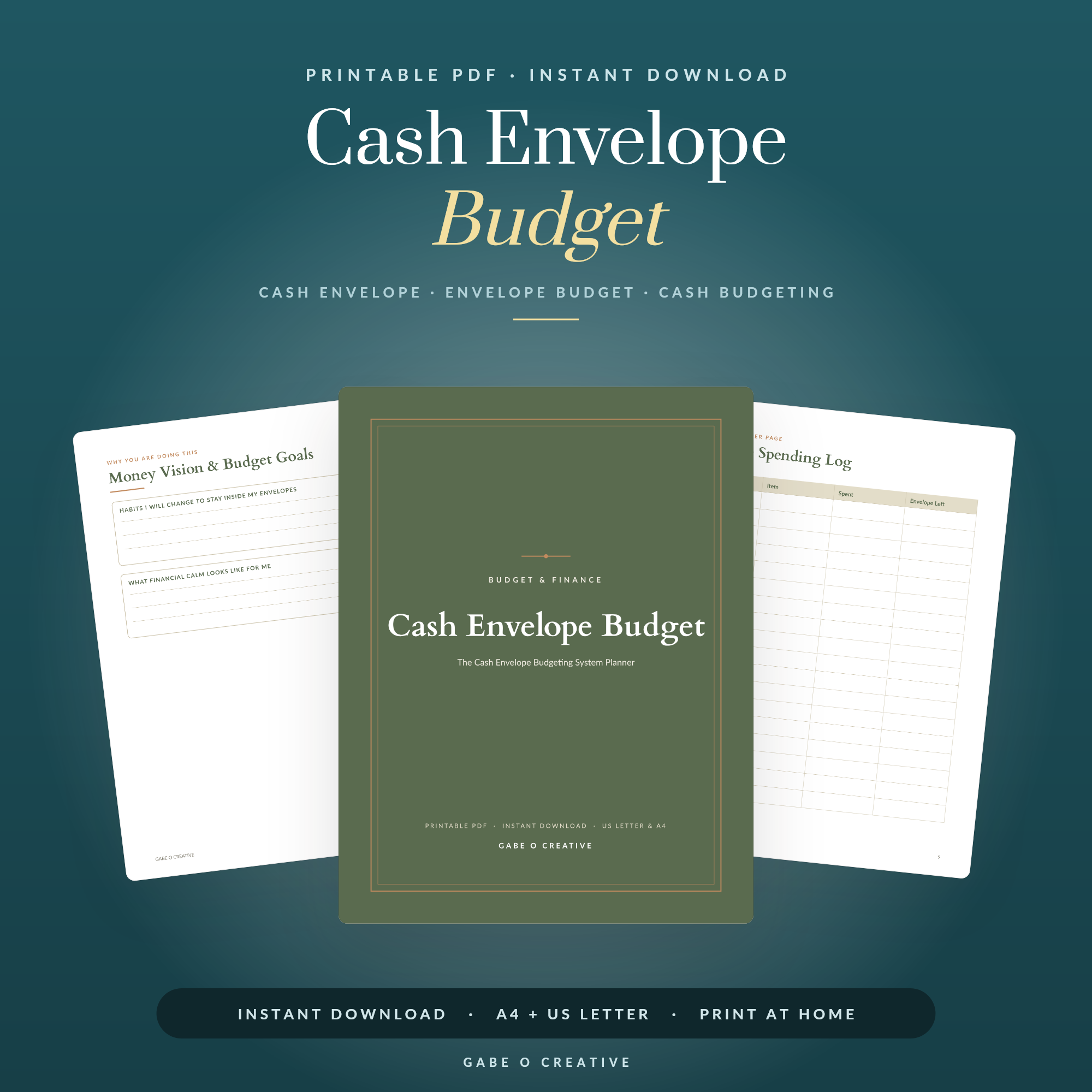
The cash stuffing method is the TikTok-viral update to envelope budgeting: withdraw your pay as cash, then split it into labelled envelopes or a stuffable wallet for each spending category. Once an envelope is empty, that category is closed until next payday. It works because running out of physical cash is a much harder limit to ignore than a number turning red in a banking app. Want to try it properly, not just watch the videos? Our Cash Envelope Budget kit gives you ready-made category envelopes and a tracker to start this week.
Ready to start stuffing? Grab the Cash Envelope Budget printable and set up your first categories in under ten minutes.
 Shop Savings Challenge Tracker Google Sheets, 52 Week Challenge, 100 Envelope Challenge £5050, No Spend Month, Custom Savings Goal Spreadsheet →
What Is the Cash Stuffing Method?
Cash stuffing takes the decades-old envelope budget and turns it into a filmable ritual. On payday, you withdraw a set amount of cash. Then you physically "stuff" it into separate envelopes, or the pockets of a purpose-made stuffable wallet, one per spending category — groceries, petrol, eating out, haircuts. Whatever a category's envelope holds is all you have for that category until next payday. There is no card to tap when the envelope is empty, so the limit enforces itself instead of relying on willpower.
The #cashstuffing hashtag has passed 2 billion views on TikTok, and the reason is the visual: creators film the stuffing itself, counting notes into each pocket while a running total appears on camera. That makes budgeting oddly satisfying to watch instead of something people hide. It has done more to normalise cash budgeting for a younger audience than a decade of financial advice columns.
Does the Cash Stuffing Method Actually Work?
Yes, for the problem it targets: overspending on categories that live on a debit card. Research on cash versus card spending consistently finds people spend more freely with cards, because a tap payment feels less "real" than handing over notes. Cash stuffing closes that gap by making every purchase visible as cash leaving an envelope. For flexible, frequent categories like groceries and takeaways, that friction cuts spending, often within the first month.
It works less well for bills you must pay electronically, anything that needs a card to book (fuel pumps that pre-authorise a card, online subscriptions), and large one-off purchases that don't fit a weekly cash withdrawal. Most people who stick with it long-term run a hybrid: cash stuffing for the categories that tempt them, and standing orders or a monthly budget planner for everything fixed.
Who Cash Stuffing Works Best For
It suits anyone who overspends on small, frequent categories rather than big, rare ones — daily coffees, weekend takeaways, impulse buys at the supermarket. If your overspending is really one or two large annual costs, like car insurance or Christmas, a sinking funds system that saves toward a named pot ahead of time usually fits better than cash in an envelope.
Cash Stuffing vs the Cash Envelope System vs the 100 Envelope Challenge
These three get confused constantly because they all involve envelopes and cash. But they solve different problems: one controls spending, one builds a habit, and one hits a savings target.
| Method | What it's for | Best for |
|---|---|---|
| Cash stuffing | Controlling everyday spending by category | People who overspend on cards, week to week |
| Cash envelope system | A structured, category-by-category monthly budget | Anyone wanting a full cash-based budget, not just spending control |
| 100 envelope challenge | Hitting a fixed £5,050 savings target through random draws | Building a lump-sum pot, not managing monthly spending |
In practice, cash stuffing is just the newer name for the cash envelope system. It gets rebranded around a compact wallet and a payday filming ritual, instead of paper envelopes filed in a drawer. The mechanics — cash, categories, empty means stop — stay the same either way.
Common Cash Stuffing Mistakes to Avoid
- Stuffing too many categories. Six tiny cash pockets is manageable. Sixteen becomes a filing exercise nobody keeps up. Start with the 4-6 categories where you genuinely overspend.
- No digital backup. A wallet can be lost, stolen or left in a coat pocket. Keep a simple log of what went into each envelope, so a bad week doesn't wipe out your record of the month.
- Carrying a full month of cash at once. Withdraw weekly rather than monthly. It limits how much is at risk if the wallet goes missing, and it matches how most people actually spend.
- No plan for leftover cash. Decide upfront whether an envelope's leftovers roll over, go to savings, or get spent. Without a rule, leftover cash quietly becomes next category's overspend.
 Shop Sinking Funds Tracker Spreadsheet, Google Sheets Savings Template, Multiple Savings Goals, Cash Stuffing & Budget Planner →
Going Digital: A Safer Cash Stuffing Alternative
Digital cash stuffing keeps the same discipline without carrying notes. Instead of physical envelopes, you use savings pots or sub-accounts inside a banking app, one per category, and move that category's allowance in on payday. It suits online shoppers, anyone who finds carrying cash impractical, and anyone nervous about keeping a wallet of notes at home. You lose the tactile ritual that makes the TikTok version so watchable, but you keep the core mechanic. And the money earns interest while it waits, instead of sitting idle in an envelope. A sinking funds tracker or full budget spreadsheet can run this version alongside your physical envelopes for categories you'd rather not carry as cash.
Either way, it's worth a one-month trial if you overspend on cards in a handful of everyday categories. It costs nothing beyond a wallet, a set of envelopes or a spare savings pot, and the physical limit does the enforcing for you. Pair it with the full cash envelope system if you want it to cover your whole monthly budget, not just the categories that tempt you. Or pair it with the 100 envelope challenge if your goal is a lump sum rather than spending control. The Budget & Finance bundle includes trackers for all three approaches, so you can mix and match what actually sticks.
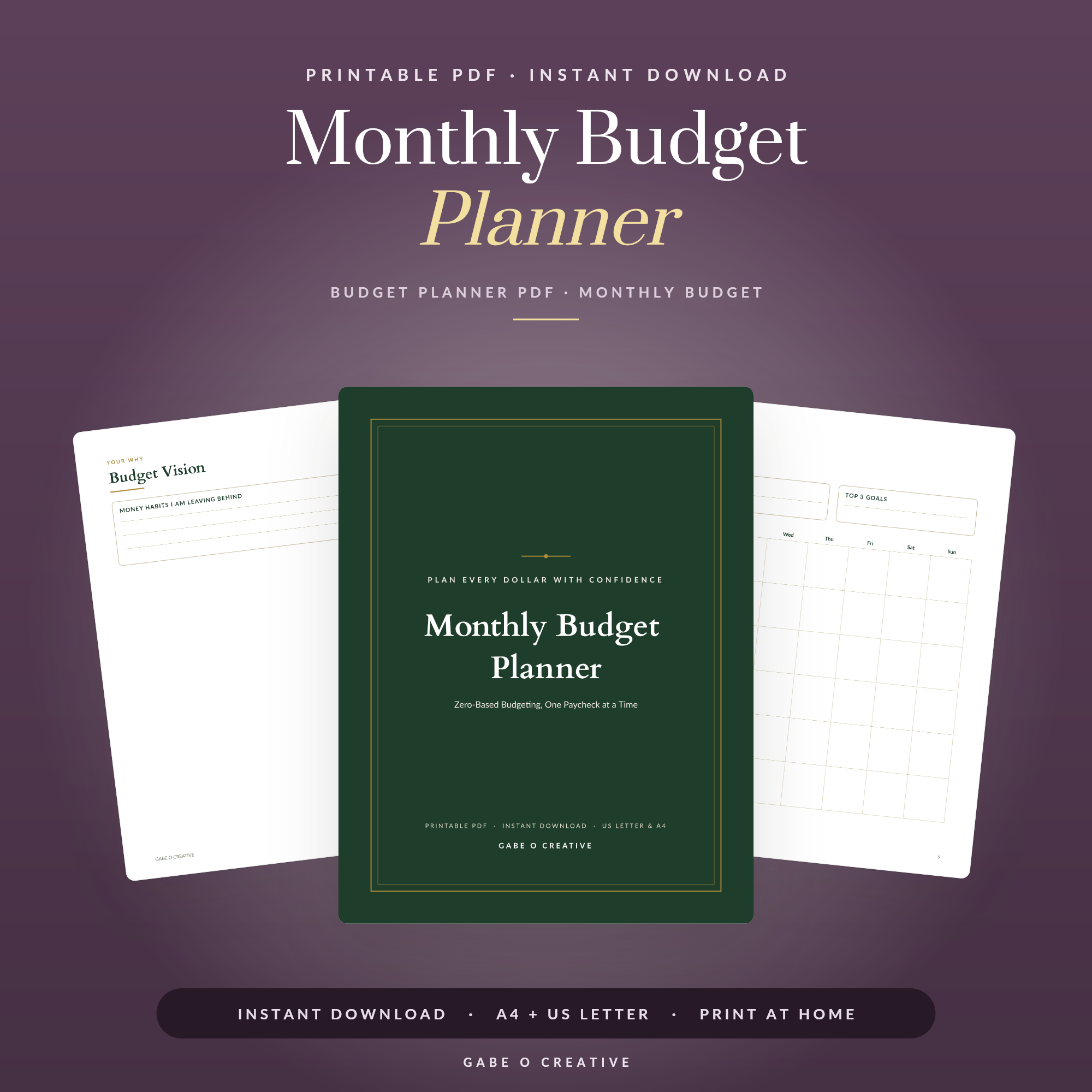 Shop Monthly Budget Planner →
Cash Stuffing FAQs
What is the cash stuffing method?
Cash stuffing is a budgeting method where you withdraw your pay as cash and split it into labelled envelopes or a stuffable wallet, one per spending category. Once an envelope is empty, spending in that category stops until the next payday.
Does cash stuffing actually work?
For flexible, frequent categories like groceries, takeaways and days out, yes — cash creates a physical limit that a card balance does not, and studies on cash versus card spending consistently show people spend less when they can see and feel the money leaving. It works less well for bills and online purchases that must go through a card.
What categories should I use for cash stuffing?
Start with 4-6 categories where you actually overspend — typically groceries, eating out, fuel, and personal spending — rather than trying to stuff every line of your budget. Fixed bills like rent and utilities should stay on standing order, not cash.
Is cash stuffing safe?
Carrying a full month of cash in one wallet is a risk if it is lost or stolen. Most people withdraw weekly rather than monthly, keep the bulk of savings in a bank account, and only stuff what they plan to spend in the next few days.
What is the difference between cash stuffing and the cash envelope system?
They are the same underlying method — envelopes per category, cash only. Cash stuffing is simply the newer, TikTok-driven name for it, usually done with a compact stuffable wallet instead of paper envelopes and filmed as a payday ritual rather than a private admin task.
Can I do cash stuffing digitally?
Yes. Digital cash stuffing uses savings pots or sub-accounts instead of physical notes, giving you the same per-category limits without carrying cash or losing interest on the money. It suits online shoppers and anyone nervous about keeping notes at home.
Ready to try it for one payday? Grab the Cash Envelope Budget printable and set up your first categories today, or explore the full Budget & Finance collection for every tracker mentioned here.