New teachers are told to be firm, not to smile until Christmas, and to establish authority early. It is advice about demeanour, and it is far less useful than the boring structural truth: most classes that go badly went badly because nobody taught them how the room works. Rules get the attention, routines do the work, and the difference between them is the most useful thing to understand before September. The Classroom Organisation OS holds the practical side once you have decided it.
New class this term? The Classroom Organisation OS keeps your class lists, seating, routines and pupil notes in one Google Sheet, so the first fortnight is not held together by memory.
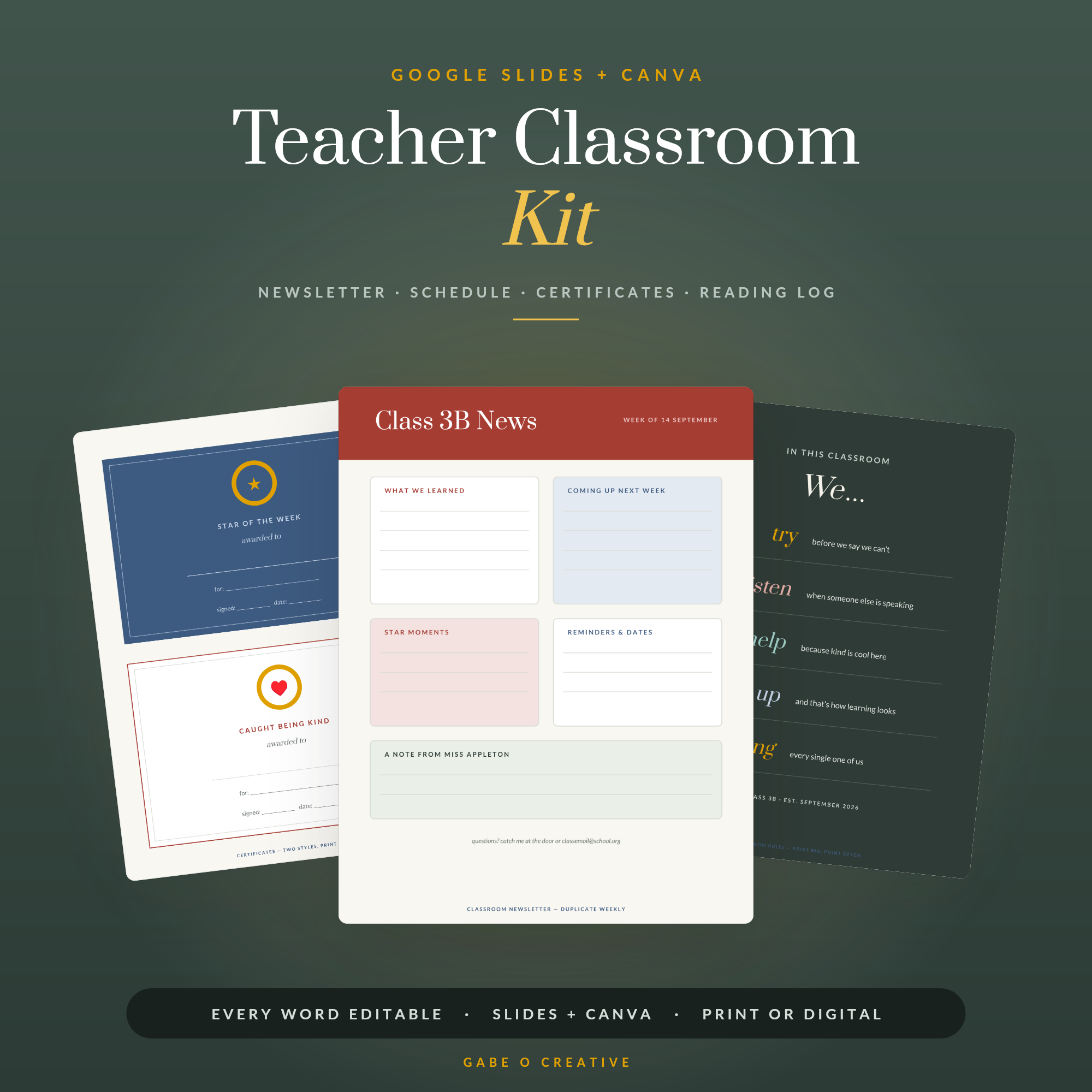 Shop Teacher Classroom Kit — Editable Classroom Newsletter, Schedule, Certificates, Name Labels, Reading Log & Parent Notes for Google Slides & Canva →
Rules and Routines Are Different Things
A rule is a boundary about how people are treated. A routine is a procedure for getting something done. They fail differently and they are fixed differently, which is why conflating them causes so much trouble.
When a class is noisy while handing work in, the instinct is to treat it as a behaviour problem and apply a sanction. Almost always it is a missing routine — nobody told them how work is handed in, so thirty people invented thirty methods simultaneously. Sanctions do not fix that. Teaching the procedure does, in about four minutes.
| Rule | Routine | |
|---|---|---|
| Example | We listen when someone is speaking | Work goes in the tray, back row first |
| Fixed by | Consistent enforcement | Explicit teaching and practice |
| How many | Three to five, total | As many as the room needs |
| When it breaks | Restate and follow through | Re-teach and rehearse |
Most "behaviour problems" are missing routines
Worth testing before reaching for a sanction: could a well-meaning pupil have done this correctly without guessing? If the answer is no, it is a routine problem and the fault is the system's, not theirs. That single question resolves a surprising proportion of first-term difficulty.
Five Rules, Not Twenty
Three to five, phrased positively, and each one something you will genuinely enforce every time.
The temptation is a comprehensive list covering every eventuality. It fails twice over: nobody remembers it, and you cannot possibly enforce all of it consistently — so the class quickly learns which rules are real and which are decoration. At that point the whole list is weakened, including the parts that mattered.
Fewer rules also make the reasoning teachable. "We look after each other's things" covers a dozen specific prohibitions and can actually be explained, which means pupils can apply it to situations you never anticipated.
Write them where you can see them
Not just displayed for the class — positioned where you catch them mid-lesson. The person who most needs reminding of the rules in week three is the tired adult trying to decide whether to let something go. The Classroom Labels & Signs Studio covers the display side if you want them to look deliberate rather than improvised.
The Five Routines to Teach First
Transitions are where lessons are lost, and these five cover almost all of them:
- Entering the room — what happens between the door and being ready to work.
- Getting attention — one signal, always the same, that means stop and look.
- Handing work in — where, in what order, what to do next.
- Moving around — when it is allowed and how.
- Packing away — starting early enough that it is calm.
Teach each one the way you would teach content: explain it, model it, have them practise, correct it, practise again. Telling a class a procedure once is not teaching it. Most classes need a routine rehearsed several times in the first week before it runs without prompting — and every one of those minutes is repaid many times over by Christmas.
 Shop Classroom Labels & Signs Editable Template for Google Slides & Canva, Tray Labels, Book Corner Signs, Display Headers, Job Chart & Name Labels →
Consistency Beats Severity
Classes forgive a strict teacher. They do not forgive an unpredictable one, because unpredictability means they cannot tell what will happen — and a room where the response to the same action varies by the adult's mood is genuinely stressful to sit in.
The practical implication is uncomfortable: consistency is a capacity problem, not a character one. You can only be consistent about a small number of things, so the number has to be small. Three boundaries enforced every single time will hold a room better than ten enforced on the days you have the energy.
The first three weeks are the whole negotiation
A class tests boundaries early — not out of malice, but because they genuinely do not know where the edges are until they find them. Hold the line boringly for three weeks and it largely stops. Let it slide in week two and you will renegotiate the same boundary repeatedly until July.
That is why front-loading matters. The effort curve is steep at the start and drops sharply, and teachers who spread it evenly across the year end up doing more work overall.
Resetting When It Has Gone Wrong
It will, somewhere, and the recovery is straightforward if you are willing to be explicit.
Name it plainly: this routine has not been working, here is what it should look like, we are going to practise it again. Then re-teach it exactly as you would in week one. Classes respond well to this — far better than to a teacher pretending the original expectation is still in force while visibly tolerating something else.
The thing that genuinely damages authority is not admitting a reset. It is the gap between what is stated and what is accepted, because that gap is what pupils actually learn from.
Once the human systems are set, the physical ones matter too — our classroom setup checklist covers the layout, zones and first-week admin that sit underneath all of this, and classroom organisation ideas covers keeping it that way. For the teaching itself, lesson planning is the companion piece, and the Teacher Classroom Kit has the editable signs and labels.
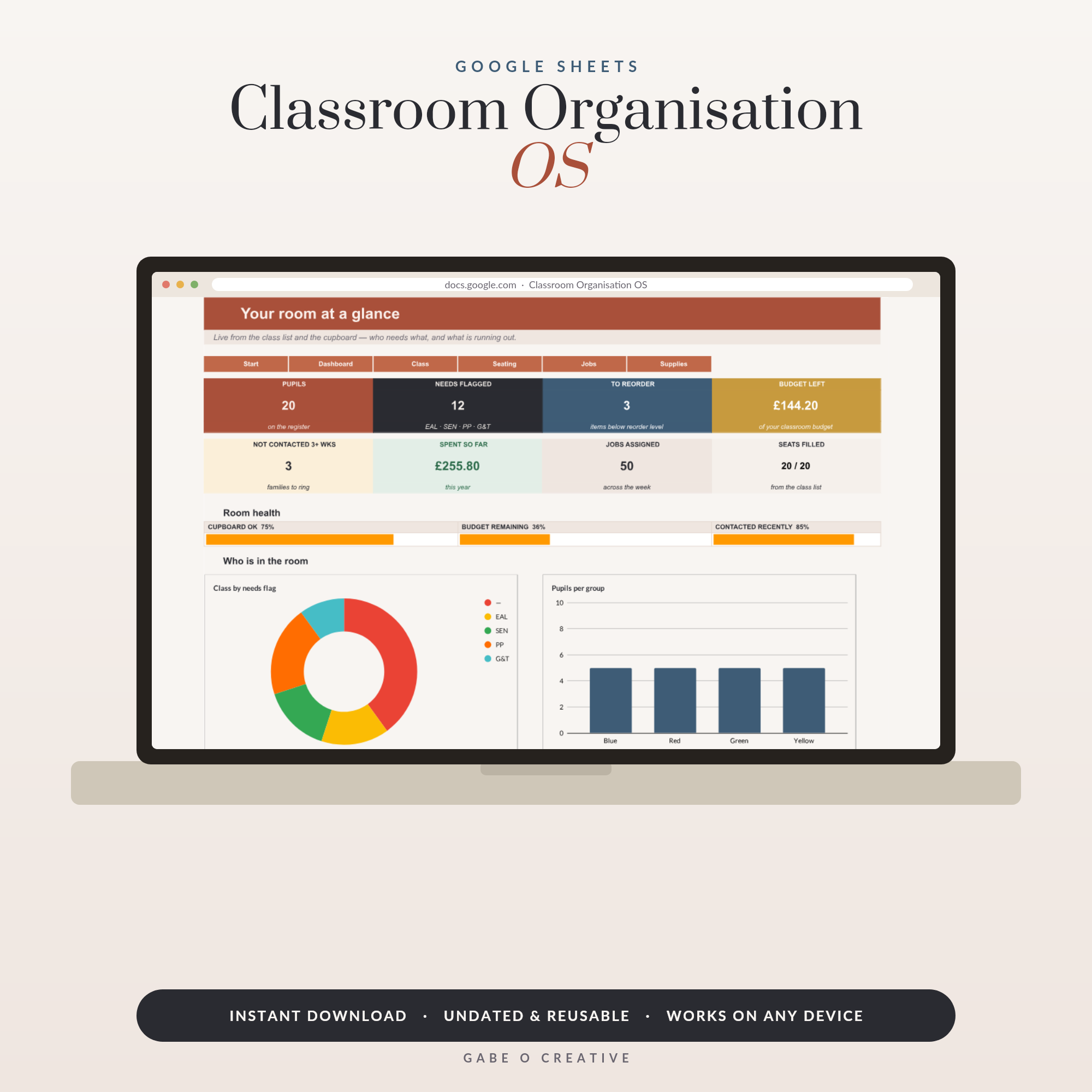 Shop Classroom Organisation Google Sheets Template, Teacher Class List & Seating Plan Spreadsheet with Job Rota, Supplies Inventory & Budget Tracker →
Classroom Rules and Routines FAQs
How many classroom rules should I have?
Five at most, and three is often better. A long list cannot be remembered by anyone, including you — and a rule you do not enforce consistently teaches the class that rules are negotiable, which costs you far more than the rule was worth.
What is the difference between a rule and a routine?
A rule is a boundary — how we treat each other. A routine is a procedure — how we hand work in, how we enter the room. Most problems blamed on behaviour are actually missing routines, and routines are taught rather than enforced.
Which routines should I teach first?
Entering the room, getting attention, handing work in, moving around the room, and packing away. Those five cover most of a lesson's transitions, and transitions are where lessons are lost.
How do I actually teach a routine?
Explain it, model it, have them practise it, and correct it until it is right — the same way you would teach anything else. Telling a class a procedure once is not teaching it; most classes need it rehearsed several times in week one.
How do I stay consistent when I am exhausted?
Have fewer rules. Consistency fails because there is too much to hold, not because of willpower. Three boundaries you always enforce beat ten you enforce on a good day — and classes forgive strictness far more readily than unpredictability.
What if I get it wrong in the first week?
Reset it explicitly. Say that a routine has not been working, re-teach it, and start again. Pretending the original version is still in force when it plainly is not does more damage than admitting the reset.
General guidance for teachers — always follow your own school's behaviour policy, which takes precedence over anything here.
Decide the five before term starts. Write your rules and your first five routines down, then keep the term's records in the Classroom Organisation OS — or browse the full Students & Teachers collection.