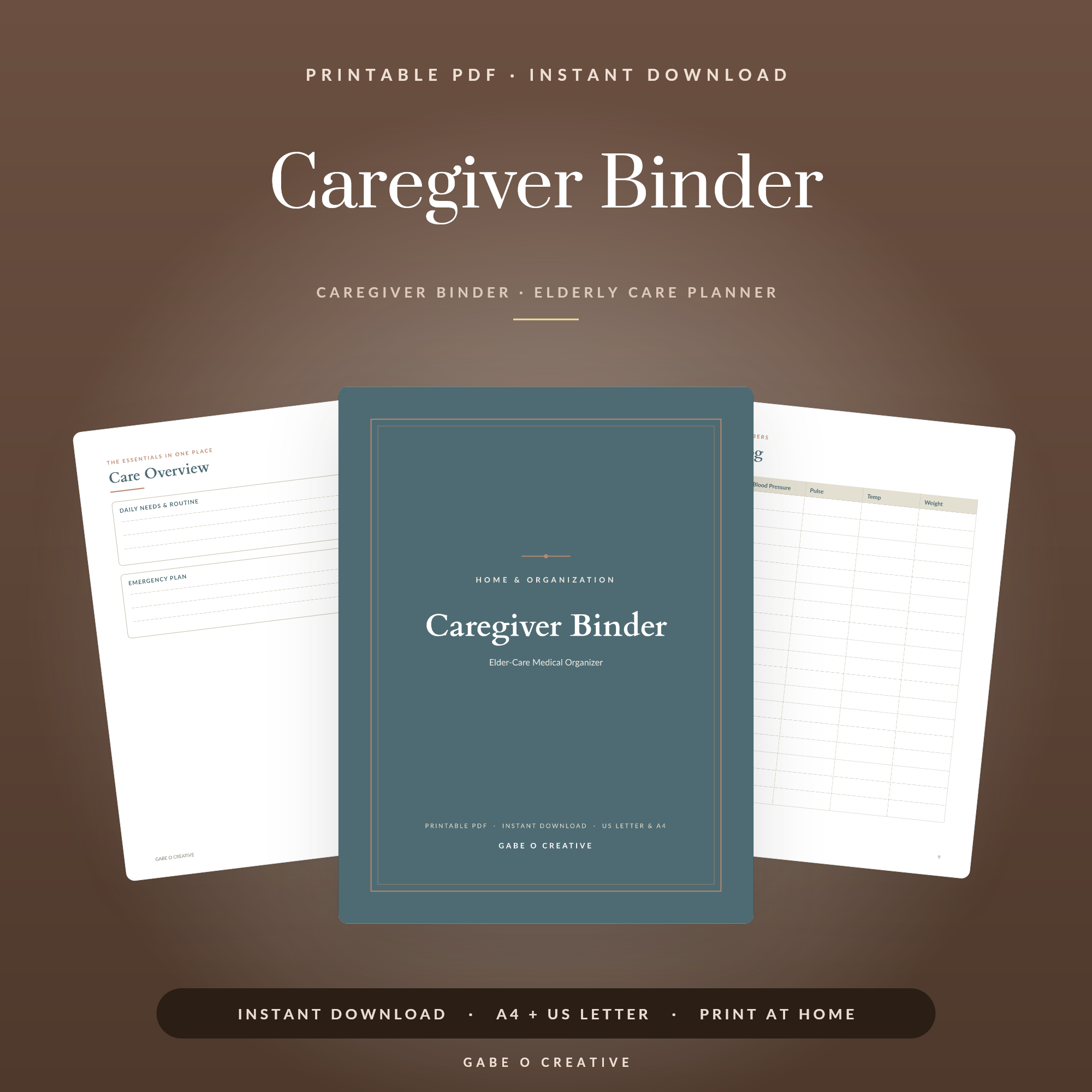
A dementia care binder differs from a general elder-care binder in one specific way: alongside the medical and admin paperwork, it has to carry the things only you know — how she takes her tea, which word she uses for the bathroom, that afternoons are harder than mornings. That information matters because it travels. When someone else takes over for an afternoon, a respite stay or a hospital admission, the medication list keeps them safe, but the personal detail is what keeps the day calm. Our Caregiver & Elder Care Binder covers the paperwork side; this guide covers what to add when the person you care for has dementia.
A note on what this is. This is an organising guide from a stationery studio, not medical or legal advice. For clinical questions, care assessments or a diagnosis, speak to your GP or care team. The charity and NHS resources linked throughout are the authoritative sources, and several of them are free.
Start with the free tool the professionals already use
Before building anything yourself, get a copy of “This is me”, the Alzheimer's Society leaflet for recording who someone is — their background, likes, dislikes, routines and preferences — so that care staff who have never met them can still treat them as a person rather than a patient. It's designed for any setting: at home, in respite, in a care home, or on a hospital ward. It has been endorsed by the Royal College of Nursing since 2010, and you can download it free.
Put a completed copy at the very front of the binder, and a second copy in the hospital bag. Ward staff change shift; the leaflet doesn't. Building your own version from scratch is duplicated effort, and a homemade sheet doesn't carry the same recognition with staff who already know this one on sight.
The pages a dementia binder needs that a standard one doesn't
A general care binder handles medications, appointments, contacts and finances. Those still matter. These are the additions that earn their place when memory and communication are affected:
- A communication page. Which words land, and which don't. The NHS advises speaking slightly more slowly, using simple sentences, and sticking to one idea at a time — so write down the phrasing that actually works for this person, not generic advice. If “Shall we get your coat?” goes better than “We're leaving now,” that sentence belongs in the binder.
- A daily rhythm page. Not a schedule to enforce — a description of how the day usually goes. When they wake, when they tire, when they're most themselves.
- A “what helps when it's hard” page. The music, the blanket, the photo, the walk. Written down while things are calm, because nobody thinks clearly in the middle of a difficult hour.
- A life-story page. Jobs, places lived, names that matter, the story they tell most often. Alzheimer's Society describes life story work as supporting conversation, memory and wellbeing — and it gives a new carer something real to talk about.
- A changes log. Dated notes on anything different — sleep, appetite, confusion, mood. This is the page your GP will actually want, because patterns over weeks are far more useful than “she's been a bit off lately”.
What to write on the changes log (and what to leave out)
Keep it short and factual, and date every entry. “Tuesday 9th — awake from 2am, didn't settle, refused breakfast, calmer by 11” is more useful to a clinician than a paragraph of interpretation. Record what you observed, not what you think it means; the diagnosis is their job, and a log that mixes the two is harder for them to read.
Two things worth noting specifically, because they're easy to forget under pressure: anything new that started within days of a medication change, and any sudden change over hours rather than weeks. A rapid change in confusion can indicate delirium, which is a different thing from dementia progressing and can have a treatable cause such as an infection — so it is worth a same-day call to the GP rather than a note in the binder.
Keep it thin enough to actually use
The binder that helps is the one someone can find something in during a difficult ten minutes. A fat binder gets abandoned. Five sections, clearly tabbed, is plenty: This is me · Medical · Daily rhythm · Changes log · Admin and contacts.
Two copies, not one. A full binder at home, and a slim version — “This is me”, the medication list, key contacts — that lives in the bag and goes wherever they go. The day you need it will be the day you're least able to assemble it.
If you're building the paperwork side from scratch, our Caregiver & Elder Care Binder has the medical, contact and admin pages ready to print, and the wider caregiver binder guide covers how to set one up without being overwhelmed by it. For medication specifically, the medication tracker guide goes into more detail than a single binder page can.
Dementia care binder questions
What is a dementia care binder?
A folder holding both the practical paperwork for someone living with dementia — medications, contacts, appointments — and the personal information that helps anyone caring for them: how they communicate, their usual daily rhythm, what settles them, and their life story.
What is the "This is me" leaflet?
A free Alzheimer's Society leaflet for recording a person's background, preferences and routines so professional carers who have not met them can provide personalised care. It is used in hospitals, care homes and at home, and has been endorsed by the Royal College of Nursing since 2010.
What should I record day to day?
Short, dated, factual notes on sleep, appetite, mood and confusion — what you observed rather than what you think it means. Patterns across weeks are far more useful to a GP than a general impression, and a log that separates observation from interpretation is easier for them to read.
How is this different from a normal elder care binder?
A standard binder covers medical and admin paperwork. A dementia binder adds the personal information that does not appear on any medical record — preferred words and phrasing, the usual shape of the day, what helps during difficult moments, and a life story page.
Should the binder go to hospital?
Take a slim version rather than the whole folder: the "This is me" leaflet, the current medication list and key contacts. Ward staff change shift, so written information reaches people a conversation at admission will not.
When should I contact a doctor rather than write it down?
A sudden change over hours rather than weeks warrants a same-day call, as does new confusion shortly after a medication change. Rapid changes can indicate delirium, which is distinct from dementia progressing and may have a treatable cause such as an infection.
The organising is the easy part, and it is genuinely worth doing — but the hard part is the caring, and you should not be doing that without support. Alzheimer's Society runs a support line and local services, and your GP can refer you for a carer's assessment.