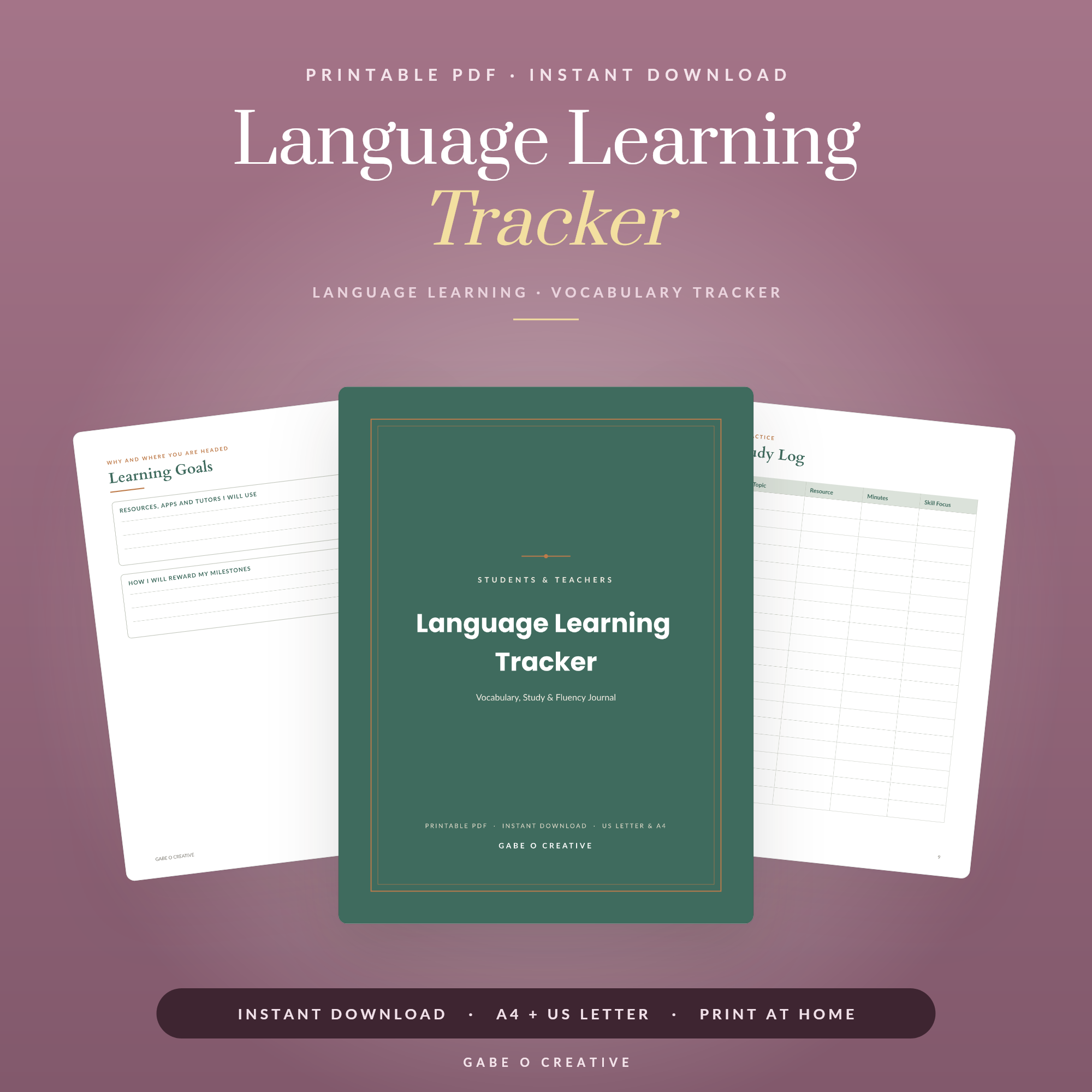
A vocabulary list that only ever grows longer isn't really a tracker — it's just a record of everything you've looked up once. The difference between a language learning log that works and one that quietly gets abandoned by week three usually comes down to one thing: whether it's built around reviewing what you've logged, not just adding to it. The research behind why that matters has a name, and it's worth understanding before building a study routine around it.
The spacing effect: the one finding worth building your routine around
The spacing effect is one of the most consistently replicated findings in learning research: material reviewed in short, spread-out sessions is retained far better long-term than the same total study time crammed into one sitting. According to Farnam Street's summary of the research, this holds "for words, numbers, images, and skills" and "for anyone of any age" — it's not specific to language learning, but language learning is one of the clearest places to see it in action, since vocabulary is exactly the kind of discrete, reviewable material the effect was originally studied on.
The same source cites a concrete reference point from Gabriel Wyner's book Fluent Forever: studying for 30 minutes a day over four months, using spaced review rather than cramming, can retain roughly 3,600 flashcards at 90-95% accuracy. That's not a promise about any specific learner's results, but it's a useful anchor for what steady, moderate daily practice — the kind a tracker is meant to support — can realistically add up to over a few months, rather than the unrealistic "fluent in 30 days" claims language apps sometimes lead with.
What this means for what you actually log
If spacing is the mechanism that makes review work, the tracker's job is to make spacing easy to actually do, not just to record what's been studied once. That means three things matter more than a long vocabulary list on its own:
| What to track | Why it matters more than a plain word list |
|---|---|
| Word, meaning, AND an example sentence | A word without context is harder to recall later — the sentence is what actually gets reviewed, not the isolated word |
| When each word was last reviewed | This is what makes spaced review possible at all; without it, review becomes rereading the whole list every time |
| Confidence per word, not just "logged" | Words you're shaky on need reviewing sooner than ones you already know solidly — treating every word the same wastes review time on things you don't need to revisit yet |
The Language Learning Tracker is built around this structure: a vocabulary log with word, meaning and example together rather than a bare list, plus a separate progress view split by skill — speaking, listening, reading and writing develop at genuinely different rates, and tracking them as one blended sense of "progress" hides which one actually needs more attention.
Track skills separately, not as one number
It's easy to feel like language progress is stalling when really only one skill is lagging. Someone who reads comfortably but freezes mid-conversation isn't failing at the language — they're ahead on reading and behind on speaking, which is a completely normal, uneven pattern rather than a sign the whole approach isn't working. Logging the four skills separately (rather than one overall confidence rating) makes it obvious where the actual gap is, so study time can go toward the skill that needs it rather than more of whatever already feels comfortable.
Immersion counts too, and is easy to forget to log
Watching a show, listening to music, or reading something not designed as a study exercise is real practice, but it's the first thing people stop tracking because it doesn't feel like "studying." It's worth logging anyway — immersion is where vocabulary already reviewed gets tested in a natural context, which is a different kind of reinforcement than a flashcard review, and seeing it logged alongside formal study sessions gives a more honest picture of total exposure to the language than study time alone.
Building the habit, not just the log
A study streak — consecutive days with at least some logged activity, even five minutes — tends to matter more for actually reaching fluency than any single long session, since the spacing effect specifically rewards frequency over intensity. A habit tracker alongside the language log makes that streak visible day to day, which is often the difference between a routine that survives a busy week and one that quietly stops.
If the study side is already in hand and the harder part is keeping track of everything else a busy term brings, a student assignment tracker covers the coursework side, and a reading tracker works well for anyone using books in the target language as part of their immersion practice.