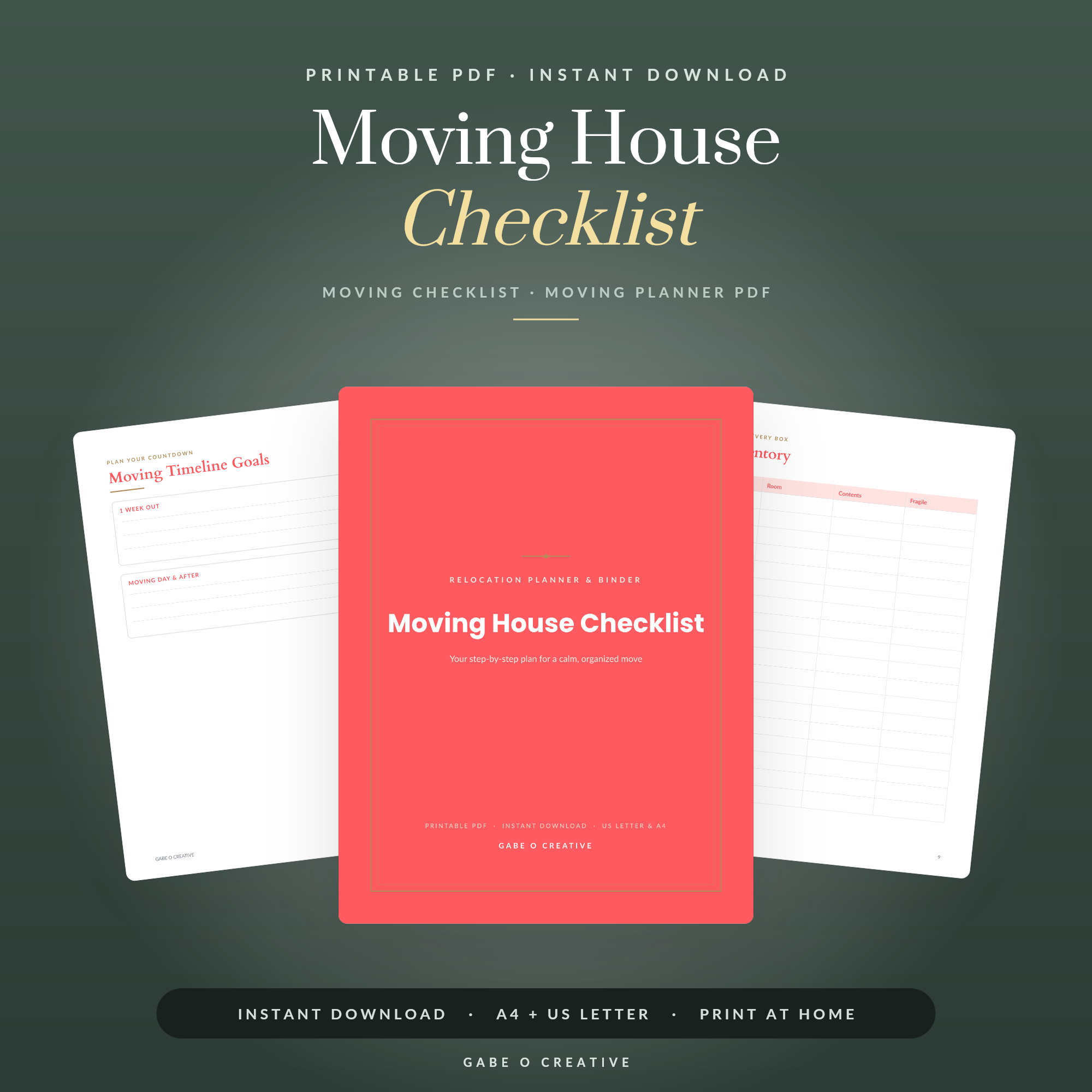
A moving abroad checklist that only covers packing boxes and forwarding your post is a domestic moving checklist wearing a passport. The admin that actually delays or derails an international move is different in kind, not just degree: visas with hard prerequisites, banking that won't simply follow you, healthcare gaps, and a tax residency question most people never think to ask until a form demands an answer. Our moving house checklist planner is a solid base for the logistics, but this is the layer on top of it that's specific to leaving the country.
Planning a move abroad right now? Start with the moving checklist planner for the packing and logistics side, then work through the sequencing below before you book anything irreversible.
 Shop Important Documents Organizer →
Why Moving Abroad Is a Different Problem
Moving house is mostly logistics done in parallel: you can pack, notify utilities and book a van at the same time, in almost any order, and it still works out. Moving abroad is mostly logistics done in sequence, because several of the biggest tasks have hard dependencies on each other. You often can't open a local bank account without a visa. You can't get some visas without proof of health insurance. You can't get some insurance without a local address. Get the order wrong and you can lose weeks waiting on something that was blocked by a step you skipped.
If you're relocating within the same country, our moving house checklist covers the six-week domestic timeline properly, packing systems, utility transfers, moving day itself. Everything below assumes you've already got that logistics layer handled and need the international layer on top of it.
Visas and Legal Status First
This is the one piece of the puzzle with a fixed external timeline you don't control, so it goes first regardless of anything else.
- Confirm the exact visa category you qualify for, work, study, family, or residency by investment, since requirements differ enormously between them.
- Start document gathering early. Criminal record checks, apostilled certificates and translated documents can each take weeks on their own, before the visa application even opens.
- Check the entry-to-residency gap. Some visas grant entry immediately but residency status (and the rights that come with it, banking, healthcare, renting) only after a local registration step once you've arrived.
- Note the renewal date the day you get it. Missing a renewal window abroad is a far bigger problem than missing one at home.
 Shop Password Keeper →
Banking and Money Across Two Countries
Banking is where the sequencing problem shows up hardest, because a lot of "simple" tasks quietly require a local address, a local phone number, or a local ID that you won't have on day one.
Before you leave
Tell your home bank you're moving and confirm which accounts and cards will keep working abroad. Set up at least one card with low or no foreign transaction fees, since you'll rely on it heavily in the gap before local banking is sorted. Keep a password record of every account you'll need to log into from abroad, a printed password keeper is genuinely useful here, since resetting forgotten logins from a new country with a new number is its own small nightmare.
After you arrive
Open a local account as soon as your visa status allows it, since many everyday things, a phone contract, a rental deposit, a local salary, depend on having one. Keep your home account open until the new one is fully functional; closing it too early is a common regret if anything from home still needs settling.
| Task | When to do it | Why it matters |
|---|---|---|
| Notify home bank of the move | 4-8 weeks before | Prevents cards being frozen for "suspicious" overseas activity |
| Get a low-fee travel card | Before departure | Bridges the gap before a local account exists |
| Arrange proof of address abroad | First 2 weeks | Usually required to open a local account |
| Open local bank account | As soon as visa allows | Unlocks phone contracts, rentals and local salary |
Healthcare, Before You Need It
Do not leave this until something goes wrong. Check whether your destination requires proof of health insurance as part of the visa itself, and separately, whether public healthcare access starts immediately or only after a residency waiting period, they're often not the same date. If there's a gap, a bridging private policy covering at minimum the first three to six months is worth the cost. Bring copies of prescriptions, vaccination records and any ongoing treatment history translated if needed, since a new doctor abroad starts from nothing without them.
 Shop Home Inventory →
Shipping, Storing or Starting Over
International shipping is priced by volume, not weight, which changes the maths on what's worth bringing. A full house move overseas can easily cost more than replacing the furniture on arrival, once duty, delays and insurance are added up. A useful filter: ship what's expensive to replace or genuinely irreplaceable, sell or donate the bulky mid-value stuff, and plan to buy furniture locally once you know your actual space. Photograph everything you're shipping or storing before it leaves your hands, our home inventory tracker is built for exactly this, and it doubles as the record you'll want if anything goes missing in transit or needs an insurance claim.
Tax Residency: The Question People Forget to Ask
Leaving a country does not automatically end your tax residency in it. Most tax authorities use a mix of day-count tests and continuing ties, a home kept available, family still resident, ongoing work, to decide whether you're still liable. This is genuinely worth a proper conversation with an accountant who handles cross-border cases before you leave, not after a tax year has already closed with an answer you didn't intend. Keep every document that supports your position: flight dates, tenancy start dates abroad, employment contracts, in one place rather than scattered across two countries' worth of email.
The Paperwork Layer That Ties It Together
Across all of the above, one habit does more work than any single checklist item: keep every important document, visa approval, insurance policy, bank confirmation, tenancy agreement, in one place you can access from either country. An important documents organizer gives that a physical home before you travel, and it's worth building a digital backup of the same set (scanned copies, cloud-stored) in case the physical folder is what's in the shipping container. For the household admin that continues once you're settled, day-to-day bills, appliance warranties, the same emergency-planning approach as a domestic move applies, our emergency preparedness binder works just as well built around your new address as your old one.
If part of the move is a big life-stage transition rather than a relocation for work, starting a course abroad, for instance, our starting university admin checklist covers the enrolment and registration side that runs alongside everything above. And if you bought or are buying property as part of the move, the first home admin checklist covers the household side once you're actually in the door.
Moving Abroad FAQs
What is the hardest part of moving abroad?
Not the packing, the sequencing. Visas, banking, healthcare and housing all depend on each other, so the order you tackle them in matters as much as doing each one properly. Most delays happen because something was started before its prerequisite was in place.
How early should I start visa paperwork?
As soon as you have a confirmed reason to move, job offer, course place or visa sponsor, since most visa categories take three to six months and some require documents (like a criminal record check) that themselves take weeks to obtain.
Can I keep my bank account when I move abroad?
Often yes for a home-country account, but many banks restrict or close accounts once you're no longer resident, and some services (like applying for credit) become harder without a local address. Open a local account as early as your visa or entry status allows, and keep the home account open until the new one is fully working.
Do I need private healthcare when moving abroad?
It depends on the country's residency rules. Some require proof of health insurance before granting a visa, and public healthcare access often only starts after a residency threshold, so most people need a bridging private policy for the first months regardless of the destination.
Should I ship my belongings or start over?
Ship what's expensive to replace or irreplaceable, sell or store everything else. International shipping is priced by volume, not weight, so a full house move overseas often costs more than replacing the furniture would, once duty and delays are factored in.
What happens to my tax residency when I move abroad?
You don't automatically stop being tax resident in your home country the day you leave. Most countries use day-count tests and other ties (a home, family, work) to decide, so get this checked properly rather than assuming a change of address settles it.
Start the logistics side today. The moving house checklist planner keeps the packing and admin in one place, or browse the full Home & Organization collection for the documents organizer and inventory tracker to go with it.