A pet care planner is not really for you. You already know that the cat gets a third of a tin twice a day and hides under the bed during fireworks. It is for the neighbour feeding her while you are away, the sitter who has never met her, and the day you are unexpectedly in hospital and someone else has to work it out. Written for that reader, it becomes genuinely useful — and it stops being a scrapbook. The Pet Care Planner is laid out on exactly that principle.
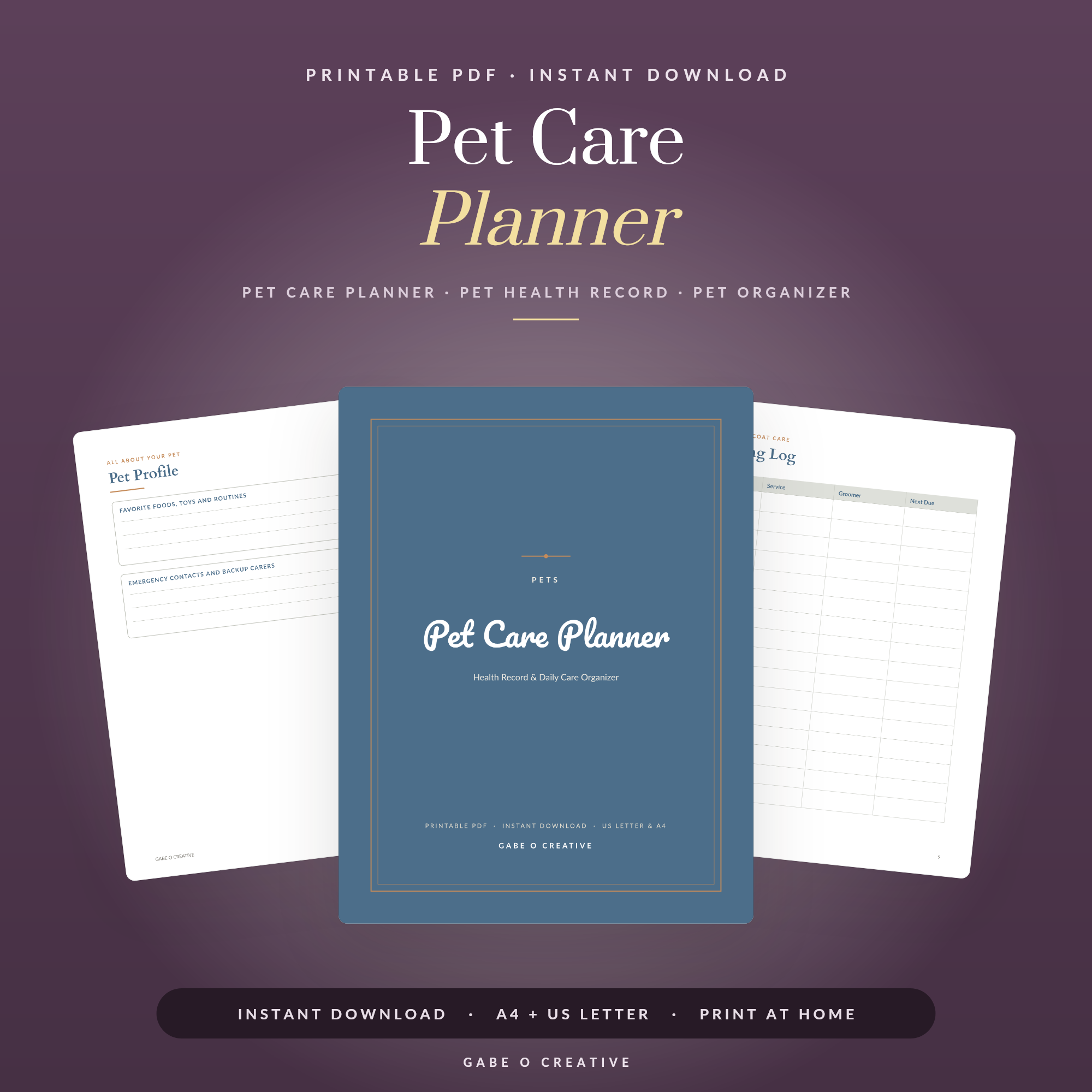
Going away this summer? The Pet Care Planner covers vet details, vaccinations, feeding, medication and a sitter handover page — print one per animal and leave it on the counter.
 Shop Dog Health Binder →
The Records That Get Asked For
Four things get requested by other people, usually at short notice, and all four are annoying to reconstruct:
- Vaccinations — dates given and dates due. Kennels and groomers will ask before they will take your animal.
- Worming and flea treatment — product used and date, because "sometime in spring" is not an answer a vet can work with.
- Microchip number — and, critically, whether the details registered against it are still current. A chip registered to an old address and a disconnected phone is worse than useless.
- Insurance — policy number and provider, not the whole document.
The one nobody records: weight
Weight drives medication doses and feeding amounts, and it is the earliest visible sign that something is wrong. Day to day you will never notice a slow change — but four numbers over a year make it obvious. Write it down at every vet visit, even a routine one.
Feeding, Written for a Stranger
"Half a cup, twice a day" means nothing without the cup. This is the section where households consistently under-specify, because the person writing it has never had to guess.
Amount by weight or a named scoop, times of day, what food specifically, where it is kept, and what happens if the animal does not eat it. Then the things people only mention verbally: which treats are allowed, what they absolutely must not have, whether the dog food bowl needs to be away from the cat.
| Vague | Usable |
|---|---|
| "A scoop of the dry food" | "One level blue scoop (in the tub), 60g, 7am and 6pm" |
| "Walk her in the morning" | "20–30 min before 9am. Lead on until the gate at the field." |
| "She has her tablet daily" | "Half a tablet in the morning, hidden in cheese. Box in the fridge door." |
| "Ring me if there's a problem" | "Vet: [name, number]. Ring them first for anything urgent, then me." |
That right-hand column takes five minutes to write once and answers almost every message a sitter would otherwise send.
The Sitter Handover Page
One page, on the counter, that a stranger can act on. Everything else in the planner can live in a folder — this page goes where it will be seen.
It needs: feeding amounts and times, the walking or toileting routine, medication, where food, leads and litter are kept, what the animal is frightened of, the vet's name and number, your contact details, and one line on what counts as an emergency versus what can wait.
That last line matters more than it sounds. Most sitters are not worried about a genuine crisis — they are worried about whether being sick once is normal. Telling them what is normal for your animal prevents both the unnecessary midnight text and, more importantly, the hesitation on the night something genuinely is wrong.
Print one per animal
Never a shared page. Two dogs on one sheet is how the wrong dose goes to the wrong dog, or the cat gets fed twice because two people each read the shared line. A name at the top of each page removes the entire category of mistake for the cost of one more sheet of paper.
 Shop Dog Training Log →
What Kennels and Groomers Ask For
If you ever board your animal, the planner stops being a nicety. Most kennels and catteries will not take a booking without proof of vaccination, and many want it a set number of weeks before arrival rather than on the day.
Expect to be asked for: current vaccination certificate including kennel cough where required, flea and worming dates, any medication with dosing instructions, your vet's details, and emergency contacts for someone who is not away with you. That last one catches people out — a contact who is on the same holiday is not a contact.
Groomers ask less but ask earlier: vaccination status, any skin conditions, and whether the animal has ever bitten or panicked during handling. Being straight about that last one gets you a better appointment, not a refused one.
Having it all on one sheet turns a stressful phone call into reading four lines aloud, usually while the person on the other end is waiting.
Keeping It Current
A pet planner rots faster than most household documents, because vaccinations, weight, medication and even the vet practice all change. Tie the review to something that already happens annually — the booster appointment is ideal, since you are updating the vaccination page anyway and you have just weighed the animal.
Date the sitter page every time you touch it. Anyone reading it can then tell whether they are looking at current instructions or last year's, which is genuinely useful information when the food has changed since.
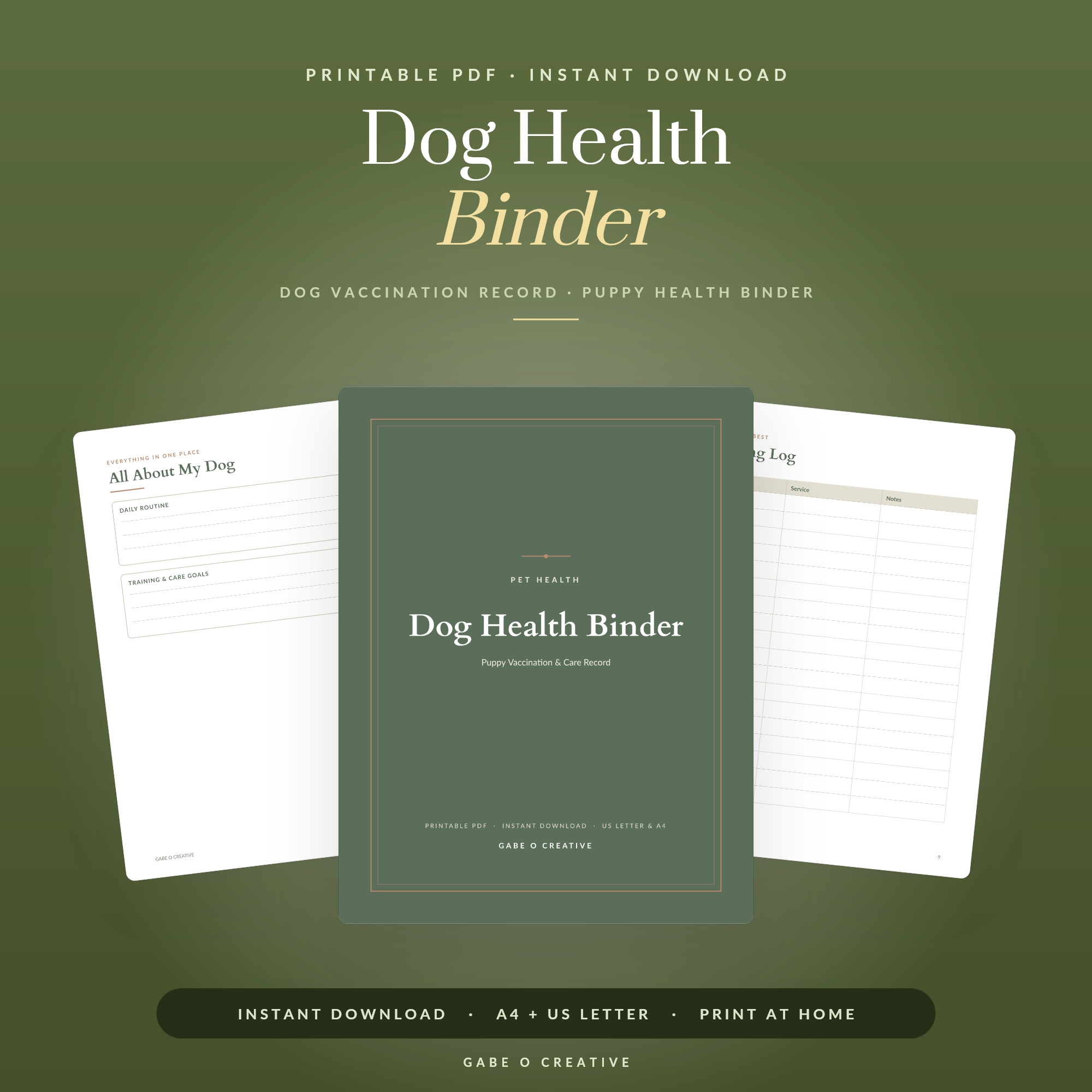
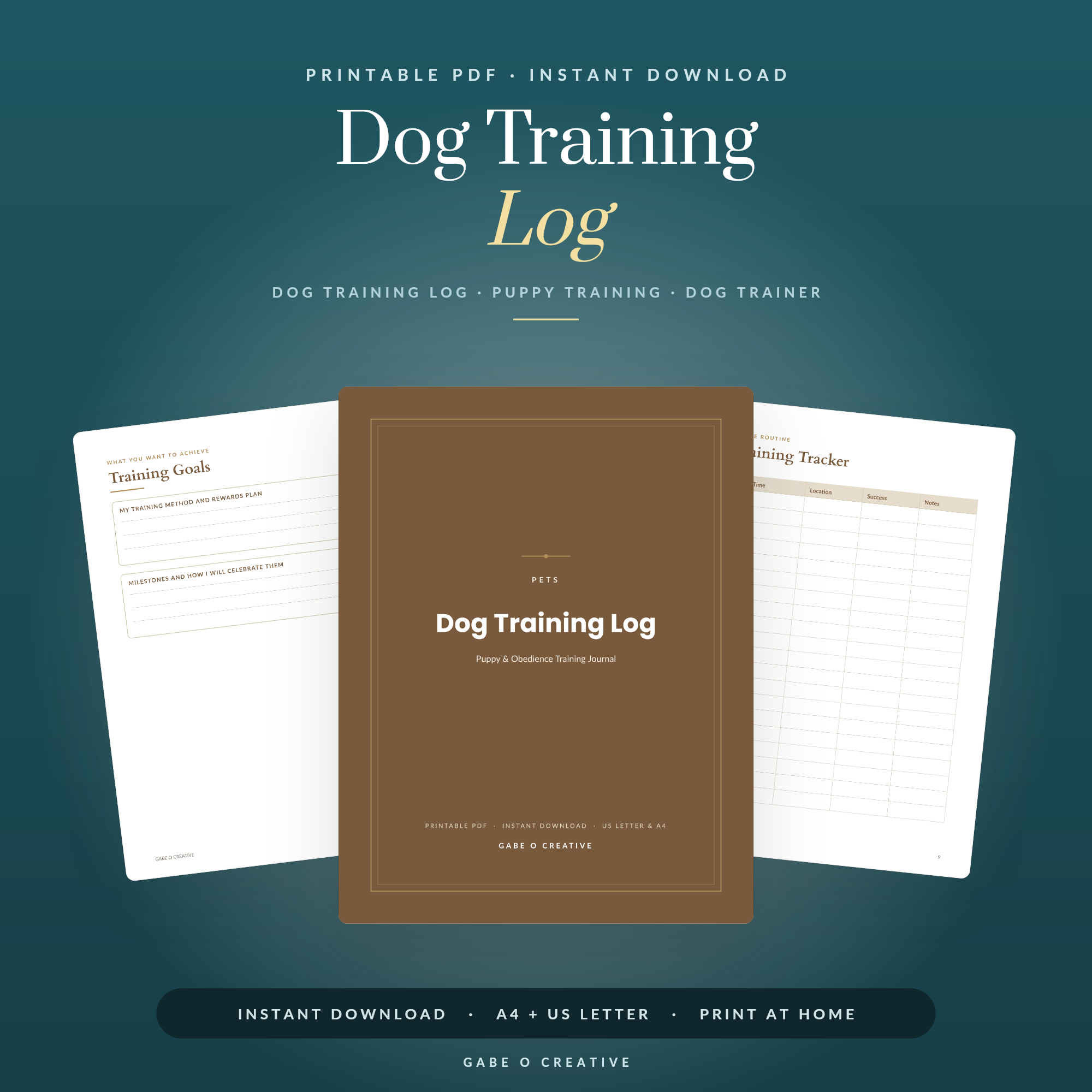
If your animal's medical history is the bulk of what you are tracking, the dog vaccination and health binder goes deeper on that side, and our guide to the dog vaccination record printable covers what to log and when. Travelling with them rather than leaving them behind changes the requirements again — pet travel planner printables covers documents and journey planning. And for a puppy or a dog in training, the dog training log tracks the part a sitter also needs to know: which commands they actually respond to.
 Shop Pet Care Planner →
Pet Care Planner FAQs
What should a pet care planner include?
Vet details, vaccination and worming dates, microchip number, feeding amounts and times, medication, insurance policy reference, and a one-page sitter handover. The test is whether someone who has never met your pet could look after it for a weekend.
How long should I keep vaccination records?
For the life of the animal. Kennels, groomers, insurers and some rental agreements all ask for proof, and "the vet has it" is not always enough when you need it on a Saturday morning. Keep your own copy of dates alongside the card.
What does a pet sitter actually need to know?
Food amount and timing, where things are kept, the walking or toileting routine, anything the animal is frightened of, the vet's number, and what counts as an emergency. Most sitter problems are not emergencies — they are not knowing how much food is a portion.
Should I record my pet's weight?
Yes, and it is the most under-rated entry. Medication doses, feeding amounts and early signs of illness all key off weight, and a slow change over months is invisible day to day but obvious on a list of four numbers.
Do I need this if I only have one, easy pet?
The planner earns its place the first time you are not there — a hospital stay, a delayed flight, an emergency. It is written for the day you cannot answer the phone, which is precisely the day nobody can ask you.
What about multiple pets?
One page per animal, always. Shared pages are where mistakes happen — the wrong dose to the wrong dog, the cat fed twice. Separate sheets with the animal's name at the top take thirty seconds more and remove the whole category of error.
An organisational aid only — it is not veterinary advice. For anything about your animal's health, ask your vet.
Write it for whoever comes next. Print the Pet Care Planner, fill in the sitter page first, and leave it where it will be found — or browse the full Hobbies, Pets & Travel collection.