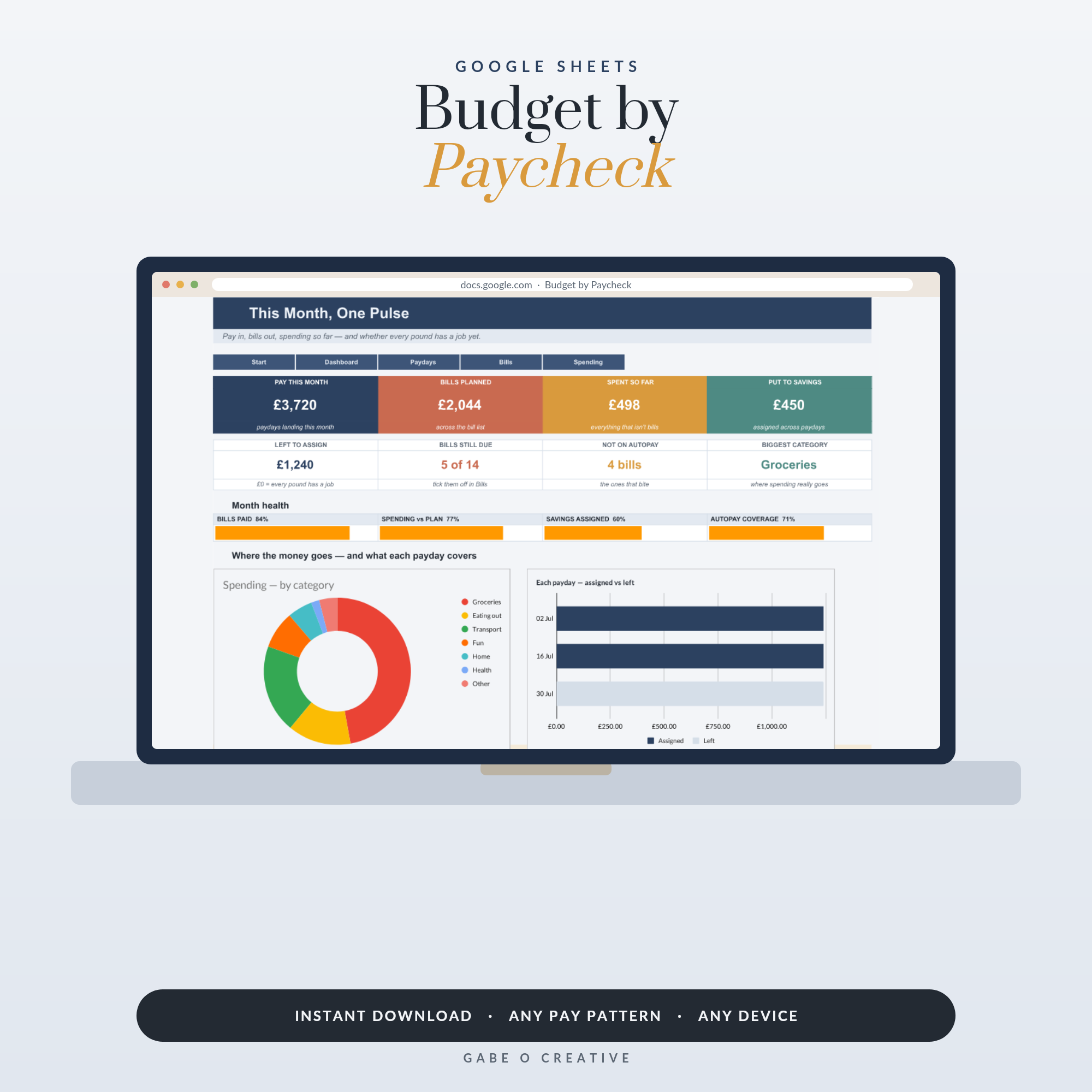
Weekly, biweekly and monthly budgeting can all work. Use a monthly view to understand regular bills, then assign money from the paydays that arrive before each bill is due. Your review schedule does not have to be identical to your pay schedule.
Correction, 8 September 2026: the previous £900 rent example suggested two payments of about £415 without explaining the missing reserve. Two such payments do not cover £900. The corrected examples below separate annual averages from money available on the due date.
Biweekly is not twice a month
Biweekly means every two weeks, also called fortnightly. A typical year has 26 such paydays, while twice-monthly pay has 24. Weekly pay commonly has 52 paydays. Check your employer's calendar: the actual number can differ in some years, so build your plan from dates rather than assuming every year is identical.
For the following illustrative calculations, assume 52 weekly, 26 fortnightly or 24 twice-monthly payments and twelve rent bills of £900. Annual rent is £10,800.
| Pay schedule | Calculation | Reserve per payday |
|---|---|---|
| Weekly: 52 payments | £10,800 ÷ 52 | £207.70, rounded up |
| Fortnightly: 26 payments | £10,800 ÷ 26 | £415.39, rounded up |
| Twice monthly: 24 payments | £10,800 ÷ 24 | £450.00 |
| Monthly: 12 payments | £10,800 ÷ 12 | £900.00 |
Rounding up by a penny avoids a small annual shortfall, but it does not solve a shortage before the next bill. The reserve must already contain enough money when a month has fewer paydays.
Worked example: the first rent bill with no reserve
Suppose rent is due on 1 October and you will receive two paycheques before then, on 11 and 25 September. Your rent pot starts at £0. Setting aside £415.39 on each payday gives £830.78, leaving £69.22 short.
| Date | Transfer to rent pot | Pot balance |
|---|---|---|
| Starting balance | — | £0.00 |
| 11 September | £450.00 | £450.00 |
| 25 September | £450.00 | £900.00 |
| 1 October: rent paid | −£900.00 | £0.00 |
The equal £450 split is only an example; unequal contributions can also cover the bill. If your available income cannot fund the total, changing the spreadsheet's schedule will not close the gap. Review essential bills and available support using MoneyHelper's budgeting guidance.
Work out the starting buffer from actual dates
List every rent-pot deposit and rent payment in date order for the coming year. Add each deposit, subtract each bill and keep a running balance starting from zero. The largest negative balance is the extra reserve this schedule needs at the start. Repeat if pay dates or rent change.
In the first-month example, the annualised transfers need at least £69.22 already in the pot just to meet that first bill. Do not assume that amount is sufficient for the whole year: inspect every subsequent due date too. A deposit arriving after the bill cannot cover it on time.
Is a third paycheque spare money?
Only after checking what it must fund. With the 26-payday reserve method, all 26 rent contributions form part of the £10,800 annual plan. Spending the third paycheque without making its planned contribution can create a later shortfall. If you instead fund monthly bills from two paycheques, still allow for food, transport and other costs during the extra fortnight before deciding what is spare.
Choose a review routine you can maintain
Monthly-paid readers can release a weekly spending allowance without pretending income arrives weekly. Weekly-paid readers can keep a monthly bills overview while assigning each wage as it arrives. For variable income, start with money actually available and identify the essentials due before the next reasonably expected payment.
If a ready-made layout would help, compare the Budget by Paycheck spreadsheet with the printable Paycheck Budget Planner. These tools organise your plan; they do not decide what you can afford.
Questions and answers
Do I have to budget on the same schedule as my pay?
No. You can plan monthly totals, allocate each paycheque and review spending weekly. Check that the money is available before each bill falls due.
How do I convert a monthly bill to a fortnightly reserve?
For a year with 26 fortnightly paydays, multiply the monthly bill by 12 and divide by 26. Round sensibly and check a dated running balance to establish the starting reserve.
Can I just halve each monthly bill?
Halving works for a plan funded by two contributions per month. It is different from spreading the annual cost across all 26 fortnightly paydays. Choose a method explicitly and verify the due dates.
Sources and checks
Source links checked on 8 September 2026. Examples marked as illustrative are created for this guide; they are not customer results.