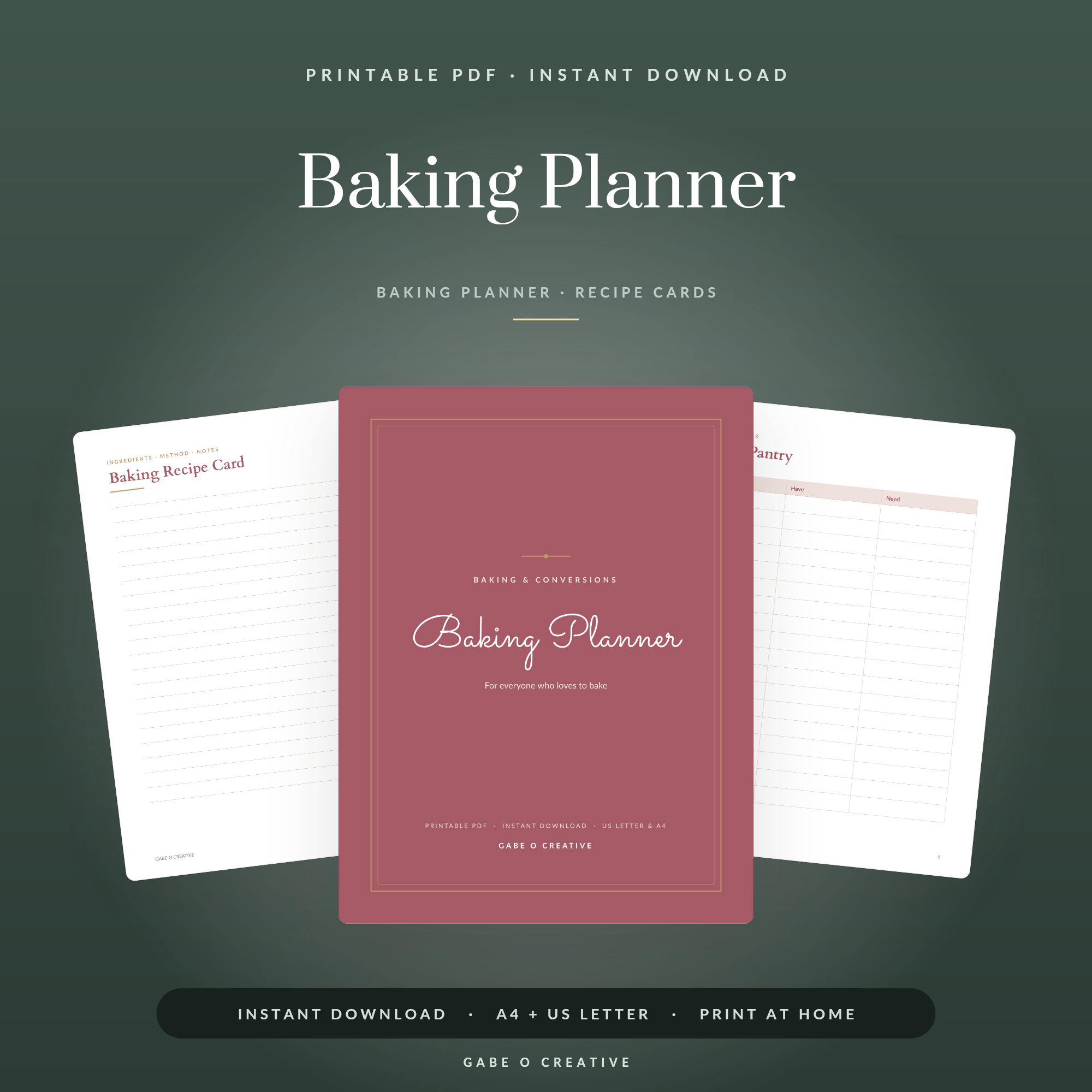
A baking planner is what turns baking from a lovely but slightly chaotic hobby into something you can actually rely on — you know what a batch costs, how to time it around one oven, and which version of the recipe was the good one. Our Baking Planner covers recipe cards, kitchen conversion charts, a bake schedule, ingredient inventory and a tried-and-loved ratings page, so nothing you learn from one bake gets lost by the next.
Baking again this week? Grab the Baking Planner and stop re-learning your own recipes from memory.
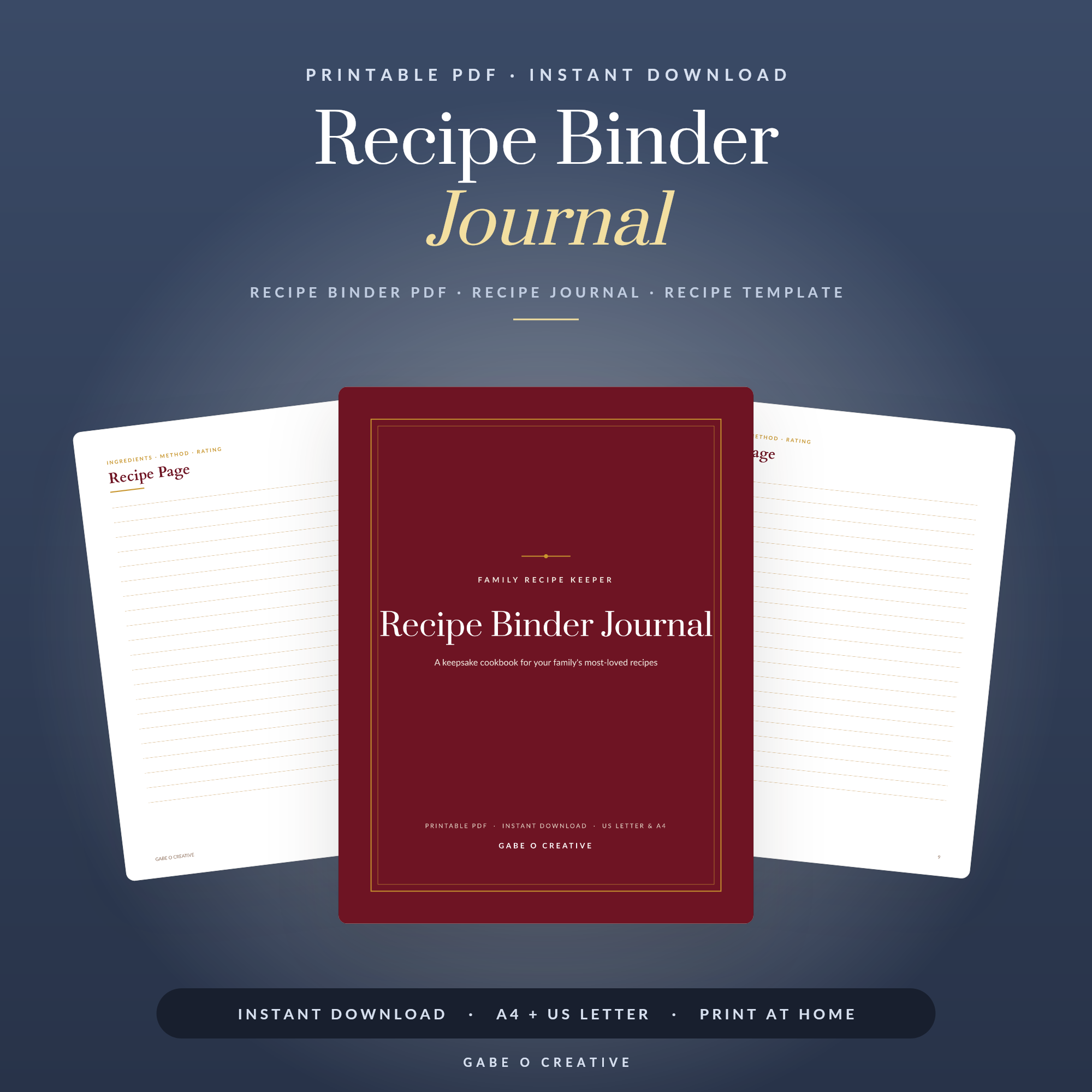 Shop Recipe Binder Journal →
What Is a Baking Planner and Why You Need One
A recipe card tells you what to bake. A baking planner tells you everything around the recipe that actually determines whether the bake goes well: how much it costs, when to start it, how it compares to last time, and what to change next. It's the difference between baking the same cake three times and getting three different results, or baking it three times and getting slightly better each time because you wrote down what worked.
A proper baking planner gives you:
- A cost per batch, so you know what you're really spending — or charging, if you sell or gift your bakes.
- A bake schedule that plans backwards from when something needs to be ready.
- Kitchen conversion charts for the moment a recipe uses cups and your scales use grams.
- A ratings and notes page so "turn it down five degrees next time" doesn't just live in your head until you forget it.
It sits alongside a recipe binder rather than replacing one. A recipe binder is where a bake lives once it's finished and reliable. A baking planner is the working space where you get it there.
Costing Your Bakes So You Actually Know the Numbers
Most home bakers can tell you roughly what a bake costs. Few can tell you exactly — and "roughly" is how bake sales lose money and gifted bakes quietly become an expensive habit nobody budgeted for.
What to include in your cost per batch
A proper cost per batch has three parts, not one:
| Cost element | Easy to forget |
|---|---|
| Ingredients (per amount actually used, not per pack) | Small quantities of spices, extracts and food colouring |
| Your time, at a fair hourly rate | Cooling, decorating and cleanup time, not just active baking |
| Packaging, boxes or delivery if it's leaving the house | Ribbon, boxes, stickers and fuel if you're dropping it off |
Once you have a true total, divide by the number of servings, slices or items to get your real cost per unit. That single number is what makes a bake sale price sensible, tells you whether a "quick favour" cake for a friend is actually a two-hour, £15 favour, and stops you underselling anything you take orders for. Write it on the planner page once and you never have to work it out from scratch again — next time, you're adjusting, not starting over.
Timing: Building a Bake Schedule That Doesn't Wreck Your Kitchen
Most baking disasters aren't about the recipe — they're about timing. Two things going in the oven that both need to come out in nine minutes, buttercream made too early and gone soft, a cake meant to be iced by 4pm still cooling at half past three. A bake schedule fixes this before it happens rather than while it's happening.
Staggering ovens and proving times
Work backwards from your deadline. If a celebration cake needs to be finished and out the door by 5pm, decorating takes an hour, cooling takes at least two, and baking takes forty minutes — that puts you starting well before lunch, not after it. Batch anything that freezes well (sponges, cookie dough, buttercream, shortbread) two or three days ahead so the day itself is only assembly and finishing, not a race against your own oven. If you're making several things for one occasion, stagger start times so only one item needs the oven's full attention at once, and note the order on your planner page so you're not working it out under pressure next time.
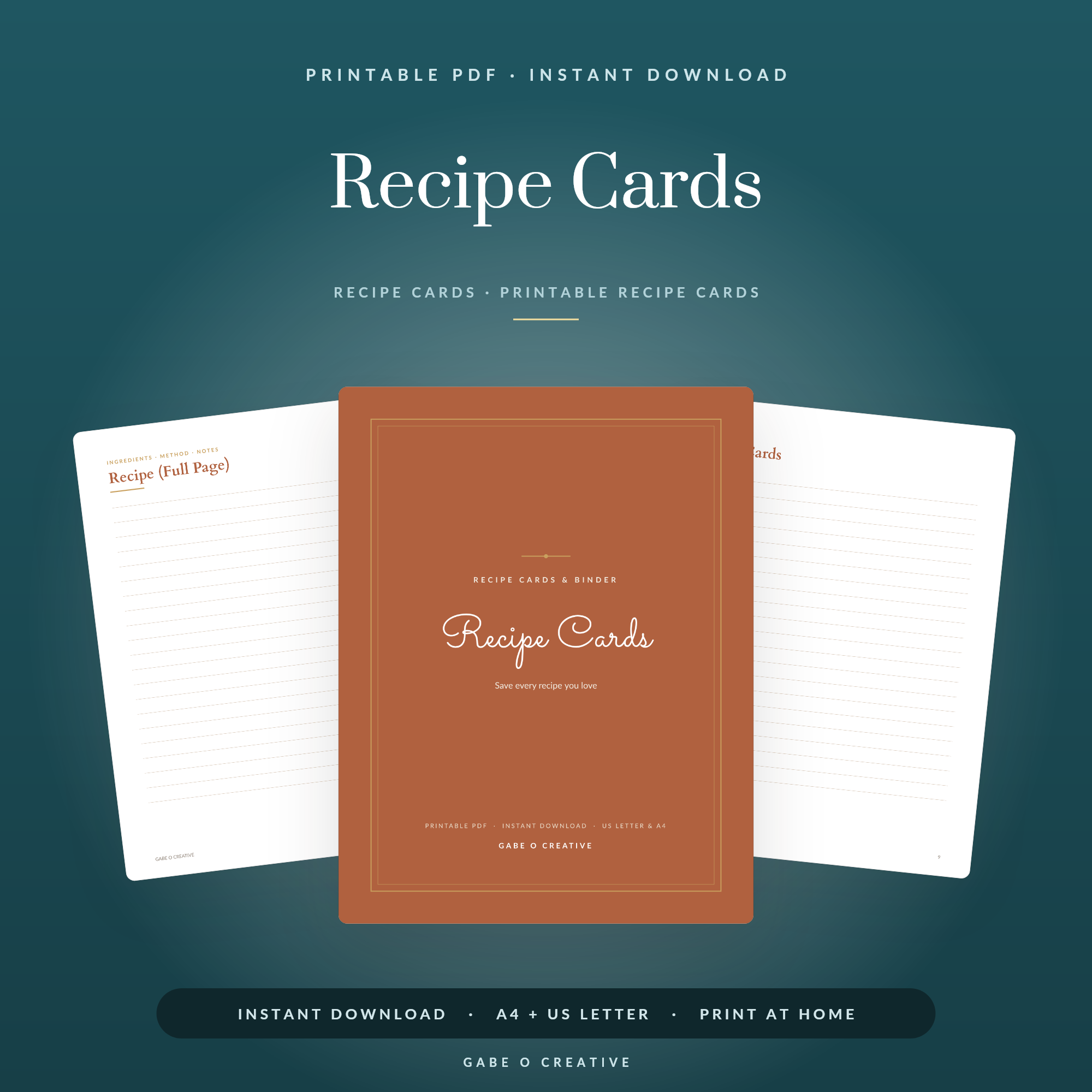 Shop Recipe Cards →
Batch Notes: The Page That Stops You Repeating Mistakes
This is the page most home bakers skip, and it's the one that actually improves your baking over time. After every bake, note three things: what you'd change, what worked, and any substitution you made and how it turned out. "Oven runs hot, dropped to 170°C", "used salted butter, less sweet, good", "double the vanilla next time" — thirty seconds of notes that save you from making the same fix by accident three bakes later, or worse, forgetting it entirely and making the same mistake again.
Kitchen conversion charts belong on the same page for the same reason. The moment a recipe from a friend, a cookbook or the internet uses a different measurement system to your own scales or cups, you're translating on the fly and that's exactly when small errors creep in. Having grams-to-cups and oven temperature conversions in the same planner as your notes means you're never hunting for them mid-bake with flour on your hands.
Build a Baking System That Lasts
The Baking Planner covers costing, scheduling and notes, but a full kitchen system pairs it with a few other pieces. Once a recipe is finished and reliable, it deserves a proper home — our Recipe Binder Journal or the card-style Recipe Cards both give it one, indexed so you can find it again in seconds rather than scrolling through your phone. If you're preserving bakes that came from someone else's kitchen — a grandmother's shortbread, a friend's christening cake — the Family Cookbook template captures the story behind the recipe as well as the method.
A Freezer & Pantry Inventory is worth pairing with your bake schedule too, so you know what's already batched and frozen before you start something new from scratch. For more on getting recipes out of memory and into something permanent, see our guide on how to preserve family recipes before they're lost, and if you're building a proper cookbook rather than a working binder, our Canva recipe book template guide covers the design side. If baking sits inside a wider weekly routine, our meal prep planner guide covers the rest of the kitchen.
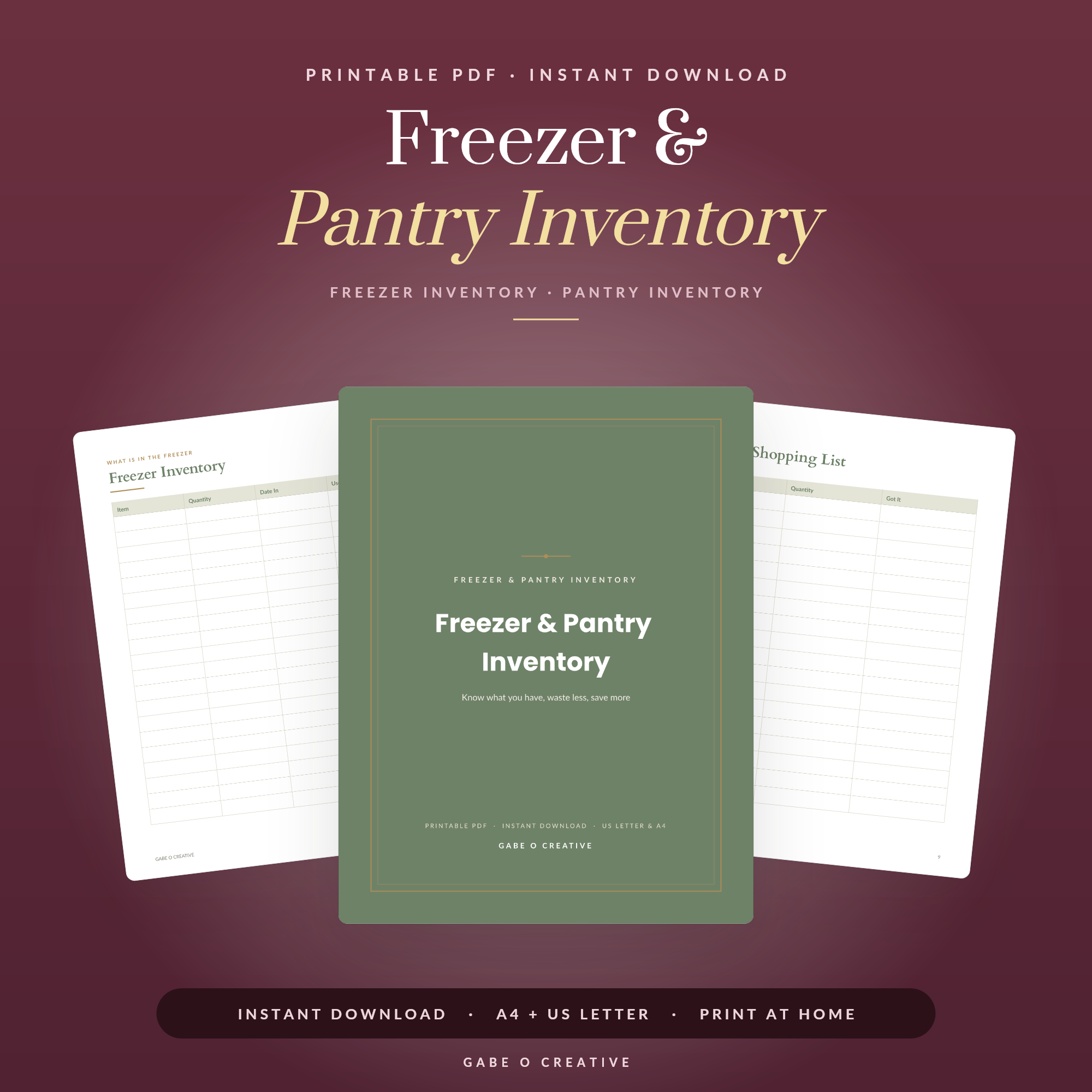 Shop Freezer & Pantry Inventory →
Baking Planner FAQs
What is a baking planner?
It's a printable system for bakers that goes beyond a normal recipe binder — it includes a bake costing page, a schedule for planning multiple bakes around one set of ovens, kitchen conversion charts, and a ratings page so you can note what actually worked.
How do I work out what a bake actually costs?
List every ingredient with the amount used and its per-unit price, add a fair figure for your time, and include packaging or delivery if the bake is leaving the house. Divide the total by the number of servings or items to get a true cost per slice, cupcake or loaf.
How far in advance should I plan a big bake?
For anything with more than two components — a layered cake, several dozen items for a sale — start the week before. Batch and freeze anything that freezes well (sponges, cookie dough, buttercream) two to three days ahead, and leave only the assembly and finishing touches for the day itself.
Why do my bakes turn out differently each time?
Usually because small adjustments never get written down — an extra two minutes in the oven, a swapped brand of butter, a lower oven temperature because your oven runs hot. Without notes, you re-learn the same fix from scratch every time you bake it.
What should I track for a bake sale or event?
How many of each item you made, how many sold, what people asked for that you didn't have, and your true cost per item versus what you charged. That record turns your next sale from a guess into a plan based on real numbers.
Do I need separate systems for recipes and baking planning?
Not necessarily — a recipe binder is where a dish lives once it's finished, while a baking planner is where you work out costing, timing and what needs tweaking before it earns a place in the binder. Many bakers use both together.
Ready to stop guessing? Grab the Baking Planner and cost, schedule and note your next bake properly.