Christmas dinner rarely goes wrong because somebody cannot cook. It goes wrong because eight dishes all want the oven at 200°C at half past one, and that arithmetic problem is invisible until the morning itself, when there is no longer a solution — only a compromise about which thing gets served lukewarm. Everything below exists to make that problem visible in November, when it is easy to solve. The Christmas Holiday Planner has the pages for it.
Hosting this year? The Christmas Holiday Planner covers the menu, the shopping list, the make-ahead schedule and the timings sheet — fill it in over a few evenings rather than all on Christmas Eve.
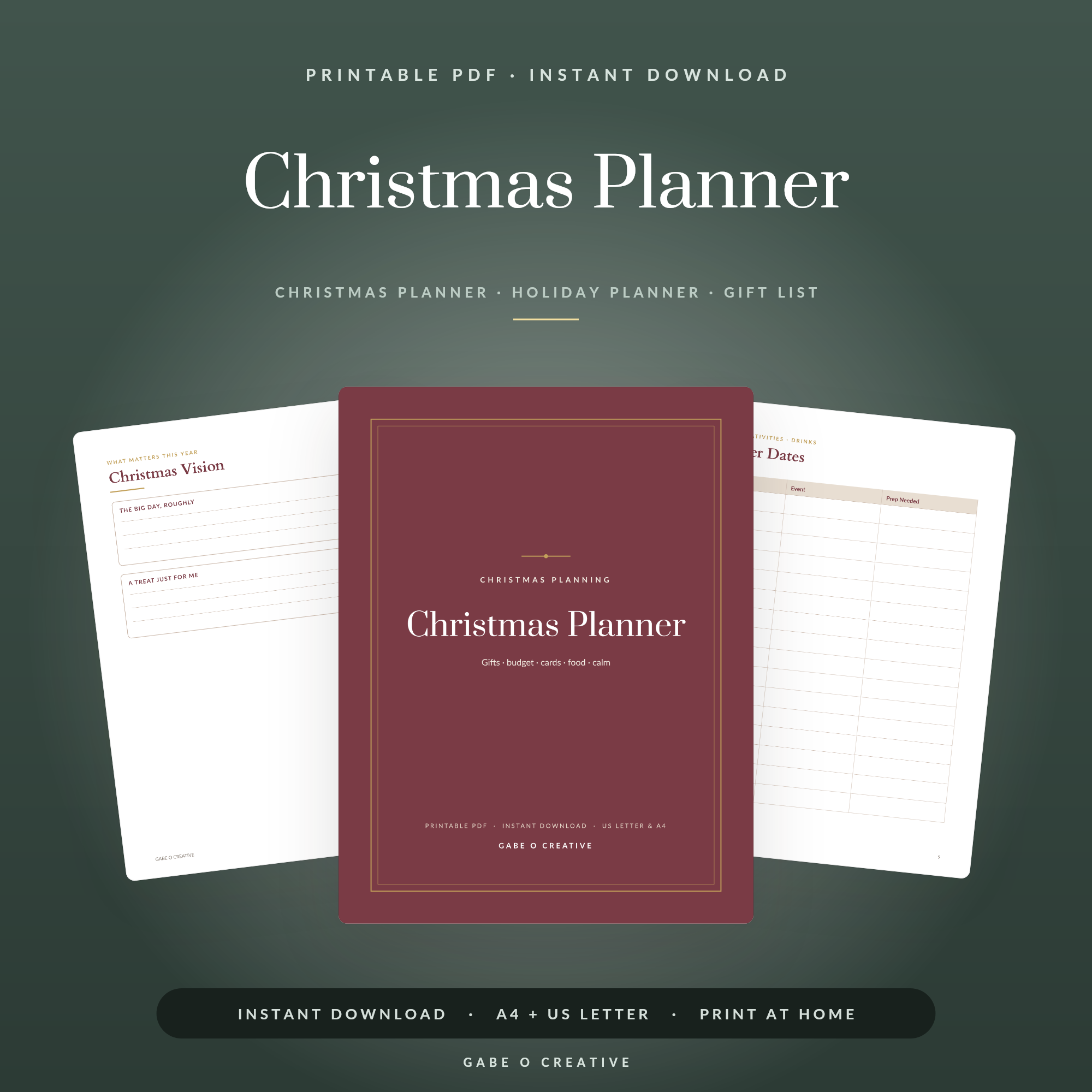 Shop Christmas Planner →
Plan Backwards, Not Forwards
Almost everyone plans forwards: get up, put the bird in, then panic in stages. Write it the other way and the whole day changes.
Put the serving time at the top of a sheet of paper. Then work backwards — resting, roasting, the point each thing goes in, the point each thing comes out for something else to go in. What you end up with is not a list of recipes. It is a schedule with times against it, and it can be handed to somebody else.
The resting window is your friend
A large bird wants 30 to 45 minutes resting, and it stays perfectly hot under foil. That window is not dead time — it is the entire second half of the plan. The potatoes crisp, the vegetables go on, everything made ahead gets reheated, and the oven is free because the thing that was monopolising it has come out.
People who fight the resting time have a difficult hour. People who plan around it have a calm one.
Oven Space Is the Real Constraint
Write down every dish that needs the oven, with its temperature and time. Most households discover the problem in about ninety seconds.
| Dish | Wants | Fix if it clashes |
|---|---|---|
| The bird | Hours, exclusive | Nothing — everything else works round it |
| Roast potatoes | High heat, 45–60 min | Par-boil days ahead, freeze, roast from frozen |
| Pigs in blankets | High heat, 25 min | Air fryer, or in during the rest |
| Stuffing | Moderate, 30 min | Cook the day before, reheat |
| Parsnips / veg | High heat | Hob or steam instead of roast |
| Bread sauce | Hob or oven | Make days ahead entirely |
The right-hand column is the actual work. Once you accept that not everything can be oven-roasted at the same temperature at the same time, the day becomes solvable — and the solution is nearly always cooking something earlier rather than cooking something worse.
Par-boiled potatoes freeze beautifully
The single best make-ahead. Par-boil, rough up the edges, cool, freeze on a tray. On the day they go straight into hot fat from frozen and come out better than most people manage fresh, because the freezing helps the texture. It removes twenty minutes of work from the busiest hour of the year.
What to Cook Days Ahead
The list is longer than most people attempt, and none of it is a compromise:
- Red cabbage — genuinely better after a couple of days
- Cranberry sauce — a week ahead, no difference
- Bread sauce — two days, reheat with a splash of milk
- Stuffing — cook the day before, reheat to crisp
- Vegetables — peeled and in water in the fridge overnight
- Gravy base — made ahead, finished with the roasting juices
Doing all six turns Christmas morning from a production line into an assembly job, which is the difference between hosting and enduring.
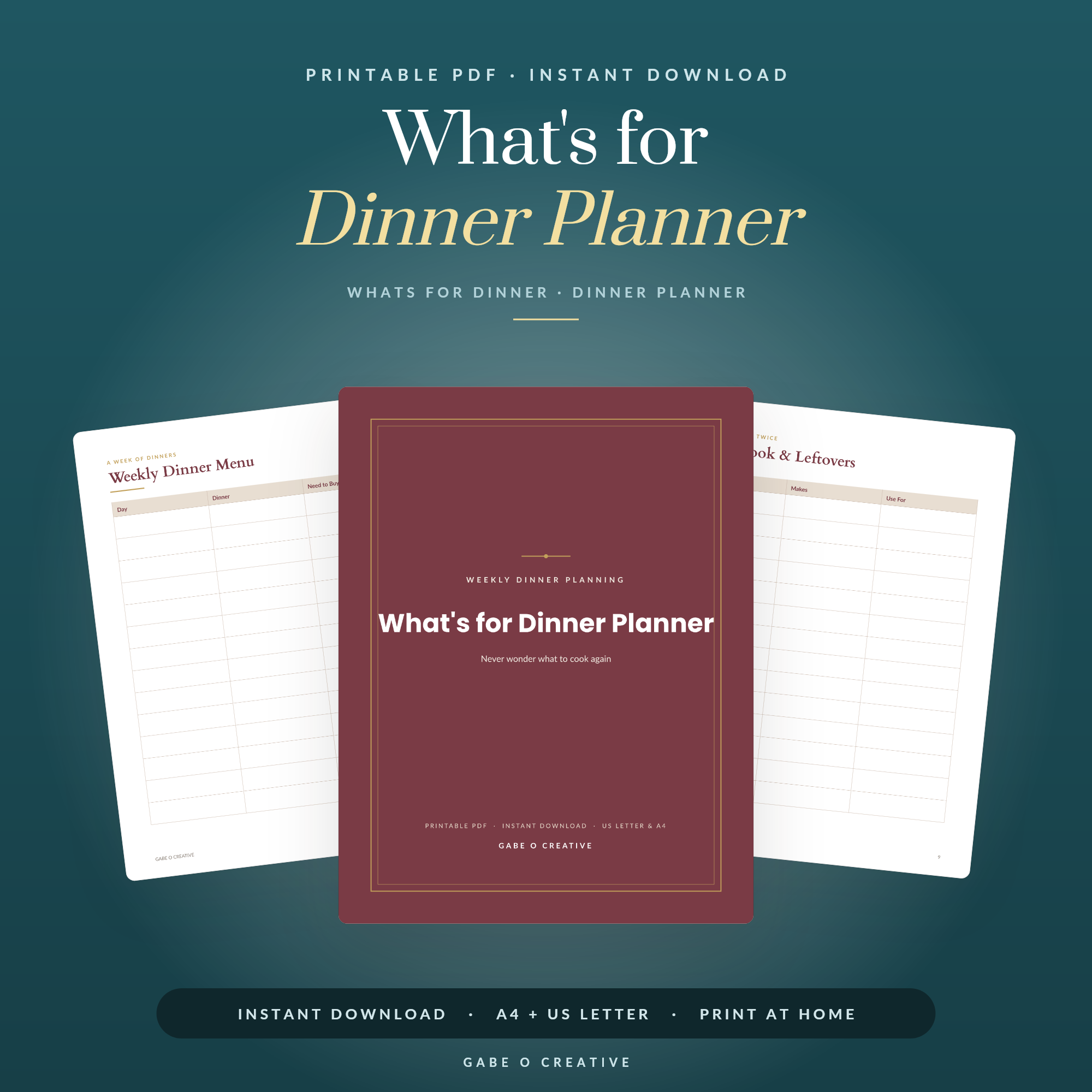 Shop What's for Dinner Planner →
Buy the freezer space, not just the food
A small point that catches first-time hosts. Everything you cook ahead has to go somewhere, and a domestic freezer in late December is usually already full of the things you bought early to avoid the last-minute shop.
Clear it out in the first week of December, before the make-ahead cooking starts. It is a twenty-minute job that quietly determines whether the plan above is possible at all — and it pairs neatly with a freezer inventory, since you will find things worth eating first.
Write It Down and Put It on the Wall
A timings sheet in your head helps nobody but you. On the wall, it lets other people act without asking.
The list should be blunt: 11:15 bird in. 12:45 potatoes in. 13:30 bird out, rest. 13:35 pigs in blankets in. 14:00 eat. Anyone in the kitchen can read it and see what needs doing next, and you stop being the only person who knows what happens in what order.
Assign whole jobs, not moments
The way to get real help is to hand over an entire area rather than instructions. Someone owns drinks all day. Someone owns laying the table. Someone owns washing up as things finish. That is genuinely delegated, and it does not require you to remember to ask at the right moment — which is the part that makes asking for help more tiring than doing it.
Cook for the people actually coming
Ask about dietary requirements in November, not on the day. A vegetarian main, a dairy-free gravy or a gluten-free stuffing are all straightforward with notice and genuinely stressful without it — and the person who needs one has almost always decided not to mention it rather than be a nuisance.
Ask directly, once, and write it on the menu page. It also affects the oven maths, because a separate main is another dish wanting space, and finding that out on Christmas Eve is how a calm plan becomes a scramble.
Start the Planning Early
The cooking is a one-day job. The planning is not, and spreading it is what makes December bearable.
November: decide the menu and how many people. Order anything specific — a particular bird, a delivery slot — because those go earlier every year. Two weeks out: the shopping list, split into what keeps and what must be fresh. A few days before: the timings sheet and the make-ahead cooking.
The money side wants the same treatment. Our guide to setting a Christmas budget covers working backwards from a total you can pay for, including the food, and the printable Christmas Planner holds both sides on paper. For the rest of the year's meals, the What's for Dinner menu planner does the weekly version of this.
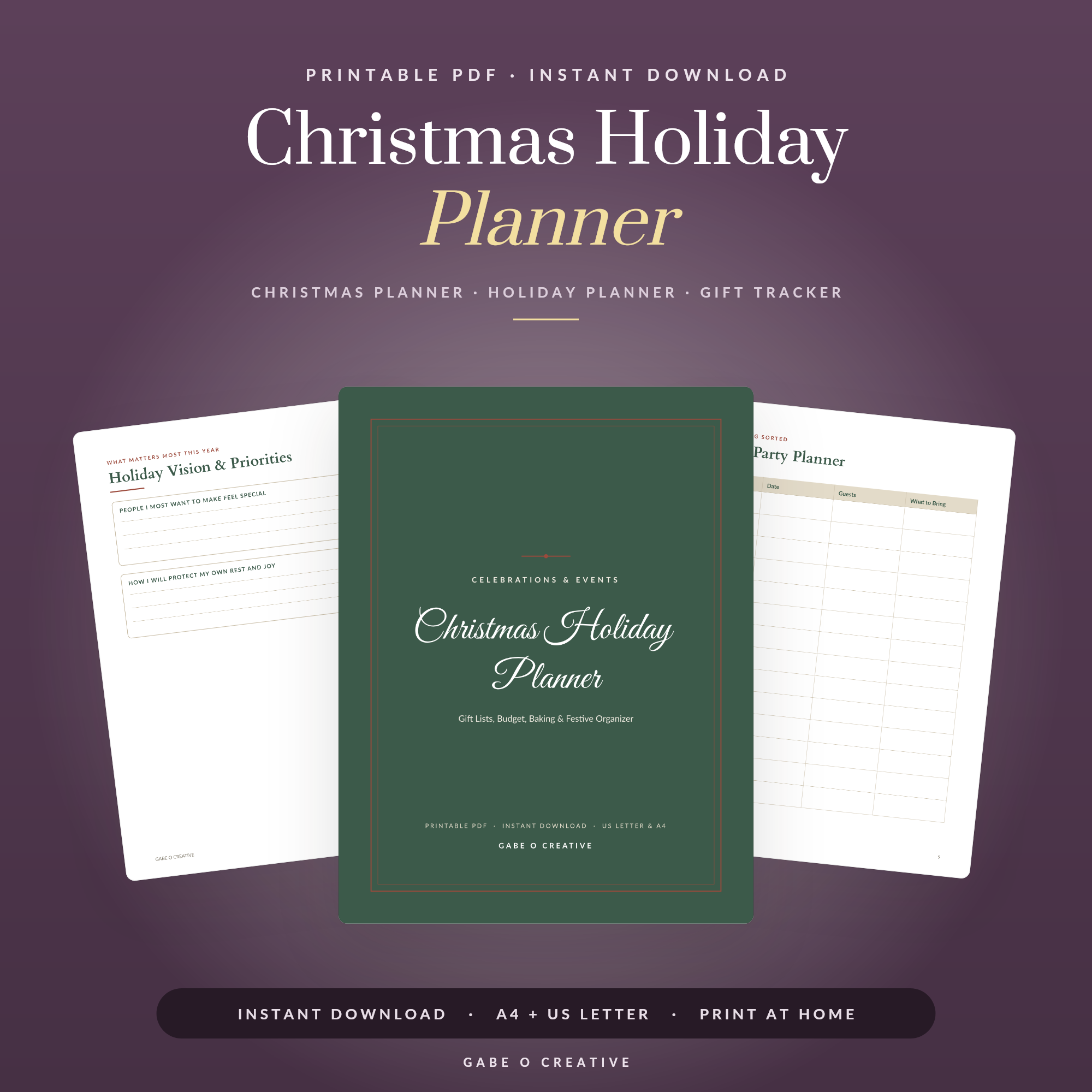 Shop Christmas Holiday Planner →
Christmas Dinner FAQs
How do I plan Christmas dinner timings?
Backwards from when you want to eat. Write the serving time at the top, then work back through resting, roasting and prep, giving each item its own start time. The list you end up with is a schedule rather than a recipe collection.
What can I make ahead of Christmas Day?
More than most people attempt: red cabbage, bread sauce, cranberry sauce, stuffing, peeled vegetables, and anything frozen weeks earlier. Cooking ahead is not a compromise — it is the single biggest reduction in Christmas Day pressure.
How do I manage oven space?
List everything that needs the oven with its temperature and time, and you will usually find the problem immediately. Solve it by moving items to the hob, the microwave or an air fryer, or by cooking them the day before and reheating.
How long should the meat rest?
Longer than feels comfortable — a large bird benefits from 30 to 45 minutes, and it stays hot. That resting window is when the roast potatoes finish and everything else gets reheated, which is exactly why the schedule works.
When should I start planning?
The menu in November, the shopping list two weeks out, the timings sheet a few days before. Anything ordered — a specific bird, a delivery slot — wants booking earlier than feels necessary, often in November.
How do I get help without micromanaging?
Assign whole jobs rather than moments — someone owns drinks, someone owns the table, someone owns washing up as it goes. A written list on the wall gets people helping without anyone waiting to be asked.
Cooking times and temperatures vary by oven, weight and recipe — follow the guidance for your specific bird and check it is cooked through.
Write the serving time first. Open the Christmas Holiday Planner, work backwards from it, and cook six things before the day — or browse the full Holidays & Seasonal collection.