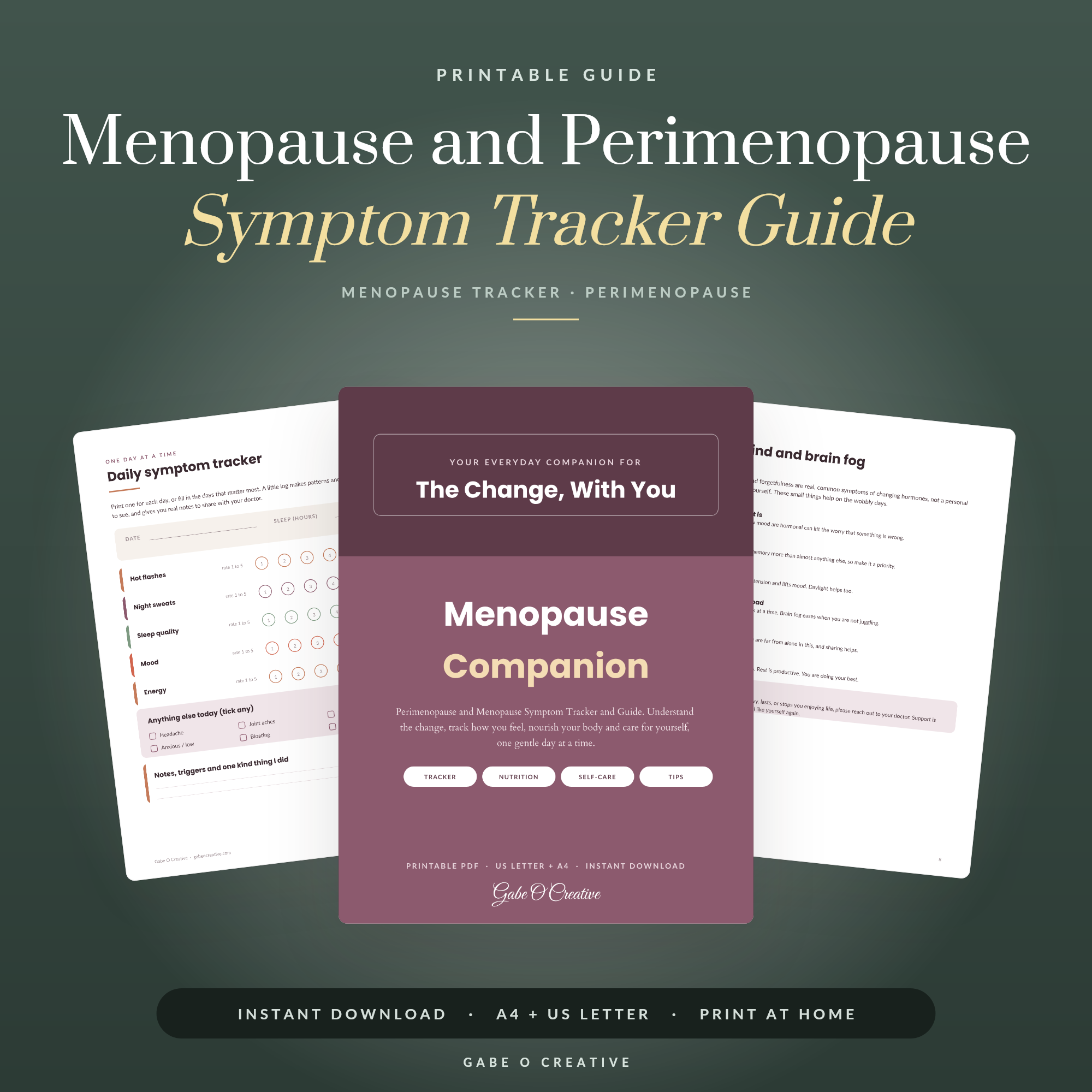
You can contact your GP about possible menopause or perimenopause symptoms without first completing a tracker. If taking notes helps you explain what is happening, bring whatever you have. A short summary is an organisational aid, not a diagnostic test or a requirement for care.
Correction, 8 September 2026: an earlier version described two weeks of tracking as a minimum and suggested a longer diary would make an HRT discussion more persuasive. Those requirements were unsupported and have been removed.
Start with what you want help with
The NHS recommends contacting your GP if you think you have symptoms and want to discuss your options. Do not postpone that conversation to fill a diary. A clinician can assess symptoms and other possible explanations, including whether any tests are appropriate.
Write one sentence about the change that concerns you most. For example: “My sleep has become interrupted and I am struggling to concentrate at work.” This is a fictional wording example, not a checklist that determines whether a symptom is significant.
Make a short summary with information you already know
- What changed, roughly when it began, and whether it is getting better or worse.
- How it affects daily activities, sleep, work or relationships.
- Any changes to your periods or bleeding, if applicable.
- Medicines, contraception, supplements and treatments you use or have tried.
- The questions you want to discuss.
It is fine to write “not sure” beside a date or frequency. Avoid guessing exact counts to make the page look complete. You do not need to establish a hormonal cause yourself.
| Topic | Example note |
|---|---|
| Main concern | Interrupted sleep; finding work harder |
| Timing | Started around July; exact date uncertain |
| Effect | Need to rest after work more often |
| Question | What might explain this and what are my options? |
If you choose to keep a diary
Use a format you can maintain: a note on your phone, a calendar or a plain sheet of paper is enough. Record the date, the symptom in your own words and any effect you want to remember. Bring existing notes rather than waiting to reach a target number of entries.
Keep sensitive notes somewhere private. You can take a summary to the appointment without sharing your entire journal. Our symptom tracker guide is an optional printable layout from our shop; buying it is not necessary to prepare or obtain care.
Questions you could bring
- Could these symptoms have another explanation?
- What treatment or support options fit my circumstances?
- Would HRT be suitable for me, and what benefits and risks should we discuss?
- What follow-up would you suggest, and when should I contact you again?
These are conversation prompts, not treatment recommendations. For background, the NHS explains what HRT is used for. Individual suitability belongs in the clinical discussion.
Bleeding that needs checking
NHS advice says to see a GP about vaginal bleeding after 12 months without a period, even if it happens only once or is a small amount. Do not wait to build a tracker before asking about it. See the NHS guidance on bleeding and other symptoms for the full advice.
This article provides general information about preparing notes. It is not a medical assessment and has not been clinically reviewed. The printable tracker overview describes available formats if you want a structured page.
Questions and answers
How long should I track symptoms before contacting my GP?
There is no diary-completion requirement in this guide. Contact your GP about your concerns and bring any notes you already have; do not delay seeking advice to complete a tracker.
Can a tracker diagnose perimenopause?
No. A tracker records observations. A clinician assesses symptoms, your history and whether any further assessment is appropriate.
Do I need to buy a printable?
No. Plain paper or a private note on your phone can be used to prepare questions. Choose a paid layout only if you find its format helpful.
Sources and checks
Source links checked on 8 September 2026. Examples marked as illustrative are created for this guide; they are not customer results.