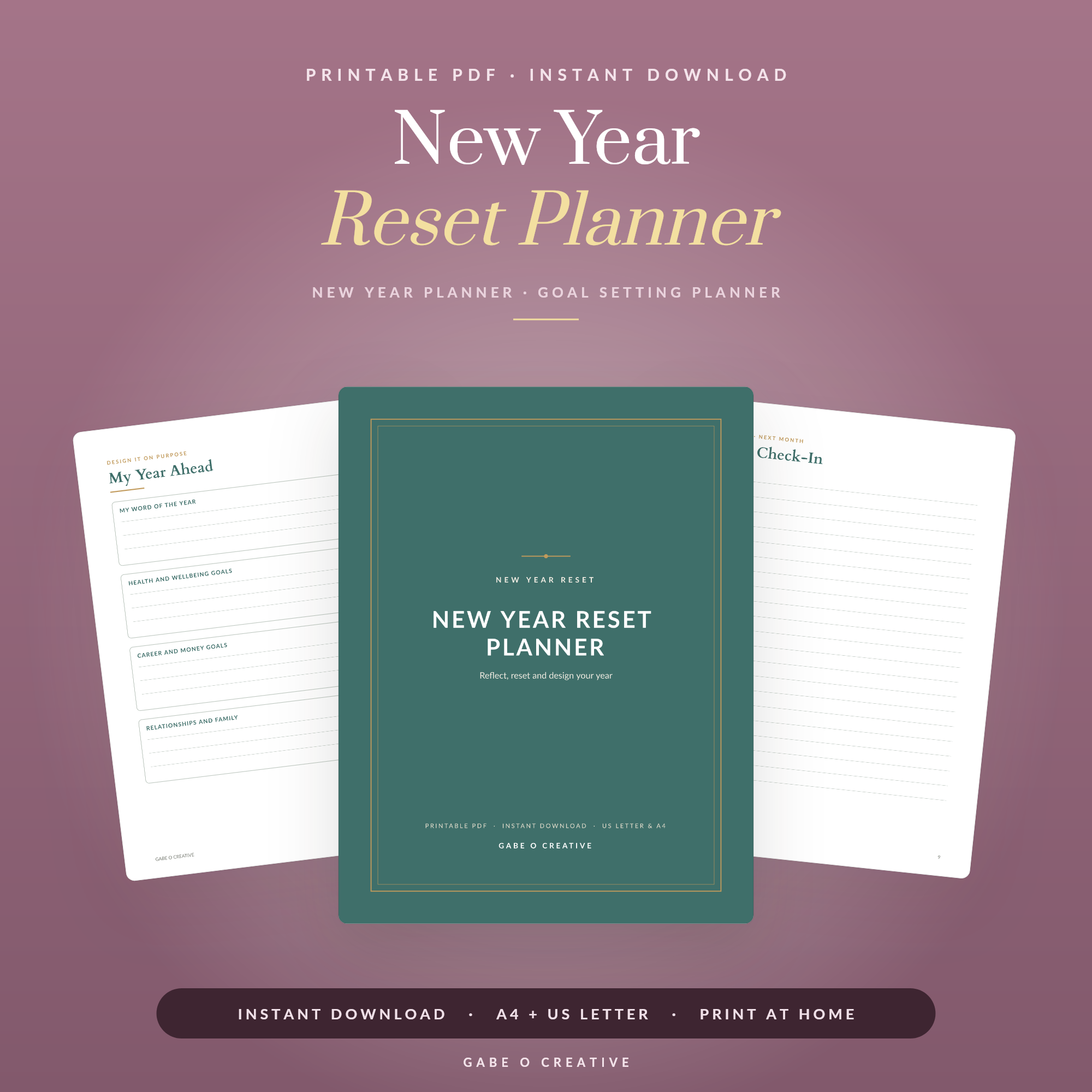
The third week of January is when most resolutions quietly die, and the reason is rarely willpower. A new year reset asks a different question from a resolution: not "what do I want to achieve this year" but "what actually happened last year, and what would I change about an ordinary week". That reframing is the whole difference, and it takes an afternoon. Our printable new year reset planner walks through it.
Planning your year? Print the reset planner and do the review pages first — the goal-setting pages make far more sense afterwards.
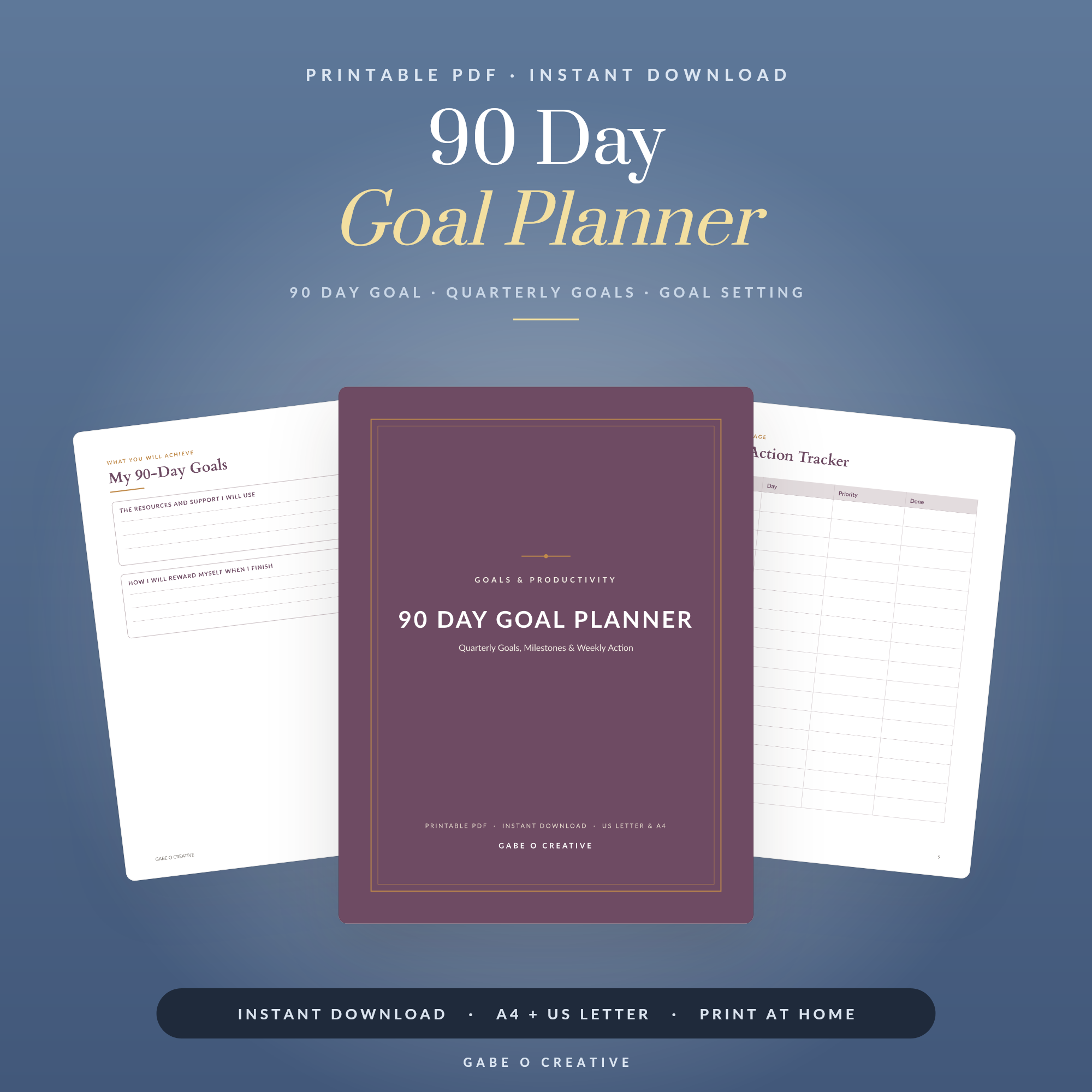 Shop 90 Day Goal Planner →
Review Before You Plan
Almost everyone skips this, and it is the part that makes the rest work. Setting goals without reviewing the year is like packing for a trip without checking the weather — you end up planning for a life you are not actually living.
Five questions, honestly answered:
- What went better than expected? Start here. People are far quicker to list failures.
- What drained me? Not what went wrong — what cost energy disproportionately.
- What did I keep putting off, and why? The "why" is the useful half. Putting something off for eleven months usually means it is either not important or genuinely difficult, and those need opposite responses.
- What did I say yes to that I regretted?
- What would I not repeat?
Write the answers down rather than thinking them. A vague sense of how the year went is exactly the thing that produces vague resolutions.
The month you are least like yourself
Worth naming: late December and early January are the least representative weeks of the year. You are rested or exhausted, out of routine, possibly slightly hungover, and surrounded by people talking about transformation. Decisions made in that week are made by someone who will not exist again until next Christmas.
Three Changes, Not Ten
Pick three. Ideally one each from different parts of life rather than three attempts at the same one.
| Instead of | Try |
|---|---|
| "Get fit" | "Walk 30 minutes before work, Mon/Wed/Fri" |
| "Save more" | "£120 leaves on payday before I see it" |
| "Read more" | "Ten pages before bed, phone in the kitchen" |
| "Be more organised" | "Twenty minutes of admin, Sunday evening" |
The right-hand column names a change to a specific week. The left names an outcome and leaves the mechanism unspecified — which is why by February you cannot tell whether you are succeeding.
Decide what you are stopping
This is the half almost nobody does, and it is where the time comes from. Adding three things to a week that is already full means dropping three things by accident, usually the ones you would have chosen to keep. So choose deliberately: a commitment you have outgrown, a subscription, a recurring meeting, a group chat. Naming a stop is what makes a start possible.
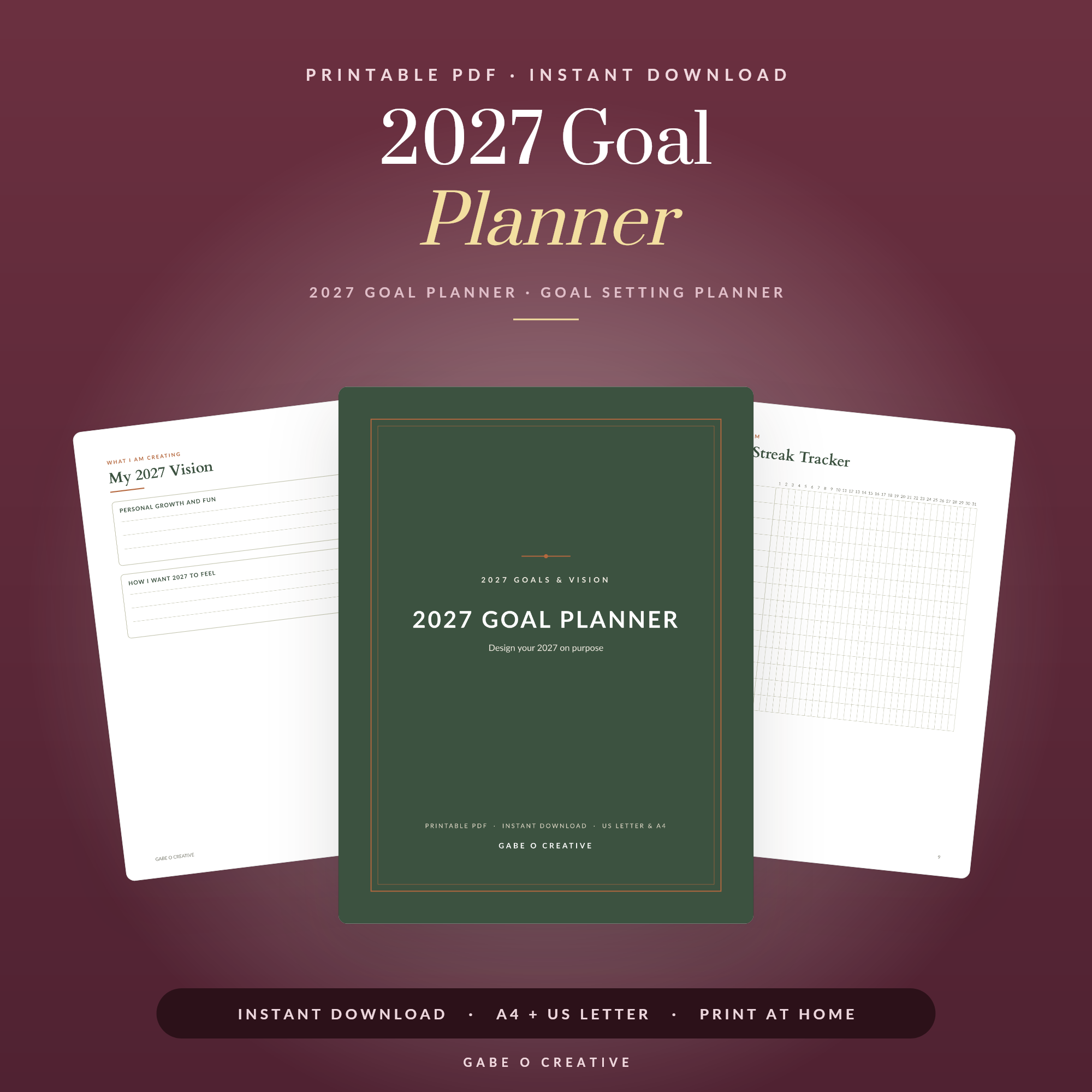 Shop 2027 Goal Planner →
Start in February, on Purpose
This sounds like procrastination and is the opposite. January is dark, money is tight after Christmas, everybody is tired and half the country is attempting the same overhaul. February has better light, restored bank balances and no ambient pressure.
So use January to plan — do the review, choose the three, set up whatever the changes need — and begin properly on the first of February. You lose four weeks of a plan that historically fails and gain eleven months of one that might hold.
If a fresh start is what you want rather than a calendar year, the same reset works at any point. Our mid-year reset checklist is the June version, and plenty of people find that a better anchor because it comes with no cultural expectation attached.
Making It Survive to March
- Put it somewhere you look. A plan in a drawer is a diary entry.
- Review monthly, not annually. Fifteen minutes at the end of each month is what catches a change that has quietly stopped happening.
- Expect to miss. The question is never whether you break the streak but whether you resume. Missing twice in a row is the actual danger point.
- Change the plan when it is wrong. A goal that no longer fits your life is not a test of character — abandoning it deliberately is a legitimate outcome of a monthly review.
For goals that need a shorter horizon than a year, the 90-day goal planner is a far better fit — a quarter is long enough to achieve something and short enough to stay real, and our guide to 90-day goals covers why. For the year-shaped version, the 2027 goal planner and the SMART yearly planner both give the structure, and the Sunday reset planner handles the weekly rhythm that keeps any of it moving.
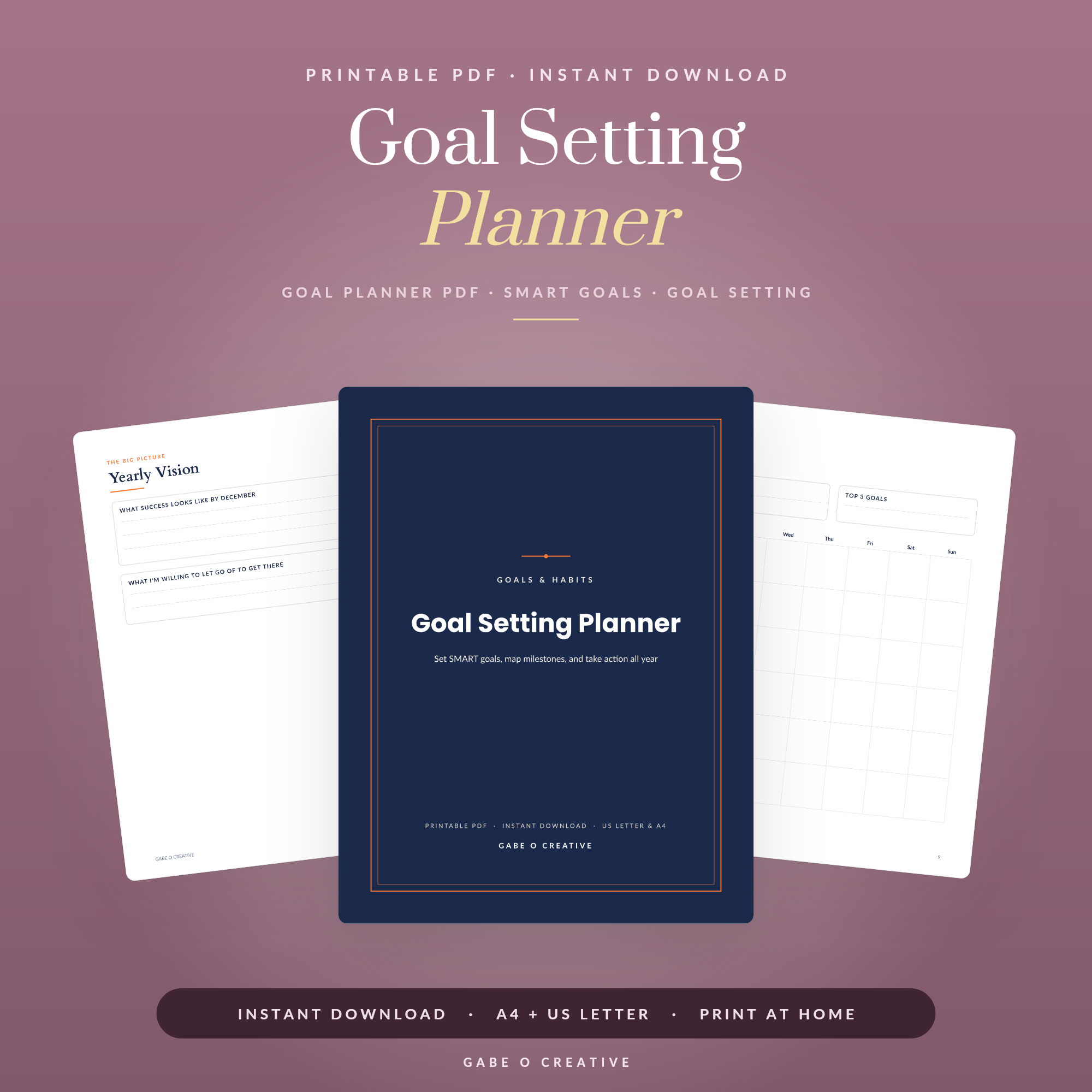 Shop Goal Setting Planner →
An Afternoon That Actually Does It
If you want the whole thing in one sitting, this is the order. Two hours, a notebook, and somewhere that is not your desk.
- Twenty minutes: what happened. Go through last year's calendar month by month rather than working from memory. Memory over-weights the last six weeks and forgets February entirely.
- Twenty minutes: the five review questions. Write the answers. Do not edit them.
- Ten minutes: what you are stopping. Name at least one thing. This is the step people skip and it is the one that creates the room.
- Twenty minutes: choose three changes. Write each as a change to a specific week, not an outcome. If you cannot say when in the week it happens, it is not finished.
- Twenty minutes: set up what they need. Move the standing order, book the first session, put the recurring block in the calendar. Doing this now is what separates a plan from an intention.
- Ten minutes: decide how you will review. A date each month, in the calendar, with a reminder.
Do it with someone if you can
Reviewing the year out loud with a partner or a friend surfaces things a notebook does not — mostly because saying "that went fine" to another person is harder when it plainly did not. It also makes the stopping decisions easier to hold, because someone else heard you make them.
What to do with the review afterwards
Keep it. The genuine value of a year review compounds: reading last year's answers before writing this year's shows you patterns no single review can, and it is usually the point at which people notice they have written "stop saying yes to everything" three years running.
New Year Reset FAQs
Why do new year resolutions fail?
Because they are usually set in the least representative week of the year, without reviewing what actually happened, and they name an outcome rather than a change to your week. A resolution with no altered routine behind it is a wish.
What should a new year reset include?
A review of the year just gone, three changes at most, and a decision about what you are stopping. The stopping half is what makes room for the starting half.
Is January a good time to start new habits?
Honestly, no. It is dark, money is tight after Christmas and everyone is tired. Planning in January and starting properly in February is far more likely to hold.
How many goals should I set for the year?
Three, and preferably one per area of life rather than three in the same one. A list of ten is a list you will not look at again after the second week.
What questions should a year review ask?
What went better than expected, what drained you, what you kept putting off and why, and what you would not repeat. The last two are where the useful answers live.
How is a reset different from resolutions?
A resolution names an outcome — lose weight, save more. A reset changes something in your week and lets the outcome follow. One is a wish, the other is a schedule change.
Do the review first. Print the new year reset planner, or browse the full Holidays & Seasonal collection.