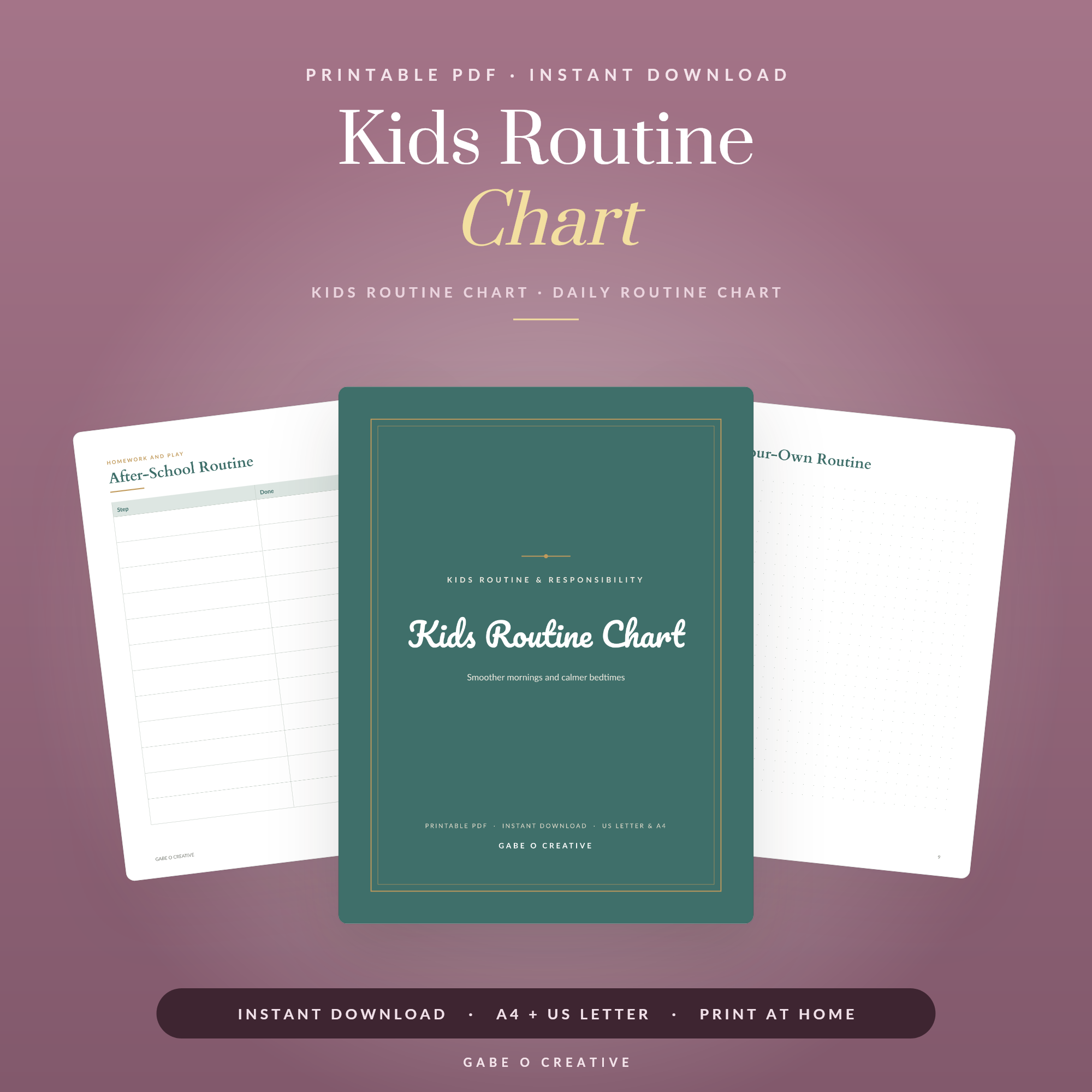
A school morning routine is the difference between leaving the house calm and leaving it shouting. The frustrating part is that almost none of the chaos is caused in the morning — it's caused the night before, by a bag that wasn't packed and a uniform nobody could find. Fix the evening and the morning largely fixes itself. What's left is a short, repeatable list the children can follow without you narrating every step. Our printable kids routine chart is built to be exactly that list.
Starting a new school year? Print the morning routine chart, put it at child height by the door, and let it do the reminding instead of you.
 View product →
Start With the Night Before
If you only change one thing, change your evenings. A morning routine that begins with "find the PE kit" was lost before anyone woke up.
The night-before list is short:
- Uniform out — including socks, which are the single most common cause of a late departure.
- Bag packed and by the door, with homework already in it.
- Water bottle filled and in the fridge.
- Letters and permission slips signed and back in the bag.
- Breakfast decided, so nobody negotiates at 7:40am.
- Shoes in one known place. Not "somewhere" — one place.
Ten minutes after dinner buys back twenty in the morning, and the twenty you buy back are the stressful ones. If you're setting up the whole year rather than just this week, our first day of school checklist covers everything that needs doing before term starts.
The Six-Step Morning Routine
Keep it short. A routine with fourteen steps is a to-do list, and children stop reading it by step four.
- Wake and open the curtains. Light does more than a second alarm.
- Get dressed — before coming downstairs, or the sofa wins.
- Breakfast.
- Teeth and hair.
- Bag, coat, shoes.
- Out.
The order matters more than the content. Dressing before breakfast prevents the toothpaste-on-the-jumper problem; teeth after breakfast rather than before saves doing it twice. Whatever order you choose, keep it identical every day — the whole value of a routine is that it stops being a decision.
Put it on the wall, at their height
A chart hung where the child can see it changes who owns the routine. Instead of "have you done your teeth?" for the fourth time, it becomes "what's next on your chart?". Picture icons work from about three; written lists from five or six. This is the same principle behind classroom rules and routines — visible expectations get followed far more reliably than spoken ones.
Realistic Timings (Work Backwards)
Most families underestimate how long mornings take, then treat every overrun as a discipline problem when it's a maths problem. Pick your leaving time, work backwards, and add slack.
| Leaving at 8:20 | What happens |
|---|---|
| 7:10 | Adults up first — fifteen quiet minutes is worth more than fifteen extra in bed |
| 7:25 | Children wake, curtains open, dressed |
| 7:45 | Breakfast, all together if you can |
| 8:05 | Teeth, hair, shoes and coats |
| 8:15 | Slack — the lost-shoe buffer |
| 8:20 | Out of the door |
That ten-minute buffer at 8:15 is the most important row in the table. Without it, every small problem becomes a late mark; with it, most mornings simply absorb the problem and nobody raises their voice.
 View product →
Making Children Self-Sufficient
The goal isn't a smoother morning for you — it's a child who gets themselves ready. That means handing over jobs earlier than feels comfortable and accepting the results for a fortnight while they learn.
- Let them dress themselves even when it's slower, and even when the outcome is questionable.
- Let them pack the bag from a checklist, and let them discover once what a forgotten reading book feels like.
- Give them their own alarm clock from around age seven. It transfers ownership more effectively than any chart.
- Stop rescuing at the door. One natural consequence teaches more than a term of reminders.
Expect it to get worse before it gets better. The first two weeks are slower than doing it yourself — that's the cost of the handover, and it pays back for years. Once children can run a morning list, they can usually run an after-school one too, which is where chore charts take over.
When There Are Several Children
One routine for three children with different school times is how mornings break. Stagger the wake times instead — fifteen minutes apart is usually enough to clear the bathroom bottleneck, which is the real constraint in most houses.
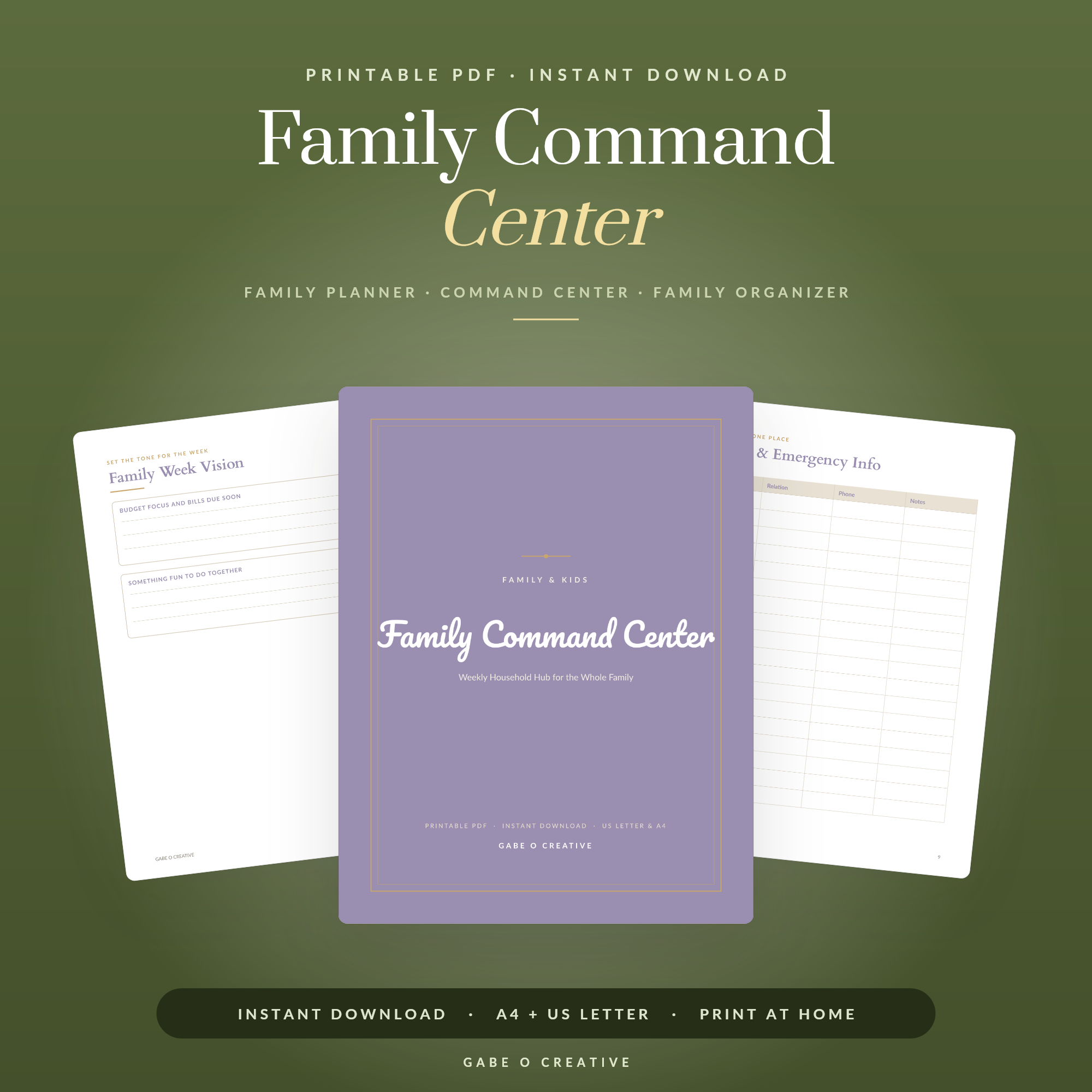
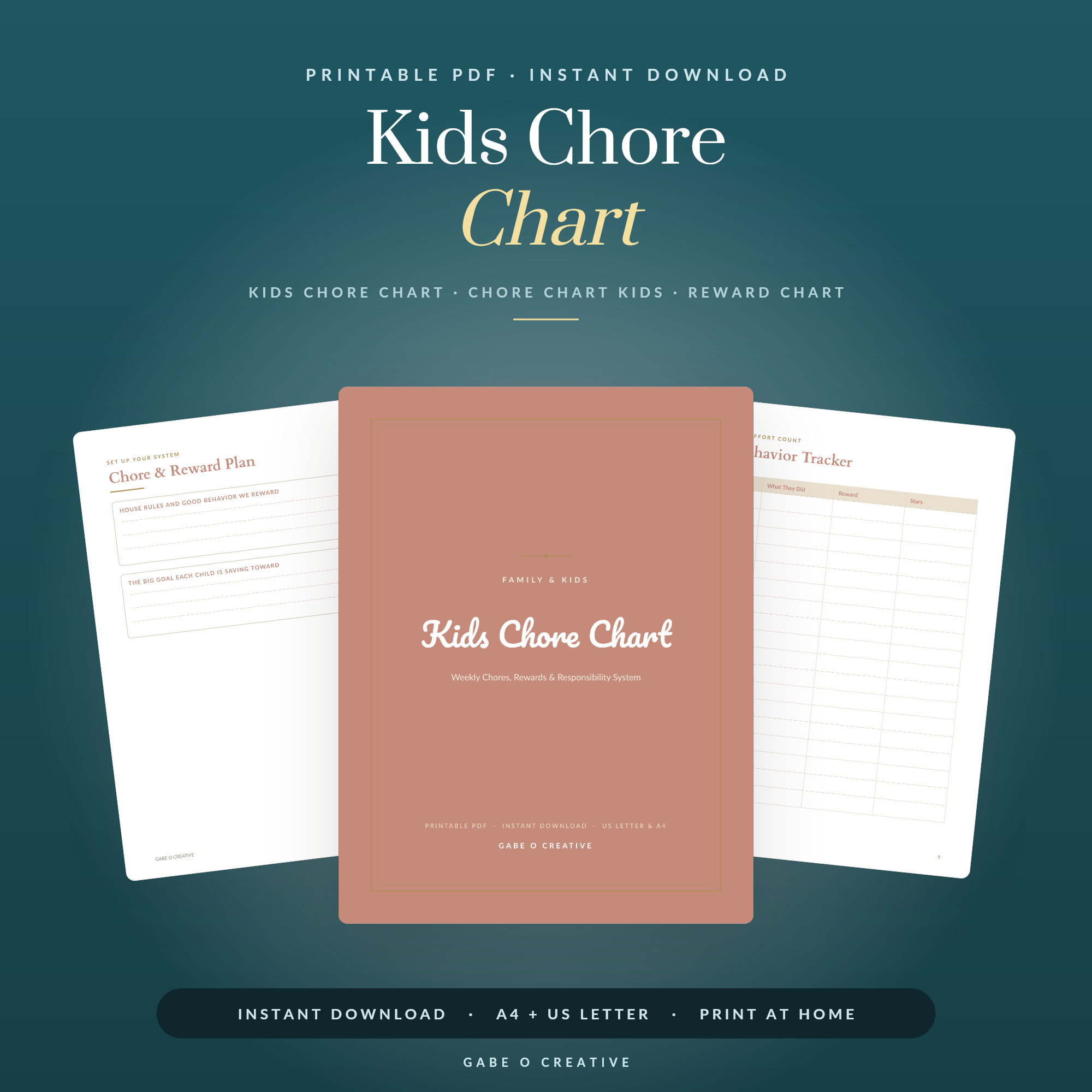
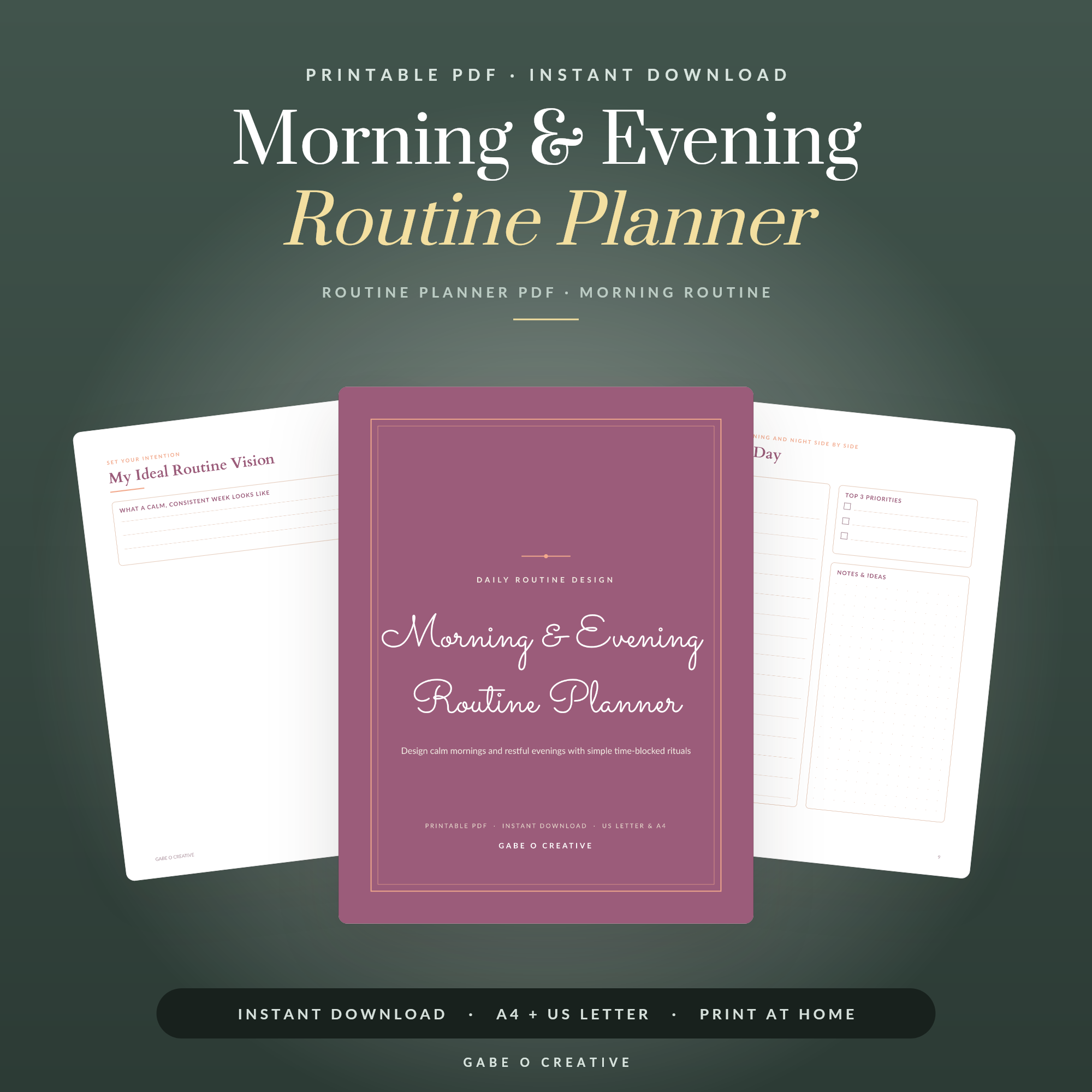
Give each child their own chart or their own column, and put the whole lot somewhere central. A family command centre handles this well: everyone's timings, clubs and kit days on one wall, so nobody has to hold it in their head. Add a kids chore chart if you're dividing up the evening jobs, and the morning and evening routine planner if the adults need a version too — the routine tends to hold better when the children can see that grown-ups follow one as well.
Going into a new school year, the back to school bundle collects the routine charts, checklists and planners in one download. For the wider set-up, our back to school printables guide covers what else is worth printing before term.
 View product →
When the Routine Stops Working
Every routine drifts, and it usually drifts for a reason rather than out of laziness. Three causes cover most of it.
The dark mornings. From late October a wake time that worked in September stops working, because nobody gets out of bed easily in the dark. Move bedtime earlier by fifteen minutes before you move the alarm, and open the curtains or put a lamp on the moment you wake them — light is what shifts the body clock, not willpower.
The chart went stale. Children stop seeing a poster that's been on the same wall for six months. Redrawing it, or letting them redraw it, revives it for another term at almost no cost.
It got too long. Routines accumulate steps — a reading record here, a water bottle there — until the list is fourteen items and nobody follows any of them. Prune it back to the original six and let the extras live on the night-before list instead.
If mornings have gone badly for a fortnight, resist adding rules. Take a step out, move something to the evening, or push the wake time back ten minutes. Almost every failing routine is overloaded rather than under-enforced.
School Morning Routine FAQs
What should a school morning routine include?
Wake, dress, breakfast, teeth and hair, bag and shoes, then out. Keep it to six or seven steps — a longer list stops being a routine and starts being a to-do list nobody reads.
How early should we get up for school?
Work backwards from your leaving time and add ten minutes of slack. Most families need 60–75 minutes for one or two children, and the slack matters more than the total — it's what absorbs a lost shoe.
How do I stop nagging every morning?
Put the routine on the wall and point at it instead of repeating yourself. When the chart holds the instructions, children answer to the chart rather than arguing with you.
What should we do the night before school?
Uniform out, bag packed by the door, water bottle filled, and any letters or permission slips signed. Almost every stressful morning was created the previous evening.
At what age can children follow a routine chart themselves?
Picture charts work from about three, and most children can follow a written or icon-based list independently by five or six. Independence is the point — the chart should be doing the reminding, not you.
How do I handle mornings with very different school times?
Stagger wake times rather than running one routine for everyone, and give each child their own column or chart. A shared family command centre keeps the different timings visible in one place.
Ready for a calmer first week? Print the kids routine chart and set up tonight's list, or browse the full Family & Baby collection for command centres, chore charts and trackers that work together.