
Homeschool record-keeping almost never fails because a parent does not care about it. It fails because it is a second job — teaching all day, then sitting down in the evening to write down what you taught. Nobody sustains that past October. The version that survives a full year is the one where the record is a by-product of the day rather than a separate task, and that is a design problem you solve once, in August. The Homeschool OS is built to be filled in during the day, not after it.
Planning the year now? The Homeschool OS tracks attendance, subjects, hours and evidence per child in one Google Sheet, and totals the year as you go.
 View product →
Four Columns, Filled In As You Go
The whole system is four things, entered in about fifteen seconds at the end of a session:
- Date and child — one row per child per day.
- Subjects covered — short tags, not sentences. "Maths, reading, history".
- Hours — only if your jurisdiction counts them. Skip the column entirely if not.
- Evidence — a note of what was produced, and where it is.
Tags, not descriptions
The temptation is to write what you did: "fractions — halves and quarters, using the cake worksheet". Lovely in September, unsustainable by half term. Write "maths" and let the evidence column hold the detail. The record exists to demonstrate breadth and consistency, and a tag does that as well as a paragraph.
Why a Spreadsheet and Not a Printable
Both have a place, and they are not competing. A printable is better for the child's daily page — something to tick, hold, and finish. A spreadsheet is better for the year, for one reason: it totals.
| Question | Printable | Spreadsheet |
|---|---|---|
| How many days so far? | Count them by hand | Already counted |
| Are we light on science? | Flick back through | Visible in a tally |
| Hours logged this term? | Add it up | Running total |
| Records for two children | Two folders | One sheet, filter by name |
| Something to hand a child | Yes — this wins | No |
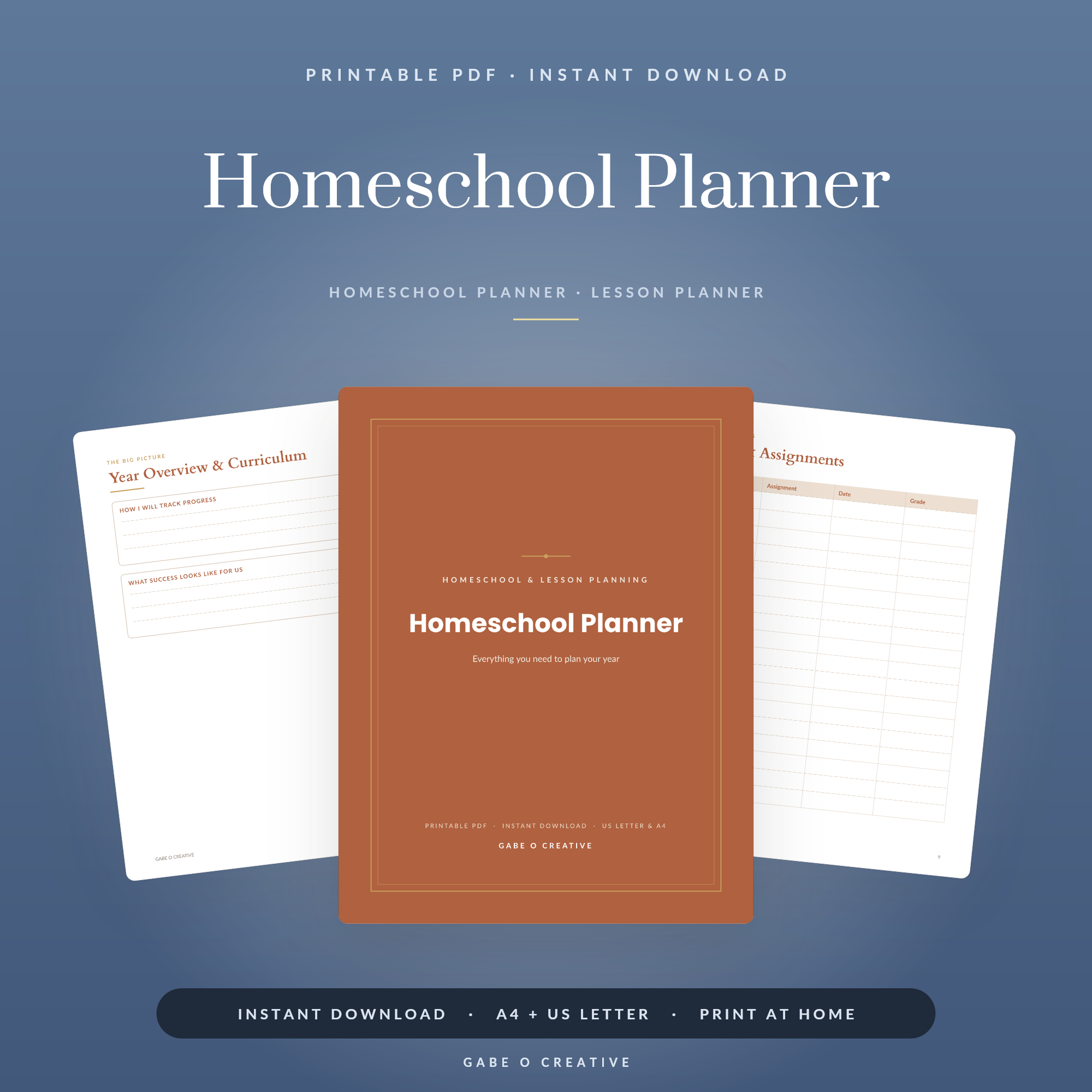
If you like the paper version for the daily rhythm, the printable Homeschool Planner covers that side, and our guide to homeschool planner printables goes into the format properly. Plenty of families run both — paper for the child, sheet for the record.
The subject balance tally is the useful bit
Almost every homeschooling family drifts towards what is going well. A running tally of subjects covered makes that visible in a way memory does not, usually revealing that one subject has quietly had three weeks off. Catching that in November is trivial; discovering it in June is not.
More Than One Child
One row per child per day, with a name column. Not a tab each.
Separate tabs feel tidier and they hide the exact comparison you most need — whether the younger one has been getting appreciably less of something while the older one's work took the attention. With everyone in one sheet you can filter by name when you want the individual record, and see them side by side when you want the honest picture.
It also halves the admin. One place to open, one place to type, one set of columns to maintain.
 View product →
Deschooling and the weeks that look empty
Families new to home education often panic at the first stretch of days that produce nothing recordable — the settling-in period after leaving school, or a fortnight where everything happened through conversation and a museum trip. Those weeks are not gaps.
Log them honestly with what actually happened: a tag like "discussion, reading, trip" and a line of evidence. A record that shows a real family year, including its quieter and less conventional stretches, is far more credible than one where every single day is neatly ticked across five subjects. Nobody believes the second one, and it is exhausting to fake.
Evidence Without a Cardboard Box
The instinct is to keep everything. Six months later that is a box nobody can search, and it demonstrates nothing because nothing in it is dated or labelled.
Far better: photograph the finished piece, give it a title and a date, and put one line in the sheet pointing at it. A dozen dated photographs per subject per term is a portfolio. Forty loose worksheets in a box is storage.
Log hours if there is any chance you will be asked
Requirements differ by country and by region — some count days, some count hours, some ask for neither and only want to see progress. Check what applies where you live rather than assuming. But if there is any prospect of being asked for hours, log them from day one: it is a five-second column while you are teaching and a genuinely impossible reconstruction afterwards.
Review it once a term, not once a week
Open the sheet properly three times a year, at the end of each term, and read it rather than add to it. Ten minutes. Look at the subject tally, the days total, and whether the evidence column has anything in it for every subject you claim to be covering.
That is the entire review process, and it is where the sheet pays you back — you find the gap while there is still a term to close it in. Weekly reviewing sounds more diligent and mostly produces anxiety about a week that was always going to be uneven.
Set It Up Before the Year Starts
Twenty minutes in August, and this is the part that decides whether it works. Build the columns, add the children, set the term dates, and enter the first day for practice.
Retrofitting is what kills homeschool records. A sheet started in week six begins with a gap you can never honestly fill, and the gap becomes a reason not to bother. Started on day one, it takes fifteen seconds an evening for a year, and at the end of it you have something you could hand to anyone who asked.
For older children doing their own work, the Student Assignment Tracker gives them a version they own themselves, which is worth handing over sooner than most parents expect.
Homeschool Spreadsheet FAQs
What should a homeschool planner track?
Attendance or days educated, subjects covered, hours if your jurisdiction counts them, and a note of evidence produced. Four columns. Anything beyond that tends to be recorded enthusiastically in September and abandoned by October.
Why use a spreadsheet rather than a printable?
Because it totals. Days, hours and subject balance are all running counts, and a spreadsheet keeps them current without you adding anything up. Printables are better for the child's daily page; the spreadsheet is better for the year's record.
How do I keep records for more than one child?
One row per child per day, with a name column — not a separate tab each. Tabs hide the comparison you most want, which is whether one child is quietly getting far less of something than the other.
Do I need to log hours?
It depends entirely where you live — some places count days, some count hours, some ask for neither. Log them if there is any chance you will be asked, because reconstructing a year of hours afterwards is genuinely impossible.
What counts as portfolio evidence?
A photograph of finished work, a title and a date. That is enough. The mistake is keeping everything, which produces a box nobody can search — a dated line in the sheet pointing at one photograph is far more useful than forty loose worksheets.
When should I set it up?
Before the year starts, because retrofitting is what kills it. Twenty minutes in August building the columns means the record is a by-product of teaching from day one rather than a job you keep meaning to catch up on.
This is a record-keeping guide, not legal advice. Home education requirements vary by country and region — check what applies where you live.
Build it before September. Open the Homeschool OS, add your children and your term dates, and log day one on day one — or browse the full Google Sheets collection.