
Self assessment record keeping is the part of being self-employed that nobody warns you about. The tax itself is arithmetic; the painful bit is being asked, in January, what a £68 payment from last April was for. If your records are tidy, filing a return takes an evening. If they aren't, it takes a weekend of scrolling bank statements and guessing. The difference isn't accounting skill — it's a five-minute weekly habit and one file that everything lands in. Our Freelancer Budget & Tax Vault spreadsheet is built to be that file.
Want next January to be boring? Set up the self-employed income and tax tracker now, log this week's invoices and receipts, and let the categories do the work at year end.
 View product →
What HMRC Actually Expects You to Keep
There's no prescribed format. HMRC asks you to keep records that let you complete a complete and correct return — the shape is up to you. In practice that means two things: every pound that came in, and every pound that went out for the business, each with something behind it.
Keep records of:
- All sales and income — invoices, platform payout reports, till or app summaries.
- All business expenses — receipts, subscription confirmations, supplier invoices.
- Bank and card statements for any account the business uses.
- Mileage and travel — dates, journeys, reason and miles.
- Anything used for both business and personal use, plus how you split it (a home office, a phone, a car).
- VAT records if you're registered, and PAYE records if you employ anyone.
The one people forget is the last-but-one. If you claim a proportion of your broadband or a room at home, the claim is only defensible if you wrote down the basis at the time. "Two of seven rooms, used for work four days a week" is a note that takes ten seconds and saves an argument years later.
Income you might not think of as income
Money that never touched an invoice still counts: platform payouts net of fees (record the gross sale and the fee as an expense, not just the net figure), cash jobs, affiliate commissions, and anything paid to you personally rather than into a business account. Marketplace fees are exactly where sellers under-report, which is why our bookkeeping guide for Etsy sellers spends so long on the payout statement.
How Long to Keep Everything
The rule differs depending on who you are, which is why the advice you read online often contradicts itself:
| Situation | Keep records for |
|---|---|
| Self-employed or a partner in a partnership | At least 5 years after the 31 January submission deadline |
| Employed or getting a pension only | At least 22 months after the end of the tax year |
| Filed late, or under enquiry | Longer — keep everything until the matter is closed |
| Limited company records | At least 6 years from the end of the accounting period |
For a sole trader, five years after the deadline means records for the 2025/26 tax year are kept until at least 31 January 2032. Storage is cheap and disputes are not, so most people simply keep a folder per tax year forever and never think about it again.
 View product →
The Five-Minute Weekly Habit
Almost everyone who finds self assessment horrible is doing a year's admin in one sitting. Doing it weekly is not more work — it's dramatically less, because you still remember what things were.
- Photograph receipts the day you get them. Thermal paper fades to blank in months.
- Open the spreadsheet once a week. Same slot every week; Friday afternoon works for most people.
- Log income and expenses with a category. Date, description, amount, category. That's the whole job.
- Reconcile against the bank. Anything in the statement that isn't in your sheet gets chased now, not in January.
- Move the tax percentage across. A separate savings pot, every time money lands.
- File the month's receipts into a folder named by tax year.
That last-but-one step is the one that turns a good record into a solvent business. Knowing your profit is useful; having the tax already sitting in a different account is what stops a good year becoming a bad January — our guide to how much freelancers should set aside for tax covers what percentage to use.
Separate the money, not just the spreadsheet
You don't legally need a business bank account as a sole trader, but a second current account used only for the business makes record keeping about four times faster. Every line on the statement is a business line, so reconciliation stops being a filtering exercise.
Spreadsheet, App or Accountant?
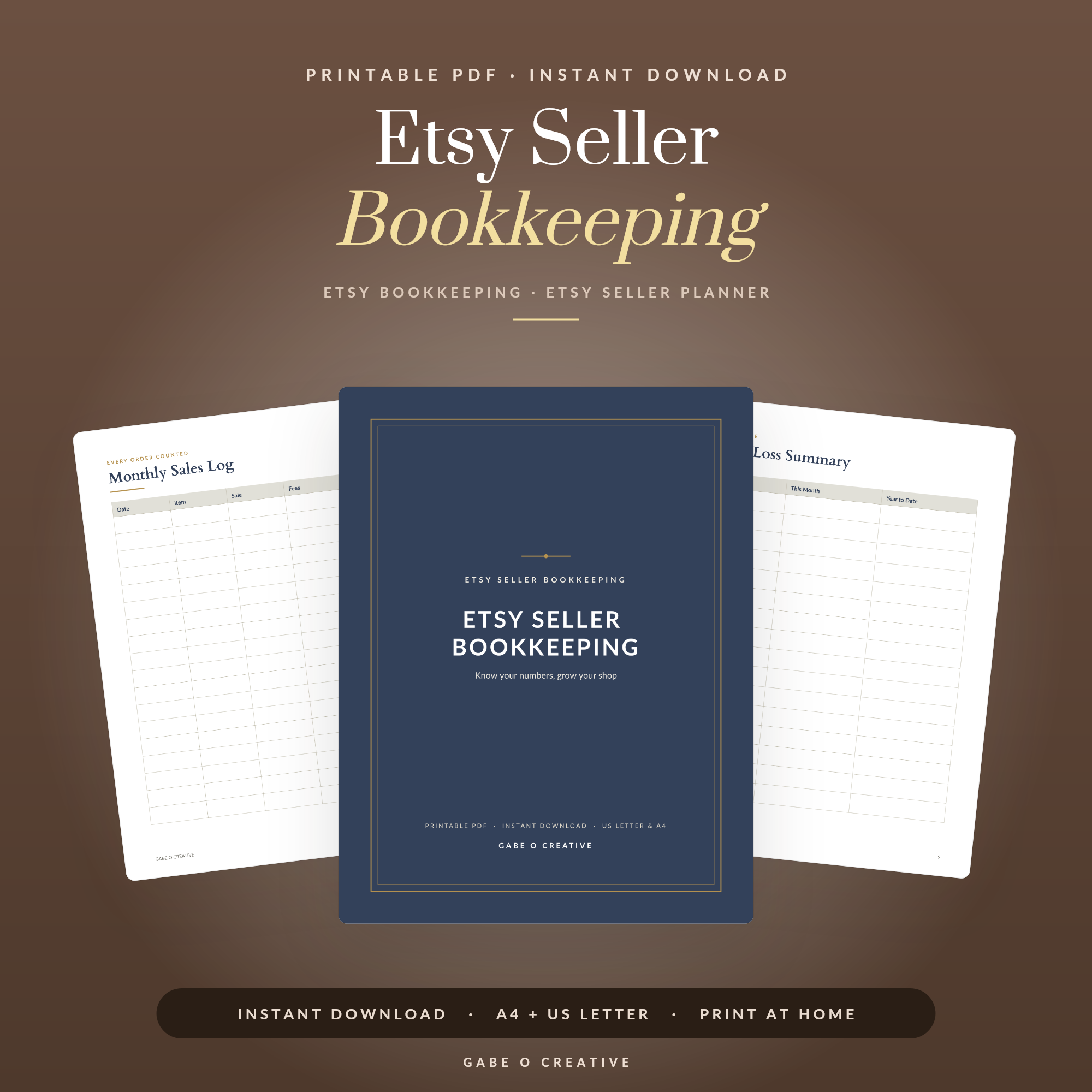
For a side hustle or a solo trade with a few dozen transactions a month, a spreadsheet is genuinely enough — and it's the option that teaches you your own numbers. The Freelancer Budget & Tax Vault handles irregular income and the tax set-aside; the bookkeeping and profit dashboard adds an automated P&L once you want to see margins rather than just totals. Sellers on marketplaces will want the Etsy seller bookkeeping set, which is laid out around payouts and fees.
Move to software when you're VAT registered, employing people, or handling enough transactions that manual entry is a chore rather than a habit. Move to an accountant when the tax questions get genuinely complicated — but arrive with tidy records either way, because that's what you're paying them not to do. If you're building the wider business system, our Google Sheets for small business guide covers what else belongs in the same file.
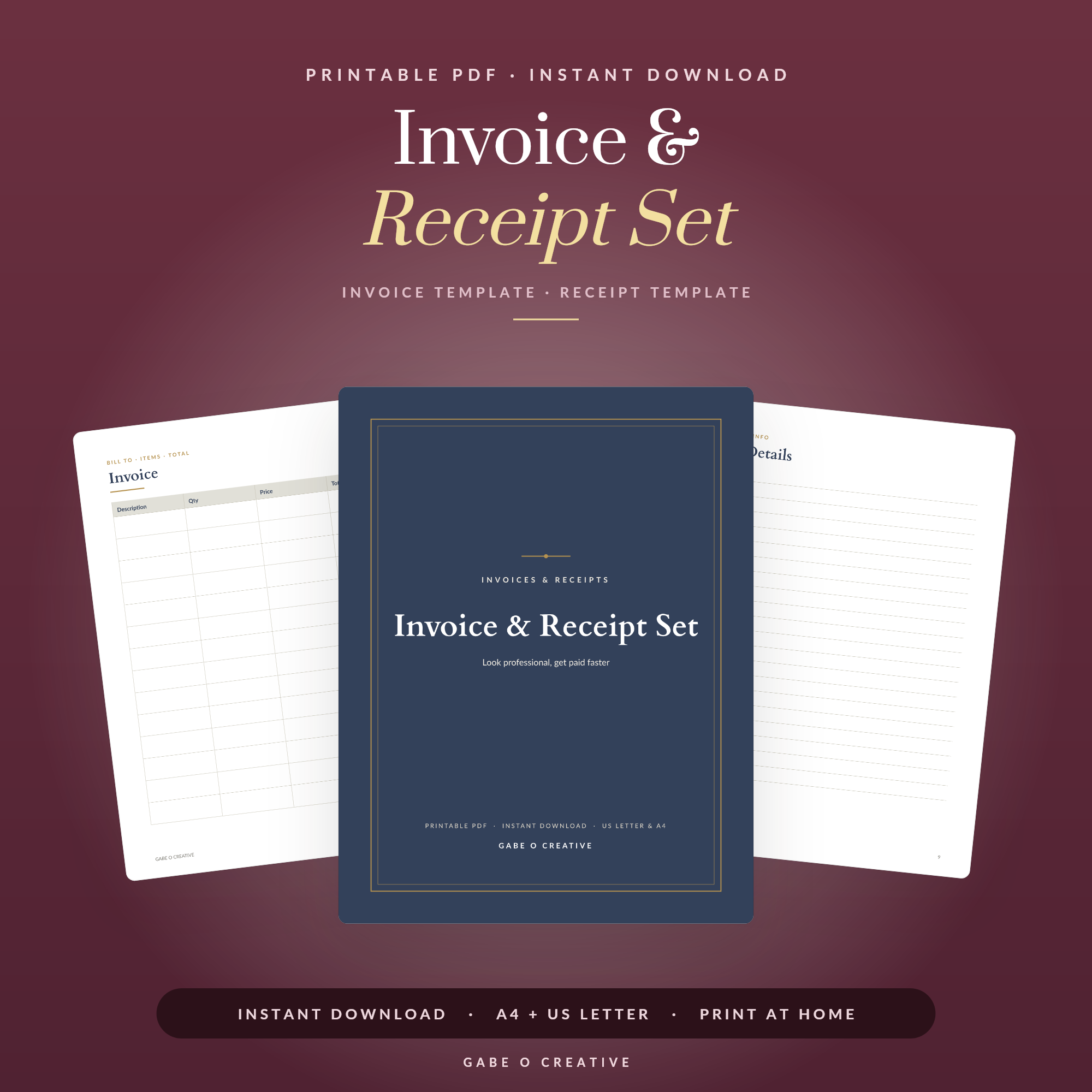
On the paperwork side, the invoice and receipt set keeps what you issue consistent and numbered, and the tax prep organiser is a printable checklist for the actual filing sitting.
 View product →
The Mistakes That Cost People Money
None of these are exotic. They're the four things that turn a tidy year into an expensive one, and all of them are filing habits rather than tax knowledge.
- Recording net payouts instead of gross sales. If a marketplace takes its fees before paying you, the fees are a deductible expense — but only if the gross sale is in your income. Netting them off quietly costs you the deduction.
- Claiming nothing because you weren't sure. Plenty of sole traders never claim their home office, phone or mileage at all. A reasonable, written-down apportionment is far better than leaving legitimate costs on the table.
- Mixing personal and business in one account. It doesn't just slow reconciliation — it makes every line arguable if anyone ever asks.
- Waiting for the deadline to register. Registration for self assessment has its own deadline (5 October after the tax year you started), separate from filing, and it's the one people miss first.
Catch these once, in a weekly ten-minute pass, and the return itself becomes a transcription job rather than an investigation.
Self Assessment Record Keeping FAQs
What records do I need to keep for self assessment?
Records of all business income and all allowable expenses, plus anything supporting them: invoices, receipts, bank and card statements, mileage logs, and records of anything you use for both business and personal use.
How long do I need to keep self assessment records?
If you're self-employed, keep them for at least five years after the 31 January submission deadline for that tax year. So records for the 2025/26 tax year should be kept until at least 31 January 2032.
Do I need paper receipts or are photos enough?
Digital copies are acceptable as long as they're legible and you keep the whole record. Photographing receipts the day you get them is far more reliable than a shoebox of faded thermal paper.
What happens if I lose a receipt?
Reconstruct it from the bank or card statement and note what it was for. A missing receipt for a genuine, clearly evidenced business cost is a much smaller problem than a claim with no trace at all.
Can I do self assessment records in a spreadsheet?
Yes. For most sole traders and side hustles a spreadsheet of dated income and expense rows, categorised, is more than enough — and it exports easily if you later move to accounting software.
Do I need to keep records if I made a loss?
Yes, and arguably more carefully. Losses can often be carried forward against future profits, and you'll need the records to support the figure when you use it.
This is general guidance rather than tax advice — if your situation is unusual, check with an accountant or HMRC directly. But the habit underneath it is the same for everyone: log it weekly, keep it five years, and January stops being a thing you dread.
Start this week's records now. Open the self-employed budget and tax spreadsheet and log your last seven days, or browse the full Google Sheets collection for bookkeeping, invoicing and profit dashboards that work together.