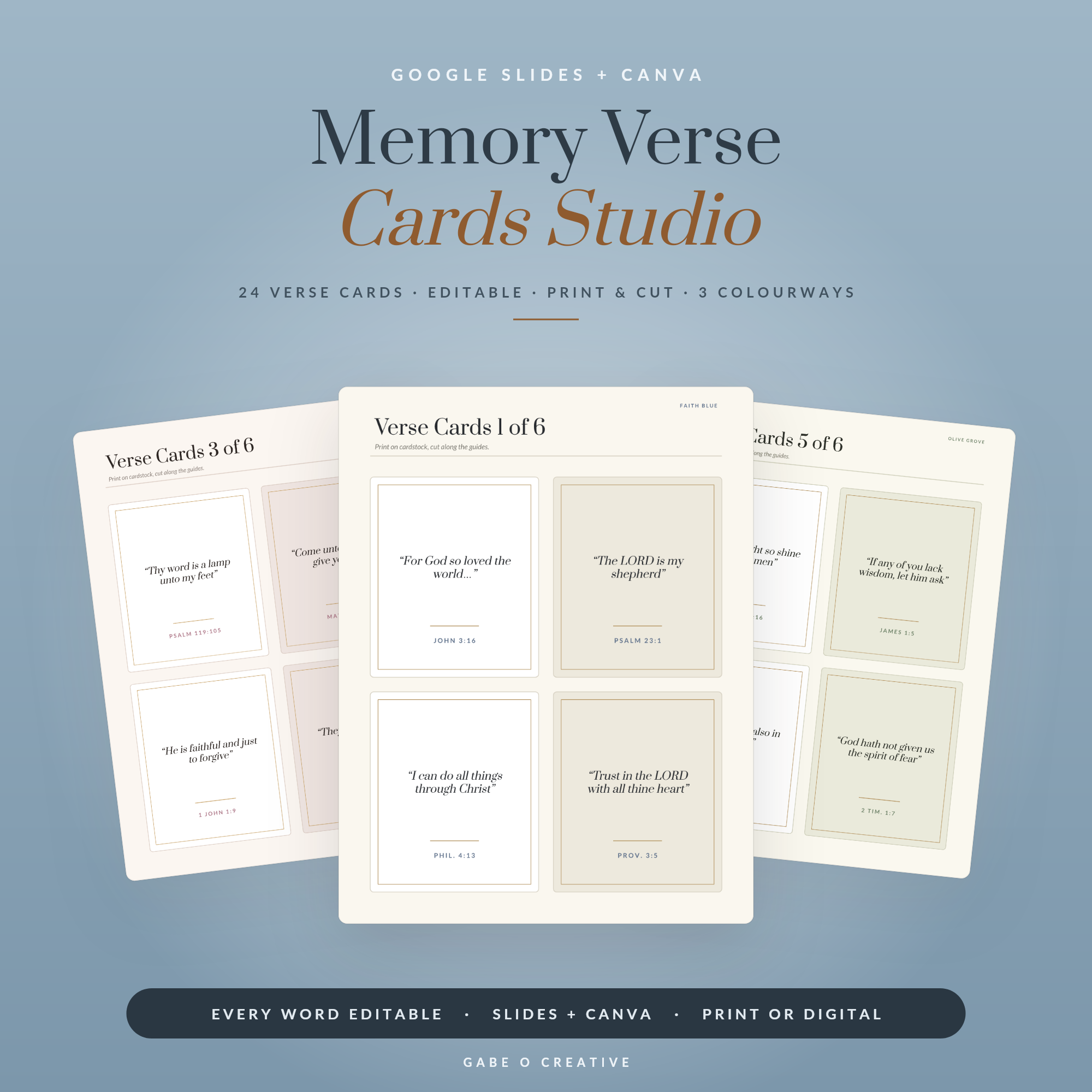
Almost everyone who tries to memorise scripture succeeds for about ten days. The verses go in, they feel solid, and then a busy fortnight arrives and by the end of the month you could not say last week's verse if someone offered you money. That is not a discipline failure — it is a design failure. A memory verse system that depends on you remembering to review will always lose to a week with a deadline in it. The fix is a system that decides for you. Our printable memory verse cards are built for exactly this method.
Want to start this week? Print the memory verse cards, write one verse on one card, and put it where you make your morning drink.
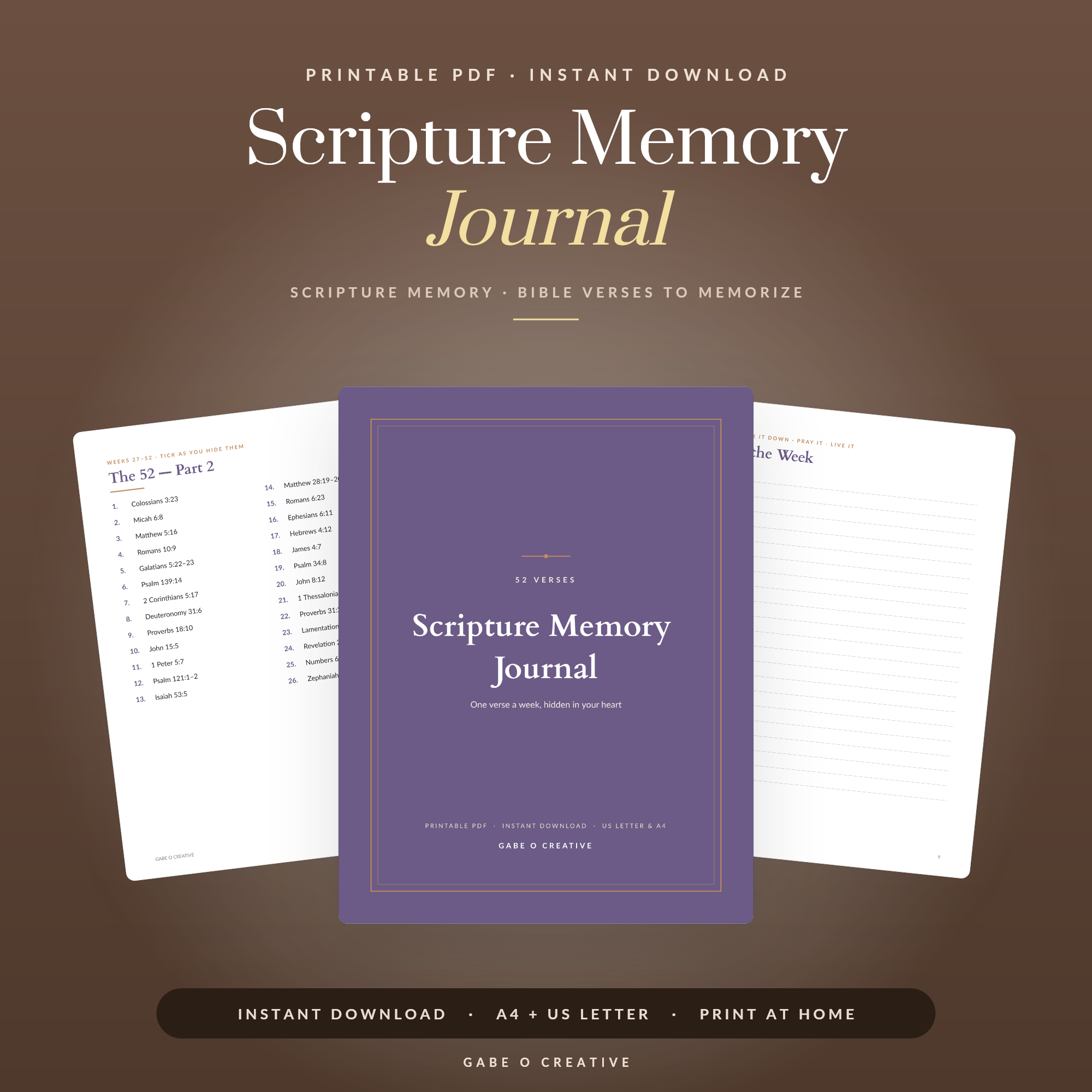 Shop Scripture Memory Journal — One verse a week, hidden in your heart →
One Verse at a Time
The instinct is to take on a whole chapter, or a themed list of twenty. Resist it. One new verse a week is the sustainable rate for almost everyone, and it still gets you fifty verses in a year — considerably more than most people manage with an ambitious plan they abandon in March.
The limit is not how much you can learn. It is how much the review cycle can carry. Learning a verse takes three or four days; keeping it takes a review schedule stretching out over months, and every verse you add makes that schedule heavier. Add five a week and the reviews collapse under their own weight by week three.
Choose verses you actually want
A verse you chose because it met you somewhere real sticks far better than one from a list of the fifty most important. If a line stopped you during your reading this week, that is your verse — our reading plan guide covers building the habit that surfaces them.
The Three-Box Method
This is spaced repetition, which is simply the finding that you remember something longest if you review it just as you are about to forget it. Three boxes, or three sections of one card holder:
| Box | Reviewed | What lives here |
|---|---|---|
| Daily | Every day | This week's new verse, plus anything you fumbled |
| Weekly | Once a week | Verses you have said cleanly 3 days running |
| Monthly | Once a month | Verses that survived a month of weekly reviews |
Movement is the whole mechanism. A new card starts in daily. Say it cleanly three days running and it earns its way to weekly. A month of clean weekly reviews moves it to monthly. And at any point, a verse you stumble on goes straight back to daily — no negotiation.
That demotion rule is what makes it work. It means the system automatically spends your attention on the verses that need it, and stops you reviewing things you already know solidly.
Reviewing takes about three minutes
Daily box: a handful of cards. Weekly: pick a day. Monthly: pick a date. If a review is taking more than five minutes, you have too many verses in the wrong boxes, not too little time.
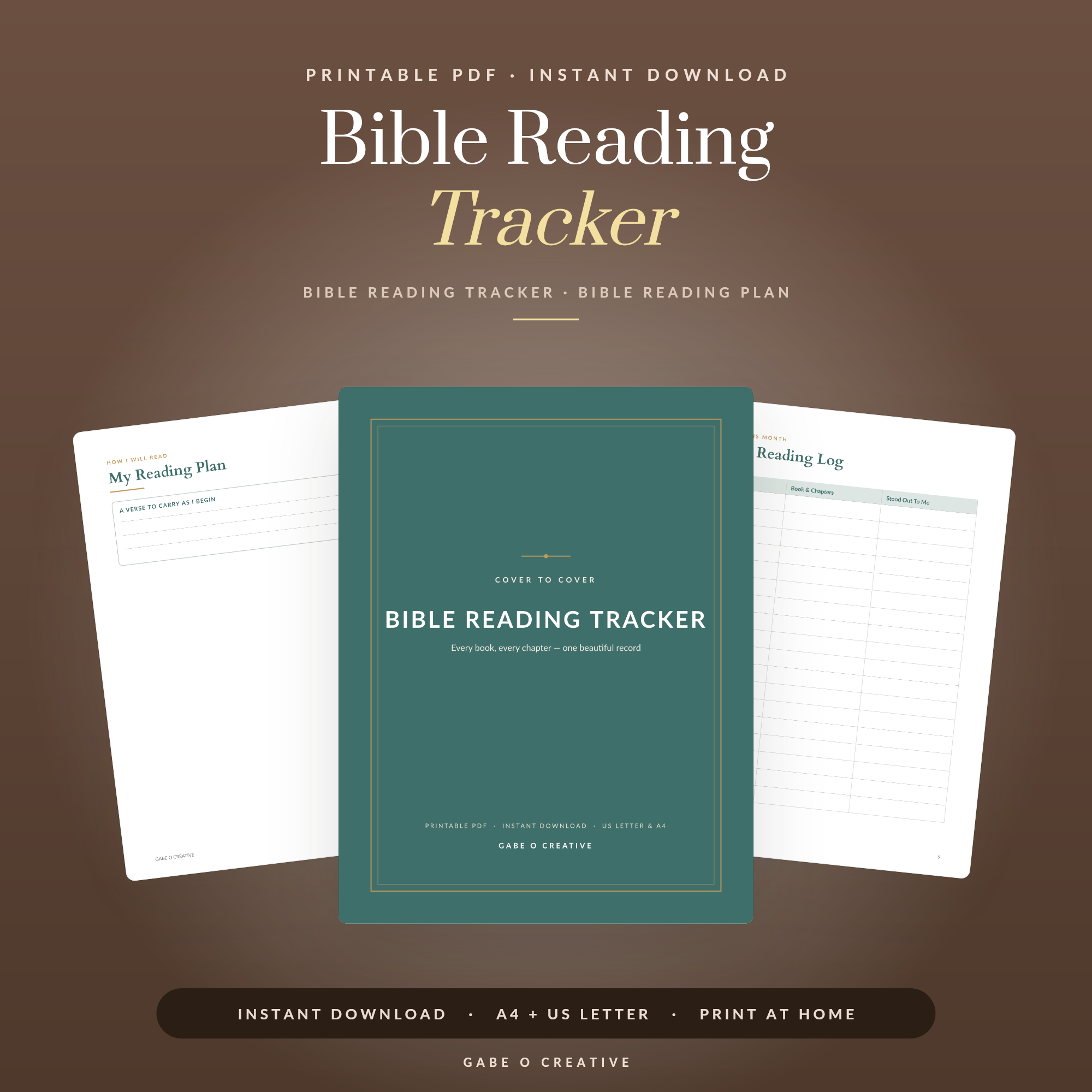 Shop Bible Reading Tracker — Every book, every chapter — one beautiful record →
Making the Review Happen
The habit dies at the review, never at the learning. Three things fix that:
- Put the cards where you already stand. Next to the kettle, on the bathroom shelf, in the car door. Anywhere you are stationary for ninety seconds anyway.
- Attach it to something fixed. While the kettle boils. On the train. Immediately after brushing your teeth. New habits fastened to existing ones survive; free-floating ones do not.
- Say it out loud. Silent reading feels like recall and is not — you are reading, not remembering. Out loud, without looking, is the only honest test.
One more that people underestimate: write the verse out by hand when you first learn it. Handwriting forces you through every word at the pace of a pen, which is why it plants a verse far faster than reading it twenty times. Our scripture writing plan guide covers that practice on its own, and the two work well together — write it to learn it, card it to keep it.
When You Fall Behind
You will, and this is where most systems die. Someone misses a fortnight, comes back to a daily box with thirty cards in it, and quietly stops.
Do not clear the backlog. Move everything back one box — monthly to weekly, weekly to daily — and carry on from today. You will re-review some verses you already knew, which costs a few minutes and nothing else. A review system you are behind on stops being opened at all, and that costs everything.
If a verse will not stick
Some do not, usually because they are longer, or the phrasing is unusual, or you never really understood them. Three options, in order: break it into two cards at a natural comma; look up what it actually means, since understanding is most of memorisation; or let it go and choose another. There is no shortage of verses, and holding on to one you resent is a good way to resent the whole practice.
For a fuller record of what you are learning and why, the scripture memory journal gives each verse a page, and the Bible reading tracker covers the wider reading the verses come out of. The faith and prayer bundle collects the cards, journals and trackers together.
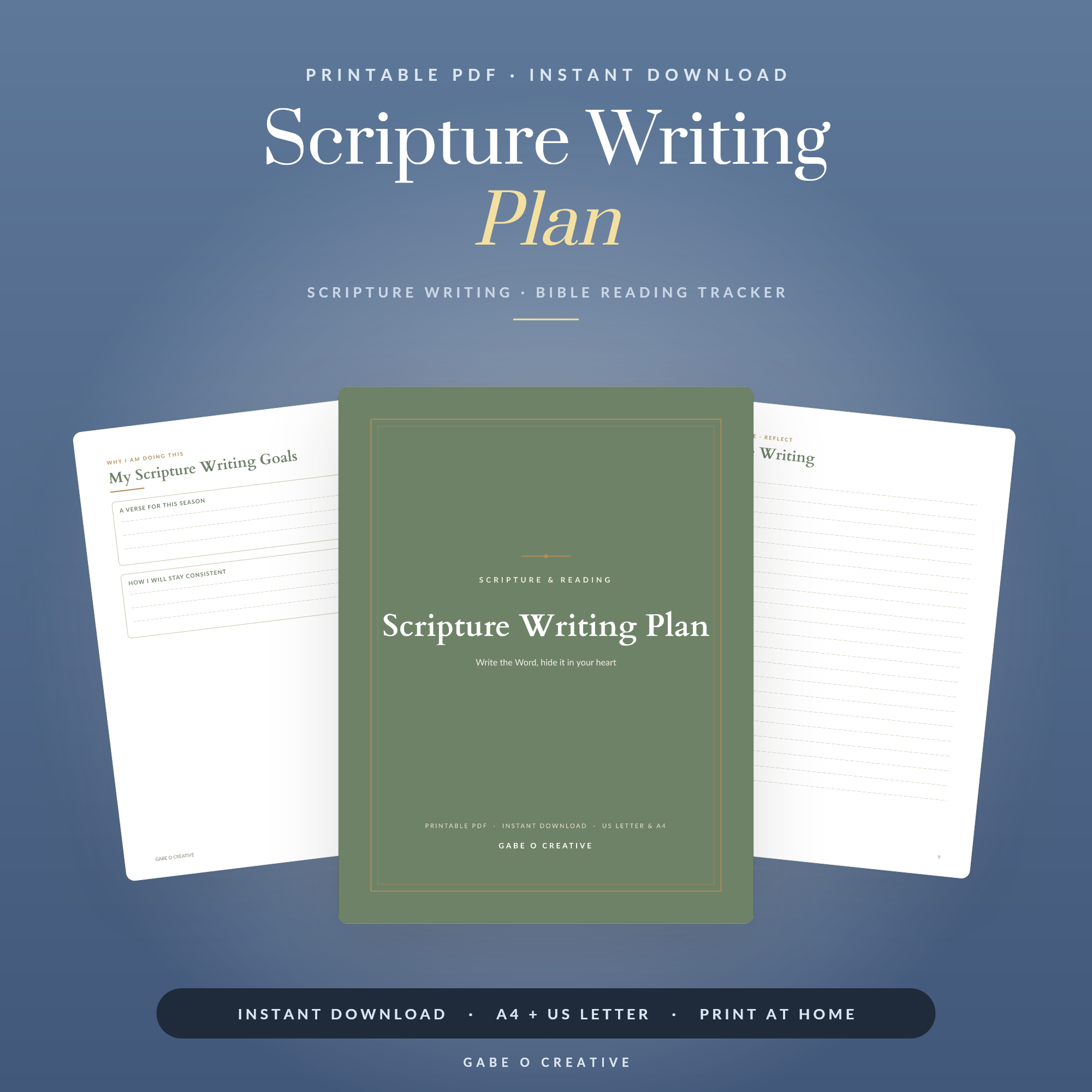 Shop Scripture Writing Plan →
What to Put on the Card
More thought than it sounds, because the card format decides whether reviewing is quick or a chore.
Front: the reference only — book, chapter, verse. That is the prompt, and prompting yourself with the reference is what builds recall in the direction you actually need it. Being able to recognise a verse you are reading is not the same as being able to produce it.
Back: the verse in full, in your chosen translation, and nothing else. No commentary, no notes, no date. Anything extra gives your eye somewhere to land that is not the words you are trying to learn.
Handwrite it. Printed cards are neater and plant the verse less firmly. If you are using a printable set, write the verse in yourself rather than typing it — the act of writing is doing a meaningful share of the work.
Doing it with children
The same system works from about six, with two changes: shorten the verse, and make the review a spoken game rather than a test. Saying it together in the car, or one word each in turn, keeps it from feeling like homework. Children generally memorise faster than adults and lose it just as fast, so the review boxes matter more rather than less.
Doing it with someone else
The most reliable version of this practice is two people on the same verse. It solves the accountability problem without any system at all — a weekly "go on then" from a friend or spouse does what no reminder app manages, and hearing someone else stumble on the same line is oddly encouraging.
Memory Verse FAQs
How many verses should I memorise at once?
One new verse a week, with older ones in review. Trying to learn five at once means learning none of them properly — the constraint is not effort, it is how many things the review cycle can carry.
What is the three-box method?
Daily, weekly and monthly boxes. A new verse starts in daily; once you can say it cleanly three days running it moves to weekly, then to monthly. Any verse you fumble goes straight back to daily.
How long does it take to memorise a verse?
Most people can say a short verse from memory within three or four days. Keeping it for a year is the harder part, and that is what the review boxes are for.
Should I memorise word for word?
Yes, and pick one translation and stay in it. Mixing translations is the commonest reason a verse you thought you knew comes out garbled under pressure.
What if I fall behind on reviews?
Move everything back one box and carry on from today. Do not attempt to clear a backlog — a review system you are behind on stops being used at all, which costs far more than a few forgotten verses.
Do I need cards, or will an app do?
Either works, but physical cards have one real advantage: they can live somewhere you already stand, so the review happens without you scheduling it. Apps need you to open them.
Start with one verse. Print the memory verse cards, or browse the full Faith & Christian collection for journals, trackers and reading plans.