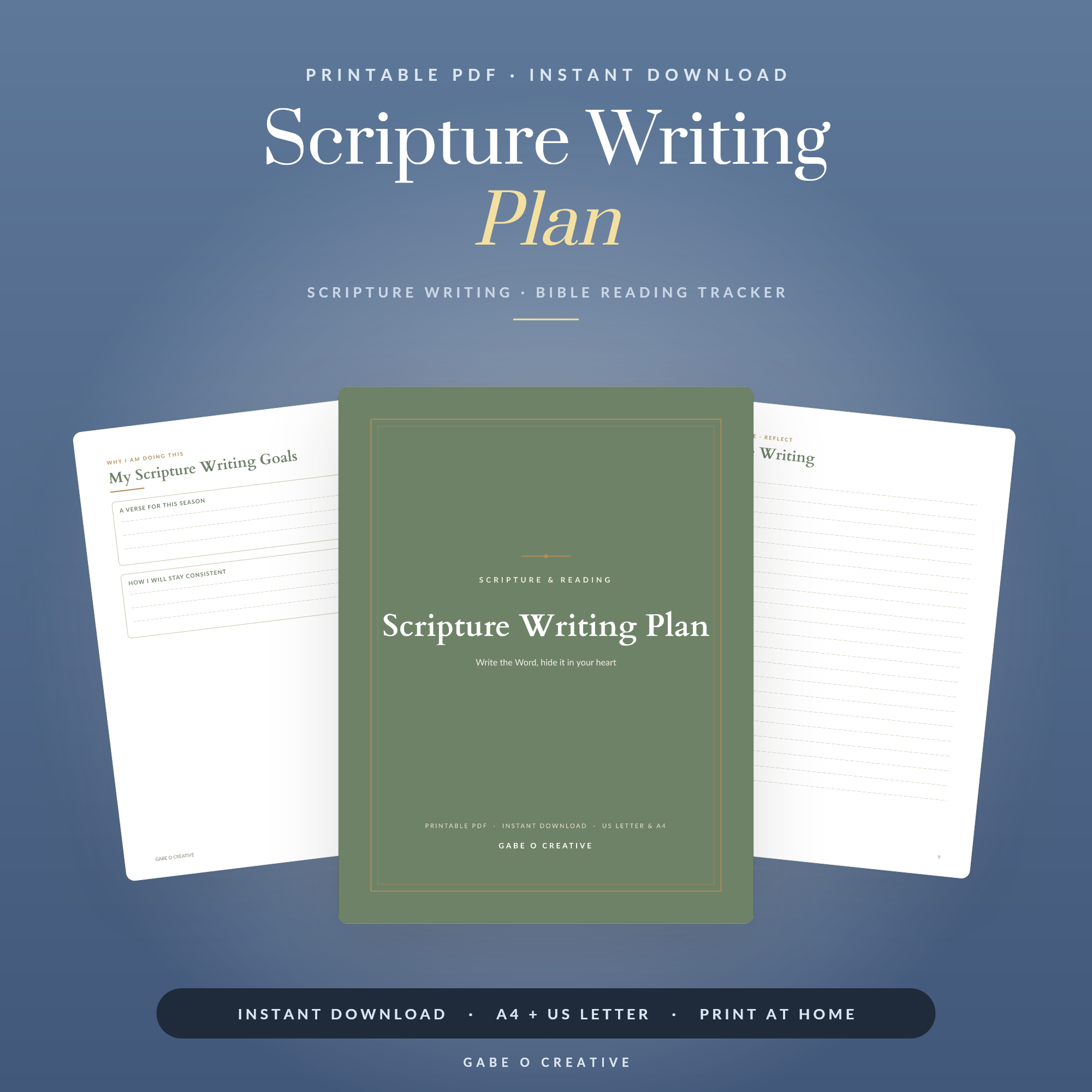
A scripture writing plan is a simple thing: a dated list of verses, usually themed, that you copy out by hand one day at a time. It sounds almost too basic to bother with, and then you try it and discover that writing a verse takes four times as long as reading it — and that you notice roughly four times as much. If your Bible reading has become something your eyes do while your mind is elsewhere, this is the practice that slows it down. Our printable scripture writing plan gives you the themed lists so you're never deciding where to start.
Want to begin tomorrow morning? Print the scripture writing plan, pick a theme, and write out day one — it takes less than ten minutes.
 View product →
Why Writing Changes What You See
Reading is fast and forgiving. Your eye skims a familiar verse, recognises it, and moves on before the sentence has actually been considered — which is why people can read a psalm they know well and arrive at the end having thought about nothing in it.
A pen makes that impossible. You cannot copy a sentence without passing through every word in it, and that alone surfaces things:
- The joins — the "therefore", "but" and "so that" which carry the argument and which reading habitually skips.
- Repetition you'd never notice at speed, especially in the psalms and the prophets.
- Who is actually speaking, and who is being addressed — often not who you assumed.
- How a verse sits in its passage, once you've written the two either side of it.
None of this requires study aids or a commentary. It's the ordinary effect of slowing down to the speed of handwriting, which is roughly the speed at which the text was meant to be received.
It also gives you something to look back on
A year of copied verses in your own handwriting becomes a record of where you were. People return to these books far more than to their reading apps, partly because the effort is visible on the page.
Choosing a Plan You'll Finish
The commonest mistake is ambition. A plan built on long passages feels serious in week one and is abandoned by week three. Aim for something you could still do on your worst day.
| Plan shape | Suits | Daily time |
|---|---|---|
| One verse a day, themed monthly | Almost everyone; the standard format | 5–10 min |
| A short passage a day | Those with a settled morning routine | 15–20 min |
| One book, start to finish | Deep dives — try a short epistle first | 10–20 min |
| A verse a week, memorised | Recall rather than attention | 5 min, but daily review |
Themed monthly lists work best for most people because the verses talk to each other. A month on peace, on gratitude, on God's promises or on the names of God accumulates into something a scattered plan never does — by week three you're seeing a thread rather than thirty unrelated sentences.
How to Actually Do It
- Pick your time and defend it. Same slot daily; morning suits most, but a consistent evening beats an aspirational dawn.
- Set out the tools the night before — journal open, pen on top, Bible beside it. Friction is what kills the habit.
- Read the verse once before you write anything.
- Copy it slowly. Neatness is irrelevant; speed is the enemy.
- Add one line of your own — a question, a noticing, a name to pray for. One line, not a page.
- Stop. Ending while you still have appetite is what makes you return tomorrow.
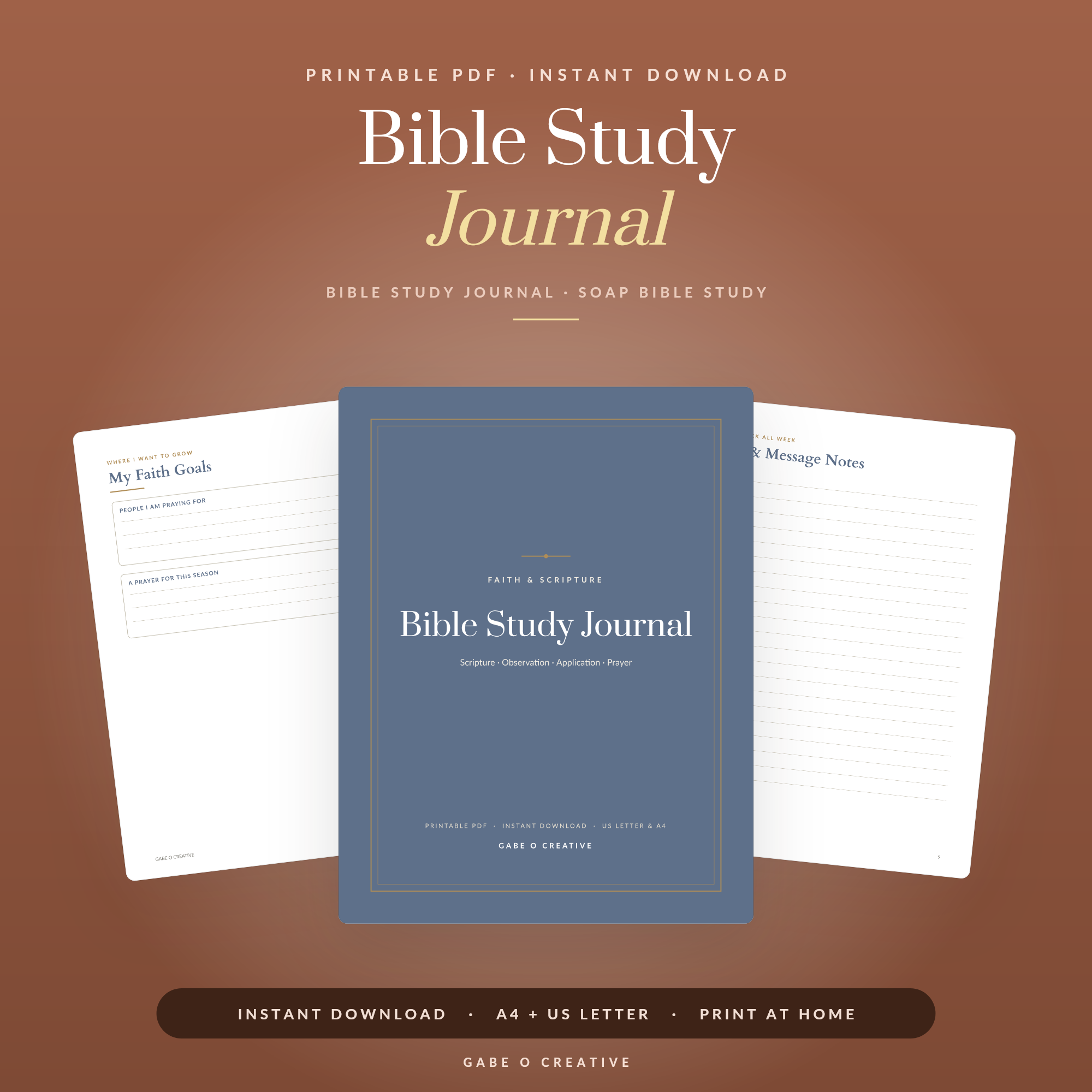
That fifth step is where a writing plan becomes a study rather than a copying exercise. It doesn't need to be profound — "why 'therefore'?" is a perfectly good entry, and it's often the question you come back to. If you want to take those noticings further, our guide to starting a Bible study journal covers the fuller method, and the Bible study journal gives it structure.
 View product →
When You Fall Behind
You will. Everyone does, and how you handle the third week decides whether the plan survives.
Do not write out the backlog. Start again from today's date. A plan is a rhythm, not a debt — and treating missed days as arrears turns a quiet practice into an accusation, which is precisely how people end up abandoning it and feeling guilty about the Bible generally. The verses you missed will come round again; there is no shortage of them.
If you've missed a fortnight, don't restart the month either. Pick up on today's date and keep going. The aim is a practice you're still doing in a year, and a year of imperfect days is worth far more than three flawless weeks followed by nothing.
Pairing it with the rest of your reading
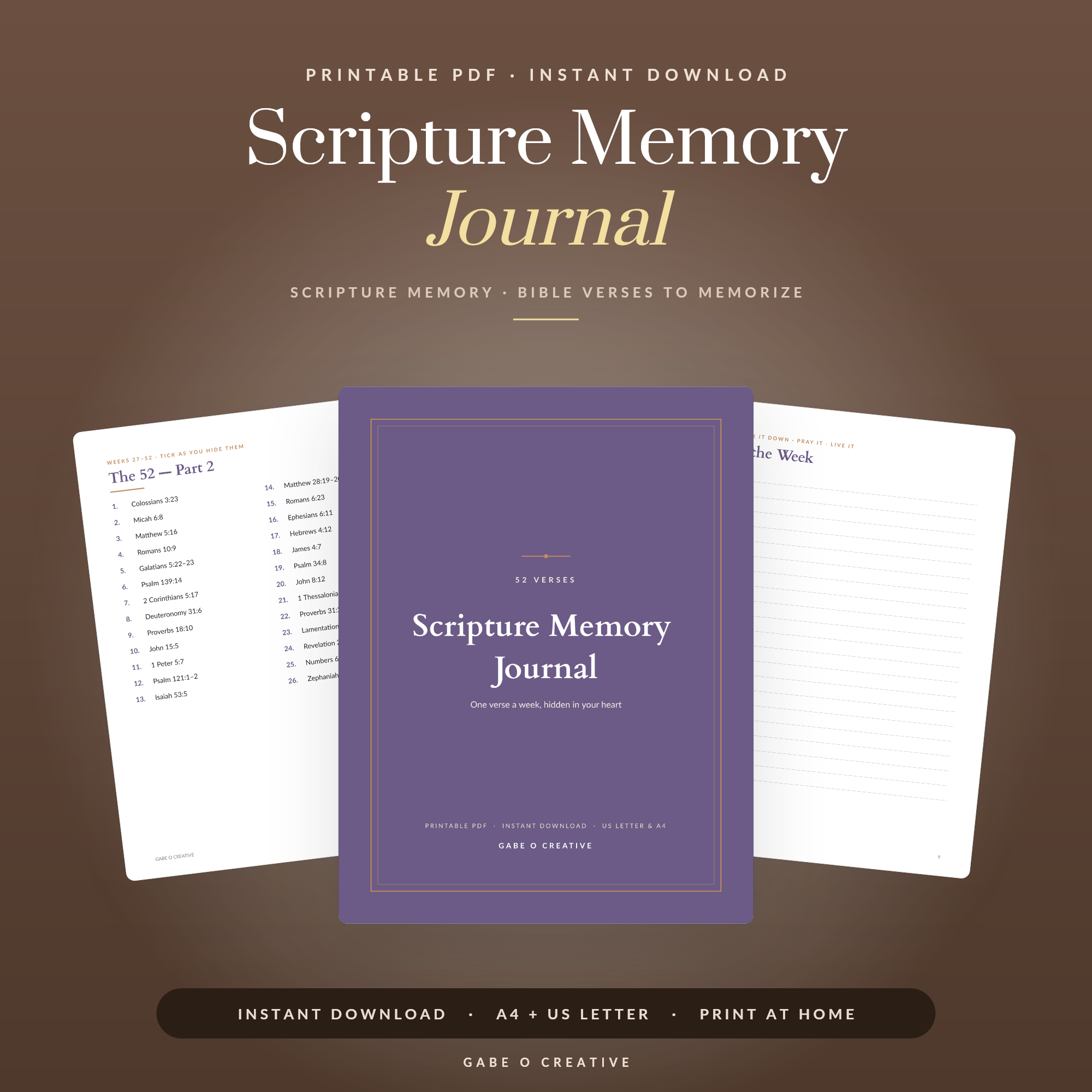
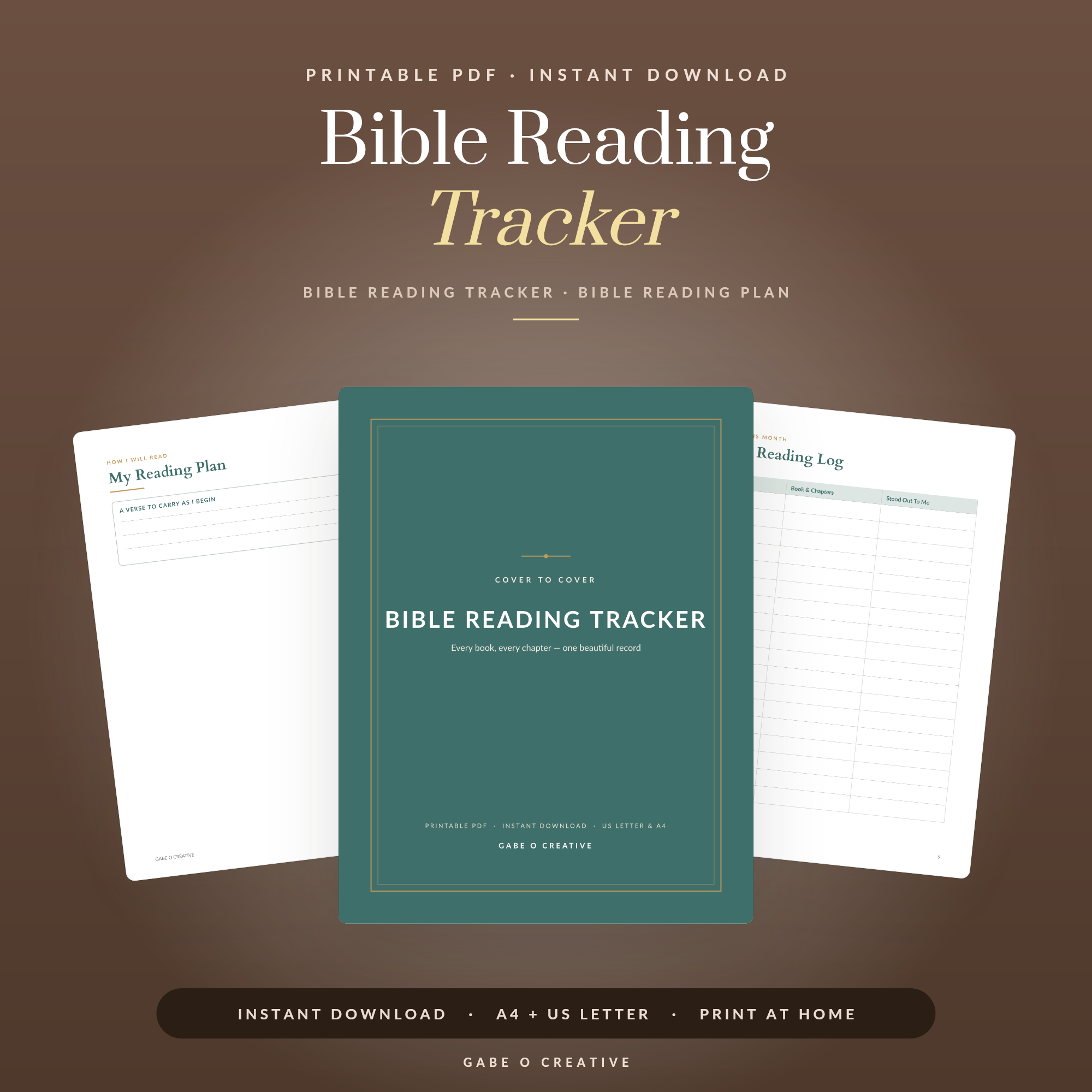
A writing plan doesn't replace reading whole books, and it isn't meant to. Many people run both: a chapter read at normal speed, plus the day's verse written out. If you're tracking the wider reading, the Bible reading tracker covers every book and chapter, and for verses you specifically want to hold onto, the scripture memory journal does the weekly repetition that writing alone won't. The faith and prayer bundle collects the writing plan, journals and prayer pages together; if prayer is the part you'd like to build alongside it, our prayer journal guide is the natural companion.
 View product →
Themes Worth Starting With
If you're choosing your first month, pick a theme with enough material to sustain thirty entries but narrow enough to build a thread. These four are the ones people finish.
- The promises of God — the standard starting theme, and the one most people return to. It spans the whole Bible, so the month doubles as a tour of it.
- Peace and anxiety — best chosen in a season when you need it rather than as a study topic. The verses land differently at the end of a hard day.
- Gratitude — pairs naturally with adding one line of your own, because the noticing and the thanking are the same motion.
- The names and character of God — the most study-like of the four. You end the month with a page of names you didn't know were there.
Whichever you choose, write the theme at the front of the journal and leave the last page blank. Coming back at the end of the month to write two or three sentences on what changed is a small habit, and it's what turns thirty separate mornings into something you can actually see.
For a first attempt, one verse a day for one month is the right size. Finishing a short plan builds far more than abandoning an ambitious one in week three — and once you've finished a month, the second is markedly easier to start.
Scripture Writing Plan FAQs
What is a scripture writing plan?
A dated list of verses — usually one per day, gathered around a theme — that you copy out by hand rather than only read. The list removes the daily decision of where to start.
Why write scripture out by hand?
Handwriting is slow, and the slowness is the point. You notice conjunctions, repetitions and shifts in tone that reading passes straight over, because your pen has to move through every word.
How long does a scripture writing plan take each day?
Usually five to fifteen minutes for a verse or two. If a plan regularly takes half an hour, the passages are too long to sustain and it will quietly collapse.
Which translation should I use?
Whichever you read most comfortably. Some people deliberately copy from a different translation than they usually read, because the unfamiliar phrasing makes familiar verses land again.
What do I do if I fall behind?
Carry on from today's date rather than writing out the backlog. Catch-up guilt ends more plans than busyness does, and the missed verses will come round in another plan.
Is scripture writing the same as memorising verses?
No, though writing helps. Memorisation needs deliberate repetition and review over weeks — a card system does that job, while a writing plan is about attention rather than recall.
Begin tomorrow morning. Print the scripture writing plan and set your journal out tonight, or browse the full Faith & Christian collection for journals, trackers and prayer pages.